America’s most destructive wildfire in Los Angeles history has left thousands homeless and twelve dead, yet the suspect’s mental instability and the system’s response now spark urgent questions about public safety and accountability.
Story Highlights
- The accused arsonist, Jonathan Rinderknecht, remains jailed without bail, with mental health and flight risk concerns at the center of the case.
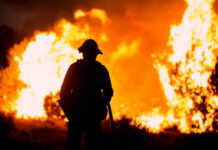
- The Palisades Fire killed 12 people, destroyed over 17,000 homes and buildings, and stands as the most devastating wildfire in LA’s history.
- Federal investigators conducted over 500 forensic tests, while the legal process exposes gaps in early intervention and disaster response.
- Landlords face lawsuits for alleged price gouging in the aftermath, putting post-disaster profiteering in the spotlight.
Suspect Detained After Catastrophic LA Wildfire
Federal authorities have ordered 29-year-old Jonathan Rinderknecht to remain jailed in Florida after he was accused of initiating a small fire on New Year’s Day that later reignited and became the infamous Palisades Fire. This blaze, which swept through affluent neighborhoods in Pacific Palisades and Malibu, left a trail of devastation: twelve lives lost, and more than 17,000 homes and buildings destroyed. The federal judge cited both Rinderknecht’s deteriorating mental health and his risk of fleeing as core reasons to deny bail, keeping him in custody as the community awaits further legal proceedings.
The timeline of events reveals how a seemingly isolated incident grew into a catastrophe. The initial fire smoldered undetected underground for days before reigniting on January 7, rapidly spreading due to dry conditions and high winds typical of Southern California’s wildfire-prone terrain. Investigators meticulously ruled out alternate ignition sources, employing extensive digital forensics to track Rinderknecht’s movements. His family’s escalating concerns about his behavior and threats led to law enforcement’s involvement and ultimately, his October arrest in Florida. The next court hearing is scheduled for October 17, as the legal process continues to unfold.
Legal and Social Fallout: Accountability and Victim Impact
The magnitude of this disaster has forced a spotlight on both the legal and social aftermath. Federal prosecutors, the Bureau of Alcohol, Tobacco, Firearms and Explosives (ATF), and the Los Angeles Fire Department collaborated on a complex investigation, involving over 500 scientific tests and fire scene recreations. The challenge of identifying “holdover” fires—smoldering underground before erupting—complicated initial firefighting efforts, but officials have consistently defended their response as thorough and timely. Meanwhile, Rinderknecht’s defense leans heavily on his mental health condition and the lack of prior physical violence, while prosecutors emphasize public safety and the extraordinary scale of destruction.
Victims and their families now face immense loss, with more than 17,000 properties destroyed and a community displaced. The disaster has triggered a surge in insurance claims, economic hardship, and political pressure on local officials to strengthen emergency response and recovery efforts. Housing rights advocates have also taken action, with lawsuits against landlords accused of price gouging renters in the aftermath, highlighting the risk of profiteering when families are most vulnerable.
Mental Health, Community Safety, and Policy Implications
The central role of mental health in this case has provoked broader questions about early intervention, public safety, and the limits of the justice system. While family members had raised alarms about Rinderknecht’s erratic behavior and threats, intervention only occurred after the catastrophic fire. Mental health professionals and legal experts agree that earlier action could have prevented tragedy, yet the system often fails to balance individual rights with community protection. The case also underscores the importance of robust forensic capabilities and inter-agency cooperation in responding to large-scale disasters caused by human actions.
Beyond the immediate legal proceedings, the Palisades Fire has set new precedents for how courts, emergency services, and the housing sector respond to disasters. Tenant advocates celebrate recent legal victories that allow price gouging lawsuits to proceed, signaling a shift toward greater accountability for post-disaster exploitation. Meanwhile, officials and industry leaders are re-examining real estate, insurance, and fire management policies to better protect communities in the future.
Jonathan Rinderknecht, accused of sparking January's deadly Los Angeles wildfire, was denied bond due to his mental health and distress he caused his family. https://t.co/2bgmc2VSrL
— KGW News (@KGWNews) November 19, 2025
As the nation reflects on this unprecedented tragedy, the Palisades Fire stands as a stark warning about the consequences of inadequate mental health intervention, the need for vigilant disaster preparedness, and the ongoing fight against those who would exploit calamity for profit. For many, the case is a grim reminder of the urgent need to restore accountability, uphold the rule of law, and defend American communities—and values—from both preventable tragedy and opportunistic overreach.
Sources:
Bail denied for Florida suspect in Los Angeles’ most destructive fire
Judge orders man accused of starting deadly LA wildfire jailed while awaiting trial
Judge orders suspect in deadly LA wildfire to remain jailed, citing mental health concerns
Court rejects landlords’ attempt to dismiss price gouging lawsuit following wildfires