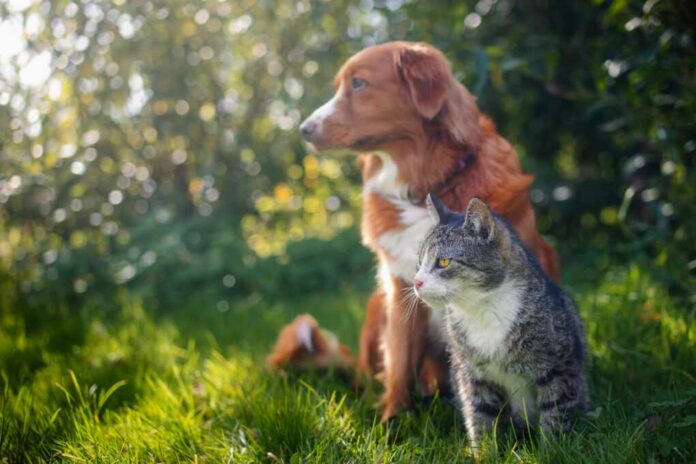
Your dog’s friendly stroll between yards may be giving an invasive predator a free ride into America’s backyards.
Quick Take
- A new peer-reviewed study in PeerJ concludes dogs and cats can spread the invasive land flatworm Caenoplana variegata by carrying it on their fur between gardens in France.
- Researchers relied on more than a decade of citizen-science reports to explain how a slow-moving worm keeps showing up in nearby, separate gardens.
- The worm’s sticky mucus helps it cling to animals, and its ability to reproduce without a mate makes new introductions harder to stop once it arrives.
- Scientists say pet travel can provide a “major boost” to the species’ spread compared with the worm’s natural crawling pace.
What the Study Found—and Why It Matters to Regular Homeowners
Scientists Jean-Lou Justine of the French National Museum of Natural History and Leigh Winsor of James Cook University analyzed more than 12 years of public reports in France to track how Caenoplana variegata spreads. The key finding is simple: dogs and cats can unintentionally move the worm from one garden to another on their fur. That matters because it helps explain infestations that plant-trade theories alone didn’t fully account for.
The study focuses on France, but the mechanism is not uniquely French. Suburban life everywhere involves pets moving daily across lawns, sidewalks, parks, and neighbors’ yards—exactly the kind of routine contact that can turn a slow invader into a persistent local problem. The research does not claim pets are the only pathway; it adds an overlooked pathway that fits real-world behavior: animals go where people and plants don’t always go.
Sticky Mucus and Asexual Reproduction: A Bad Combination for Biosecurity
Caenoplana variegata is a terrestrial flatworm, part of a broader group often associated with accidental introductions through plant trade and gardening activities. What makes this species stand out in the researchers’ reporting is how well it can exploit new opportunities once it arrives. The worm produces sticky mucus that can help it adhere to fur. It also can reproduce without needing a partner, meaning a single “hitchhiker” can potentially start a new pocket of worms.
That biological reality is why the “distance” problem becomes politically and practically important. A worm that crawls slowly might still spread, but it spreads predictably. A worm that catches rides spreads unpredictably, and unpredictability is what overwhelms local control. The researchers describe pet movement as providing a meaningful contribution to spread because animals travel farther than a worm can, including through routine trips that look harmless and are hard to regulate without overreach.
Citizen Science Data Filled a Gap That Bureaucracies Often Miss
The backbone of this research is not a one-time lab stunt; it is long-term citizen reporting. Public submissions began accumulating before 2014 and continued through 2026, giving researchers a timeline that tracks real sightings across many locations. That kind of ground-level monitoring is often more nimble than top-down programs, especially when government priorities shift toward fashionable agendas instead of basic public stewardship like invasive-species control and practical environmental management.
The sources summarizing the paper report no major contradictions between outlets, though publication and release dates vary slightly between early and mid-February 2026. Importantly, the research also acknowledges limits: the exact quantitative impact of pet travel distance is not measured in the summaries provided. Still, the logic is consistent with the evidence described—pets move more than worms, and reports show worms associated with pet fur, bridging the “how did it get here?” question.
What This Means for Pet Owners and Local Communities
The study does not prescribe detailed interventions, but it points toward a commonsense takeaway: awareness matters. If a flatworm can cling to fur, then routine hygiene after garden or yard time could reduce transfers between properties, especially in areas where the species is known or suspected. For homeowners, this is less about panic and more about recognizing that unintended consequences happen when biology meets modern lifestyles—no ideology required.
Scientists discover pets are helping an invasive flatworm spread https://t.co/5XASGwy49V
— Zicutake USA Comment (@Zicutake) February 14, 2026
From a conservative perspective, the bigger lesson is that problems are often solved best through informed citizens and practical habits, not sweeping mandates. The research highlights how ordinary people provided the data needed to identify an overlooked pathway. If agencies ever respond, the priority should be targeted guidance that respects families and property owners—helping them protect gardens and local ecosystems—rather than using invasive-species concerns as an excuse for expansive controls that punish responsible pet owners.
Sources:
Scientists discover pets are helping an invasive flatworm spread
Dogs and cats are helping to spread an invasive flatworm species
Your Dog or Cat Might Be Spreading an Invasive Flatworm