

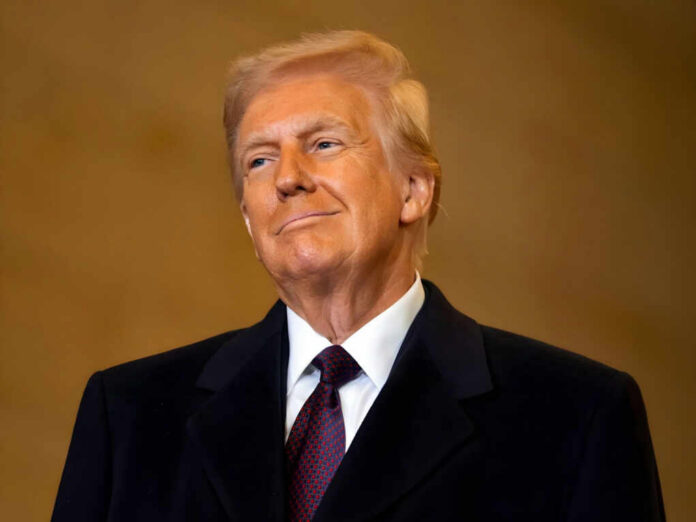
President Trump made history by becoming the first sitting president ever to attend Supreme Court oral arguments, personally watching as justices heard challenges to his executive order eliminating birthright citizenship—a move that defenders of constitutional originalism hope will restore the Founders’ intent while critics claim threatens settled law.
Story Highlights
- Trump broke 235 years of precedent by attending oral arguments as sitting president, not just ceremonial events
- The Supreme Court is reviewing Trump’s Day 1 executive order ending automatic citizenship for children born to illegal immigrants
- Lower courts blocked the order, claiming it violates the 14th Amendment’s citizenship guarantee
- Administration argues the longstanding interpretation of birthright citizenship is incorrect and seeks to overturn decades of settled understanding
Historic Presidential Presence at High Court
President Trump entered the Supreme Court on April 1, 2026, marking an unprecedented moment in American constitutional history. No sitting president had ever attended oral arguments in the Court’s 235-year history, though presidents have visited for ceremonial occasions. Trump himself had previously visited the Court three times as president for Justice Neil Gorsuch’s investiture in 2017, Justice Brett Kavanaugh’s investiture in 2018, and Justice Ruth Bader Ginsburg’s funeral ceremonies in 2020. His presence during arguments on his own executive order creates an unusual intersection of executive and judicial powers that raises questions about separation of powers and judicial independence.
Birthright Citizenship Executive Order Under Review
The case centers on Trump’s Day 1 executive order eliminating automatic citizenship for children born on American soil to parents who lack legal status. The order requires parents to prove their own legal immigration status before citizenship can be granted to their children. Multiple federal judges blocked the order after determining it violated the 14th Amendment’s guarantee of citizenship to almost everyone born in the United States, regardless of parental immigration status. Solicitor General D. John Sauer opened arguments by asserting that the longstanding understanding of the 14th Amendment is incorrect, asking the Court to overturn decades of settled constitutional interpretation.
Constitutional Stakes and Affected Americans
The 14th Amendment has long been interpreted to provide broad citizenship protections for children born on U.S. soil, with limited exceptions. The Trump administration’s novel interpretation challenges this settled understanding, arguing that the Founders never intended automatic citizenship for children of illegal immigrants. If the Supreme Court upholds Trump’s executive order, it would fundamentally alter citizenship law and affect millions of children born in the United States to non-citizen or non-permanent resident parents. State governments would face new responsibilities for implementing citizenship determinations, and the precedent could affect how courts interpret other constitutional provisions beyond immigration law.
Opposition and Concerns About Judicial Independence
The ACLU and other civil rights organizations are vigorously opposing the policy. ACLU Executive Director Anthony D. Romero stated his organization would “school him in the meaning of the Constitution and birthright citizenship,” adding that “any effort to distract from the gravity and importance of this case will not succeed.” Romero emphasized that “the Supreme Court is up to the task of interpreting and defending the Constitution even under the glare of a sitting president a couple dozen feet away from them.” The comments reflect concerns that Trump’s physical presence might inappropriately influence judicial decision-making, though the Court proceeded with normal procedures during the arguments.
A ruling is not expected until the end of June 2026. The decision will determine whether Trump’s birthright citizenship restrictions can take effect and will clarify the Court’s willingness to reconsider longstanding constitutional interpretations. For Americans frustrated with decades of illegal immigration and birthright citizenship abuse, the case represents a potential victory for constitutional originalism and border security. For others, it represents a threat to settled constitutional protections that have defined American citizenship for generations. The justices’ questions during oral arguments will provide crucial insight into their receptiveness to the administration’s constitutional arguments.
Sources:
ABC News: Oral arguments underway in Supreme Court’s landmark birthright citizenship case
Politico: Donald Trump to attend Supreme Court birthright citizenship arguments