

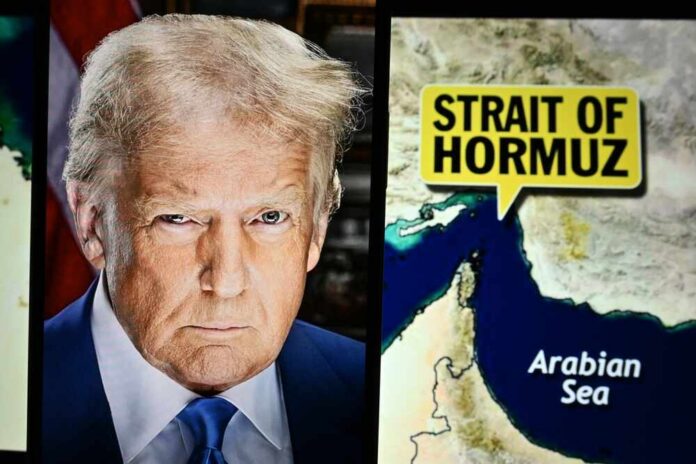
Trump’s 48-hour ultimatum to Iran over the Strait of Hormuz has MAGA voters asking the question no Republican president wants to hear: are we sliding into another open-ended Middle East war?
Quick Take
- President Trump posted a new 48-hour warning to Iran, demanding the Strait of Hormuz be reopened or face major U.S. military consequences.
- The warning lands amid Operation Epic Fury, a U.S. campaign the White House says is degrading Iran’s missiles, navy, and proxy capabilities while preventing a nuclear weapon.
- U.S. forces suffered a significant incident after an F-15E was downed in Iran, with one crew member rescued wounded and one reported missing.
- Iran’s leadership rejected the ultimatum publicly, while energy markets remain sensitive to any prolonged disruption of the Hormuz chokepoint.
- Conservative voters who backed Trump to avoid new wars are split between demanding strength and fearing mission creep.
Trump’s 48-hour ultimatum raises the stakes in week six of the conflict
President Trump issued a renewed 48-hour ultimatum to Iran on Saturday, warning that “all Hell will reign down” if Tehran does not reopen the Strait of Hormuz, a critical route for global oil and gas shipments. The threat followed earlier warnings in March and comes as fighting enters its sixth week. The administration has coupled the deadline with continued strikes under Operation Epic Fury, even as talks have been intermittently discussed and delayed.
The immediate policy problem is simple: when the commander-in-chief ties U.S. credibility to a deadline, the options narrow fast. Either Iran complies, or Washington escalates. The research available publicly does not provide independent verification for every battlefield claim made by either side, but multiple outlets agree the ultimatum is real, time-bound, and linked to the Strait’s status. That reality alone is enough to move energy prices and intensify domestic political pressure.
Operation Epic Fury’s stated goals are sweeping, and that alarms war-weary voters
The White House has described Operation Epic Fury in expansive terms: dismantling Iran’s missile and drone infrastructure, degrading its naval capabilities, countering proxy networks, and preventing a nuclear weapon. Administration officials have portrayed the campaign as systematic and decisive, arguing the operation has clear objectives rather than an “endless war” posture. Still, the breadth of the goals matters politically, because broad goals have historically become broad commitments—especially if the enemy can still retaliate.
Trump’s supporters are now debating an uncomfortable tradeoff between strength and restraint. Many conservatives remember the post-9/11 era when limited strikes repeatedly widened into years-long deployments, debt-financed spending, and unclear definitions of victory. In 2026, those same voters are also dealing with high energy costs and broader frustration with Washington’s appetite for overseas commitments. The tension is sharper because Trump’s brand has long been tied to avoiding new regime-change wars while keeping America respected.
The downing of a U.S. jet underscores the risk of escalation and uncertainty
The conflict’s human cost came into focus after an F-15E was reported downed inside Iran, with one crew member rescued “seriously wounded” and another listed as missing while search efforts continued. Any missing service member tends to harden public resolve, but it also increases the risk of escalation if recovery operations expand. The available reporting also indicates a strike in Tehran killed Iranian leaders, another step that can intensify retaliation cycles.
Hormuz disruption hits working families at home, not just “markets” overseas
The Strait of Hormuz is not an abstract map point for U.S. households. Prolonged disruption can ripple directly into higher prices for gasoline, diesel, and home heating, squeezing family budgets and small businesses. That domestic pain is a key reason the administration is using the Strait reopening as a concrete demand. For conservatives focused on kitchen-table economics, the immediate question is whether the White House can restore deterrence and stabilize energy flows without committing to a larger regional war.
Iran’s rejection and the Israel question are splitting the pro-Trump coalition
Iran publicly rejected Trump’s ultimatum through senior military messaging that framed U.S. threats as reckless and promised severe consequences. That defiance, combined with the reporting that Israel is part of the wider regional picture, is fueling a split among MAGA voters: some view standing with an ally and confronting Tehran as necessary for deterrence, while others argue U.S. interests must be defined narrowly to avoid another generation of deployments and spending.
'JUST WATCH!' President Trump sends a direct, explicit message to Iran, warning that the U.S. military could target key infrastructure as soon as Tuesday if the rogue regime refuses to let ships safely pass through the Strait of Hormuz. pic.twitter.com/UeT1Onx6bM
— Fox News (@FoxNews) April 5, 2026
The research also reflects a key limitation: outsiders cannot fully confirm claims like “most of Iran’s navy” being sunk or the precise scope of damage to missile and drone production. That uncertainty matters for constitutional, conservative governance because major military commitments require clear goals, honest assessments, and accountability for costs—blood, treasure, and liberty. If objectives drift, Congress and the public will inevitably revisit war powers, oversight, and the administration’s end state.
Sources:
President Trump’s Clear and Unchanging Objectives Drive Decisive Success Against Iranian Regime
Iran war live updates: U.S., Trump warns more coming; oil, gas, Strait of Hormuz
“All hell will reign down”: Trump gives Iran 48-hour ultimatum over Strait of Hormuz