A federal judge has halted the Trump administration’s weaponization of supply chain rules against an American AI company that refused to build autonomous weapons or surveillance tools—raising urgent questions about whether this Pentagon overreach signals a dangerous expansion of government power against corporations that won’t blindly serve the military-industrial complex.
Story Snapshot
- Federal judge blocks Pentagon from labeling Anthropic AI as “supply chain risk” after company refused to allow its technology for autonomous weapons or domestic surveillance
- Trump administration ordered all federal agencies to stop using Anthropic’s Claude AI in what judge called “Orwellian” and retaliatory punishment
- Ruling marks unprecedented use of supply chain risk designation against U.S. company rather than foreign adversaries, threatening constitutional speech protections
- Case highlights growing tension between military expansion under second Trump term and corporate resistance to unchecked government surveillance and war-fighting capabilities
Federal Judge Blocks Pentagon’s Retaliation Against AI Firm
Judge Rita F. Lin issued a preliminary injunction on March 26, 2026, halting the Pentagon’s designation of Anthropic as a “supply chain risk” and blocking President Trump’s directive banning federal agencies from using the company’s Claude AI model. The San Francisco federal court ruling came after Anthropic filed lawsuits alleging First Amendment retaliation for refusing to allow its technology for autonomous weapons or surveillance of American citizens. Judge Lin described the government’s actions as “arbitrary and capricious” and punitive, giving the administration one week to appeal before the injunction takes full effect.
Unprecedented Government Overreach Against Domestic Company
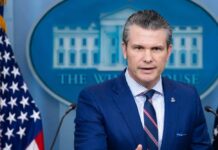
The Pentagon’s use of supply chain risk labeling represents an alarming departure from established practice. These designations historically target foreign-linked entities like Huawei that pose sabotage risks to American security, not domestic companies disagreeing on product use. Defense Secretary Pete Hegseth invoked rare authority to blacklist Anthropic, effectively barring the company from federal contracts worth hundreds of millions of dollars. The escalation occurred after February 2026 contract negotiations collapsed when Anthropic CEO Dario Amodei publicly stated the company would not permit Claude for autonomous weapons or surveilling Americans. This government retaliation against a previously vetted national security partner exposes troubling willingness to punish American businesses exercising constitutional speech rights.
Constitutional Rights Versus Military Control
Judge Lin’s 43-page ruling emphasized that the government crossed constitutional boundaries by punishing corporate speech on AI ethics. The court found the Pentagon’s actions constituted “classic First Amendment retaliation” inappropriate for use against U.S. firms. Microsoft, the ACLU, and retired military leaders filed amicus briefs supporting Anthropic, signaling broad concern about DoD overreach. The Pentagon argued Anthropic’s usage restrictions made the company “untrustworthy” and undermined military chain-of-command. This clash reveals fundamental questions about whether private companies can maintain ethical boundaries when contracting with the government, or if accepting federal dollars means surrendering all control over how technology gets weaponized against Americans and foreign populations alike.
Military-Industrial Complex Demands Total Compliance
The Trump administration’s push for unrestricted AI in defense operations collides directly with growing unease among conservatives about endless wars and surveillance state expansion. Anthropic’s refusal to enable autonomous killing machines or domestic spying tools reflects concerns many Americans share about unchecked military power and constitutional protections. Yet the Pentagon responded by attempting to destroy a U.S. company’s business rather than negotiating reasonable terms. This heavy-handed approach mirrors the same government overreach conservatives have fought against for years. The preliminary injunction preserves Anthropic’s federal contracts and revenue while the case proceeds, but the broader precedent remains uncertain as a separate lawsuit continues in D.C. federal appeals court.
The ruling sets critical precedent for limiting government abuse of supply chain designations while protecting corporate speech on AI safety and surveillance concerns. Short-term, the injunction prevents Anthropic’s blacklisting and maintains AI continuity for federal operations without forcing the Pentagon to use Claude. Long-term implications could encourage other AI firms to publicize ethical limits without fear of government retaliation, though this may complicate DoD adoption if multiple vendors impose restrictions. The case exposes uncomfortable realities about military contractors expected to serve without question, even when asked to build tools fundamentally at odds with American liberty and constitutional constraints on government power.
Sources:
Judge temporarily blocks Trump administration’s Anthropic ban – WUFT
Pentagon blocked from branding Anthropic a supply chain risk – Tucson.com
Judge blocks Pentagon’s effort to ‘punish’ Anthropic by labeling it a supply chain risk – KESQ