A silent stand in the House gallery turned into a handcuff moment that’s now fueling Ilhan Omar’s latest outrage campaign.
Quick Take
- U.S. Capitol Police arrested Aliya Rahman, a guest of Rep. Ilhan Omar, during President Trump’s 2026 State of the Union after police said she refused repeated orders to sit down.
- Rahman was charged with unlawful conduct and disruption of Congress, a misdemeanor carrying up to six months in jail or a $500 fine.
- Capitol Police said “demonstrating” is prohibited in congressional buildings and is clearly stated on State of the Union tickets.
- Omar called the arrest “heavy-handed” and demanded a full explanation, while accounts differ over whether Rahman was “demonstrating” or “standing silently.”
What happened in the gallery—and why police say it was unlawful
U.S. Capitol Police arrested Aliya Rahman, a software engineer and guest of Rep. Ilhan Omar (D-Minn.), during President Donald Trump’s State of the Union address on Tuesday night. Police said Rahman “started demonstrating” in the House gallery at about 10:07 p.m., was instructed to sit down, refused, and was taken into custody because demonstrations and disruptions are illegal inside congressional buildings. Rahman was later transported for medical treatment before booking.
Capitol Police also emphasized a key procedural point: State of the Union tickets explicitly warn attendees that demonstrating is prohibited. That matters because it frames the incident less as a spontaneous misunderstanding and more as enforcement of a known rule designed to keep a constitutionally significant event—Congress assembled while the President addresses the nation—from devolving into a scene. Police ultimately charged Rahman with unlawful conduct and disrupting Congress, both misdemeanors.
Competing narratives: “Demonstrating” vs. “standing silently”
Rahman and Omar describe the same moment differently. Rahman said she was arrested for “standing up silently,” while Omar publicly argued the response was excessive and demanded clarification about why the arrest occurred. The factual overlap is clear across reporting: Rahman stood up, police ordered her to sit, and she did not comply, triggering removal. The unresolved question is characterization—whether her conduct legally qualifies as a prohibited demonstration inside the gallery.
That distinction is not trivial for Americans who care about both the First Amendment and orderly governance. The Capitol complex is not treated like a typical public sidewalk protest zone, and Congress has long enforced rules against gallery disruptions. When a guest refuses lawful instructions during the nation’s most watched constitutional address, law enforcement is placed in a no-win position: enforce decorum and get accused of overreach, or allow escalating interruptions that undermine the institution’s work.
Rahman’s background and the broader immigration-enforcement backdrop
Rahman’s arrest at the State of the Union landed harder because she was already a known figure from a January 2026 incident in Minneapolis linked to “Operation Metro Surge,” an immigration enforcement push involving Border Czar Tom Homan. Video from that earlier episode showed federal agents pulling Rahman from her vehicle as she yelled that she was disabled. DHS later described her as an “agitator” who ignored repeated orders to move her vehicle away from the scene.
Rahman has said she has autism and a traumatic brain injury, and she has described significant shoulder injuries. After the January detention, she alleged mistreatment and denial of medical care. She later testified before Congress about the physical and emotional fallout, describing torn shoulders and cartilage damage. In the State of the Union incident, Rahman said officers pulled on her shoulders during removal and stopped only after a sergeant intervened—an allegation not addressed in the Capitol Police summary.
Omar’s response, congressional decorum, and what can be verified
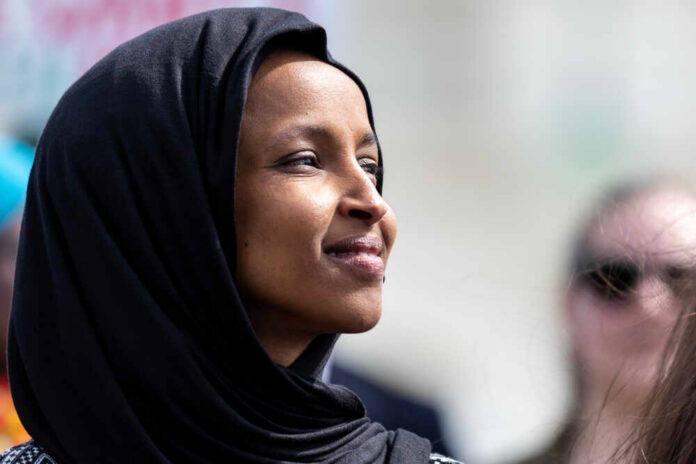
Omar issued a statement calling the arrest “heavy-handed” and said it sent a “chilling message” about democracy, while demanding a full explanation. Omar also told CNN she did not regret shouting during Trump’s remarks about immigration and Somali migrants in Minnesota, and she said Rahman was “back and safe” after her release. Separately, reporting noted that disruptions during high-profile addresses are not new, with members and guests previously escorted out.
Based on the available sourcing, the strongest verified facts are procedural: Rahman was removed after refusing instructions, was charged with a misdemeanor, and was released early the next morning. The least verified claims involve the physical handling during removal—Rahman’s shoulder-related account is specific but not independently confirmed in the police statement provided in coverage. For conservatives wary of government power, that means two things can be true at once: Congress can enforce strict decorum, and agencies should still be transparent about use-of-force decisions.
Why this flashpoint matters to conservatives watching Washington
The political aftershock is predictable: Omar is pressing the “accountability” narrative, while Capitol Police are emphasizing clear rules and lawful orders. For a country exhausted by performative politics, the practical issue is whether high-profile events are becoming stages for activists—while elected officials use the resulting enforcement to generate headlines. If rules against gallery demonstrations are enforced unevenly, Congress invites deeper distrust; if rules are enforced consistently, critics will still frame it as suppression.
The limited but consistent reporting indicates the system functioned in one narrow sense: an attendee refused instructions and was removed under existing law. The harder question is whether Washington can maintain order without creating new grievances—especially when disabilities and prior enforcement controversies enter the story. Until additional documentation is released—bodycam policies, medical reports, or fuller incident narratives—the public is left weighing a clear rule against competing accounts of what “standing” meant and how the removal was executed.
Sources:
https://www.foxnews.com/politics/squad-member-claims-state-union-guest-arrested
https://time.com/7381328/ilhan-omar-trump-state-of-the-union-aliya-rahman-arrest/
https://omar.house.gov/media/press-releases/rep-omar-statement-arrest-aliya-rahman