

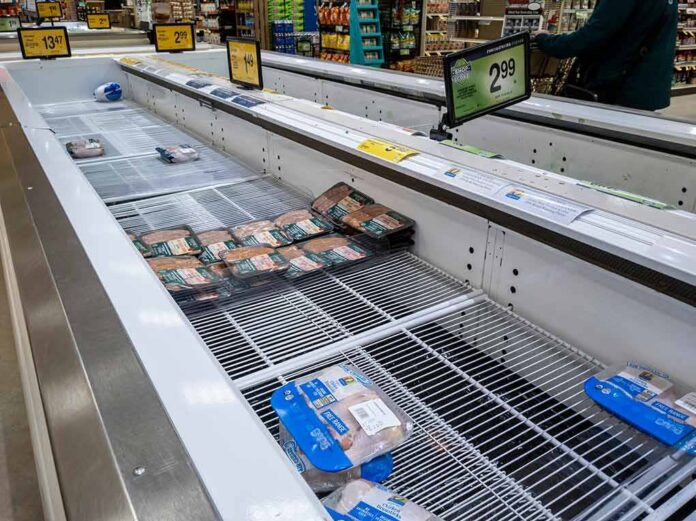
Hackers turned supermarket refrigerators into heaters across Europe, spoiling food and exposing a soft underbelly in the continent’s supply chain.
Story Snapshot
- French authorities say hundreds of supermarkets had refrigeration systems hijacked, with probes now underway.
- Retail leaders reported ruined stock and store disruptions, calling the attack unprecedented and serious.
- Attackers manipulated connected fridge controls, forcing defrost cycles and extreme temperatures.
- European Union officials called repeated retail cyberattacks deeply concerning and cross-border in scope.
What Happened To Supermarket Refrigeration
French supermarkets reported a cyberattack that directly changed how their fridges worked. Hackers forced units into constant defrost mode and pushed temperatures to as high as 50 degrees Celsius, which is 122 degrees Fahrenheit. Food spoiled and some stores had to dump stock. This was not a simple computer bug. It was a digital break-in that caused real world damage. The Paris prosecutor’s cybercrime unit opened an investigation to track the intruders.
French Finance Minister Roland Lescure told lawmakers that about 700 of France’s 10,000 supermarkets were affected, while other reports put the number lower. The variation shows counts were still being confirmed. Officials also examined reports of fires linked to the disruption, and looked at the scale of food loss. The core fact holds: criminals reached into store systems and changed temperatures. That turned a backroom screen into a lever on public food safety.
Which Retailers And Equipment Were Hit
Named retailers described major effects. Groupement Mousquetaires said about 300 Intermarché and Netto stores were impacted. The head of Coopérative U said roughly 80 stores were hit and called the targeting of refrigeration an unprecedented attack on France’s food chain. Reporting identified older refrigeration management gear among affected systems, including products from Danfoss, Copeland, and Dixell, which raised concern about security gaps in legacy equipment. Attribution for who did it remains unresolved.
European exposure extended beyond France. The European Commission’s food and agriculture commissioner, Christophe Hansen, said the bloc is taking the incidents very seriously and called repeat cyberattacks deeply concerning. Reports cited affected retailers or incidents in at least eight countries, though links among them have not been proven. This matters because the cold chain is woven across borders. One weak link can disrupt supplies, raise prices, and shake public trust in basic services.
Why This Matters For Families And Stores
These attacks show how cyber tools can break physical systems we rely on every day. Refrigeration keeps meat, dairy, and medicine safe. When hackers flip settings, stores must trash food or close aisles. That hits family budgets and store margins at the same time. Officials stressed no national food shortage was proven, yet the event still touched food security. The lesson is simple: old connected gear plus weak protection equals risk to the checkout line.
For Europe, this is also a policy test. The updated European Union cybersecurity rules for key sectors aim to harden essential services, including food retail operations. Those rules push risk management, incident handling, and business continuity. The question is whether stores with legacy systems will replace or secure them fast enough. Criminals will keep looking for the easy path. Closing remote access holes on old controllers may do more for shoppers than any press conference.
What To Watch Next
French investigators will work to confirm store counts, map the technical path, and assess losses. Retailers will audit their equipment, change passwords, restrict remote access, and patch or replace end-of-life devices. European officials will weigh whether to share more technical guidance across borders so chains do not repeat the same mistakes. Shoppers should expect stores to be open, but may see brief outages or product gaps as systems are checked and fixed.
Sources:
insiderpaper.com, pbs.org, abc.net.au, euronews.com, foodtradenews.com