Iranian state-backed hackers have paralyzed a major American medical technology company in what experts warn represents a dangerous escalation of cyber warfare targeting critical U.S. healthcare infrastructure.
Story Snapshot
- Handala hacking group, linked to Iran’s intelligence services, executed a devastating cyberattack on Stryker Corporation, shutting down global IT systems for 56,000 employees across 61 countries
- Attack wiped devices clean including laptops and work phones, displaying Handala’s logo and bringing operations to a complete standstill with employees unable to work
- Incident marks first major Iranian cyber strike on U.S. medical firm during current conflict, raising concerns about patient care disruption and vulnerability of American healthcare systems
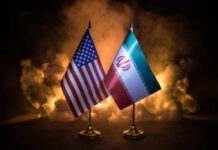
- Attack follows U.S.-Israel military operations against Iran in late February, with Iranian cyber groups retaliating through coordinated infrastructure attacks
Iranian Hackers Bring Medical Giant to Its Knees
Stryker Corporation, a U.S. medical technology firm employing over 56,000 workers worldwide, suffered a complete IT infrastructure collapse following a sophisticated cyberattack attributed to Handala Hack, an Iranian state-sponsored hacking group. The attack wiped devices clean across Europe, Asia, and the United States, displaying the Handala logo on affected systems. Internal communications confirmed a “severe, global disruption” impacting all laptops and systems, with engineers, administrative staff, and support teams unable to perform basic functions. Microsoft was engaged for incident response, though the company acknowledged the root cause remained unidentified as the crisis unfolded.
BREAKING – Iranian group claims responsiblity for major hack on US medical company https://t.co/pbDyiL5zPS pic.twitter.com/PsEJCpiLNu
— Insider Paper (@TheInsiderPaper) March 11, 2026
State-Sponsored Retaliation Against American Interests
Handala Hack operates under the direction of Iran’s Ministry of Intelligence and Security, blending pro-Palestinian messaging with aggressive cyber operations against Western and Israeli targets. The group emerged prominently following Operation Epic Fury, a joint U.S.-Israel military campaign launched February 28, 2026, striking Iranian positions and triggering multi-vector retaliation. Security analysts at Unit 42 and Flashpoint confirm Handala specializes in data exfiltration and destructive wiper attacks, distinguishing this incident from typical distributed denial-of-service operations. Prior to targeting Stryker, the group claimed responsibility for attacks on Israeli energy companies, Jordanian fuel systems, and civilian healthcare facilities throughout the region.
Healthcare Sector Faces Escalating Vulnerability
The Stryker breach exposes dangerous weaknesses in American healthcare infrastructure at a time when geopolitical tensions demand heightened vigilance. With operations for a $20 billion corporation paralyzed, potential delays in patient care and medical device production raise serious concerns for Americans depending on these critical services. Check Point’s Gil Messing warned that attack volumes exceed normal baselines, with Iranian cyber groups recruiting globally to expand capabilities despite Iran’s internet connectivity dropping below four percent capacity. Health-ISAC, the healthcare sector’s cybersecurity organization, monitors the U.S.-Iran cyber fallout, though no specific warnings preceded the Stryker attack, highlighting the reactive rather than proactive posture plaguing critical infrastructure protection.
Government Overreach Failures Leave Americans Exposed
This devastating attack underscores how previous administrations’ weak cybersecurity policies and inadequate protection of critical infrastructure leave ordinary Americans vulnerable to hostile foreign actors. While billions flowed to globalist initiatives and foreign aid, domestic cybersecurity for essential services like healthcare received insufficient attention and resources. The Biden administration’s soft approach to Iranian aggression emboldened regime-backed hackers to escalate operations against American companies and citizens. Experts from the Foundation for Defense of Democracies note that despite Iranian hackers facing technical struggles, U.S. infrastructure remains historically vulnerable, a direct consequence of misplaced priorities favoring international entanglements over homeland security. As tensions escalate, Americans dependent on medical technology face real risks from adversaries exploiting these preventable security gaps.
Broader Pattern of Iranian Cyber Aggression
The Stryker incident represents just one component of coordinated Iranian cyber retaliation following U.S.-Israel military operations. Handala claimed responsibility for attacks on Israeli energy infrastructure just days before the Stryker breach, signaling intentions for “massive cyber attacks” across multiple sectors. Other Iranian-aligned groups including Cyber Islamic Resistance and FAD Team have targeted Israeli defense installations, municipal systems, and industrial control networks throughout the conflict. Security analysts warn that opportunistic attacks are rising as Iran-backed groups exploit trans-regional tensions to strike Western interests. The coordination between Iranian hackers and pro-Russia cyber actors further complicates the threat landscape, though Iran’s severely degraded internet connectivity limits large-scale coordinated operations for now.
Sources:
Iranian hackers cripple major health network sparking WW3 fears
Pro-Russia actors support Iran nexus hackers
US-Israeli campaign triggers Iranian counteroffensive targeting Gulf energy critical infrastructure
US, Israel and Iran trade cyberattacks