
New York City postponed the Macy’s Thanksgiving Day Parade for the first time in its 100-year history, after forecasters warned of winds up to 65 miles per hour tearing through Manhattan.
Quick Take
- Macy’s pushed its 100th parade from Thursday to Saturday, the first weather postponement ever.
- The National Weather Service issued a High Wind Warning with gusts up to 65 mph and flood risk.
- City Hall, the NYPD, and Macy’s made the call together, not the mayor alone.
- Conservative commentators accused Mayor Mamdani of political motives, though they offered no evidence beyond suspicion.
- Mamdani will skip Saturday’s rescheduled parade because of planned foot surgery.
A Storm Forces an Unprecedented Call
New York City’s official Thanksgiving travel advisory warned that a High Wind Warning would cover the city from 10 a.m. Thursday to 1 a.m. Friday. Forecasters predicted gusts up to 65 mph, heavy rain, and coastal flooding during the exact hours the parade would have marched through Manhattan. Macy’s said it was postponing the 100th parade “out of an abundance of caution,” citing the same storm threatening the entire East Coast.
The danger went beyond wind alone. Reports described heavy rain, flash flooding, coastal flooding, and hazardous travel conditions stretching across the New York metropolitan area. The storm also caused power outages and travel delays well beyond the parade route, placing the postponement inside a much bigger regional emergency response rather than a decision aimed only at one event.
City and Macy’s Made the Decision Together
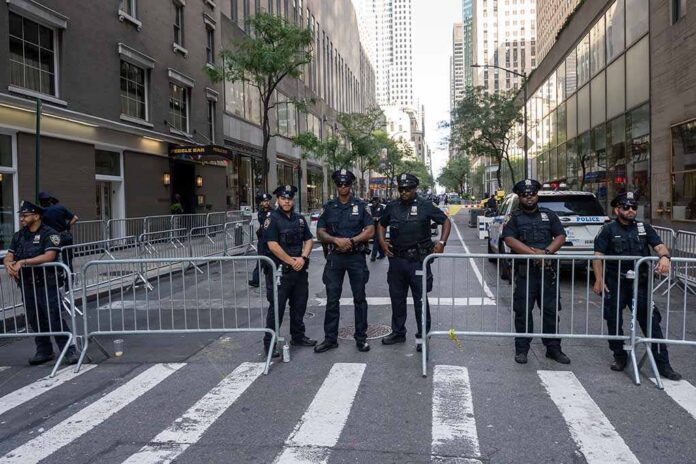
The postponement was not announced as a unilateral mayoral order. New York City’s advisory said the move came “in coordination with Macy’s, the NYPD and other City agencies.” NBC News reported that Macy’s reached its decision only after consulting with city and agency partners. That shared process matters, since it spreads responsibility across multiple officials and a private company with its own safety and insurance concerns.
Rather than scrap the event outright, organizers rescheduled it. The 100th parade will now step off Saturday, November 28, at 8:30 a.m., preserving the tradition while avoiding Thursday’s worst conditions. Still, the public record made available so far does not include the city’s written risk assessment, NYPD operational orders, or Macy’s internal wind-safety thresholds that would show exactly how officials reached that specific threshold for postponing.
A Century Without a Weather Cancellation
The parade has only gone dark three times before, in 1942 through 1944, when balloon materials went to the World War II effort. Weather had tested the event before without stopping it. In 1971, high winds and rain forced organizers to ground every balloon, but the parade still marched. That long streak of continuity is exactly why this postponement stands out as historically significant, regardless of how the politics shake out.
Backlash Targets the Mayor, Not Just the Storm
Conservative commentators quickly turned the postponement into a political story. Commentator Dave Rubin claimed Mamdani canceled the parade because he “hates America,” not because of rain. Other conservative voices on social media argued that calmer conditions caught on camera near Times Square showed the storm wasn’t dangerous enough to justify the move. None of these claims include independent weather data or city records contradicting the official forecast.
BREAKING NEWS FR. NEW YORK MACY`S PARADE
MACY`S THANKSGIVING DAY PARADE POSTPONED UNTIL SATURDAY MORNING 8.30 AM NY TIME DUE TO STORM
The 100th annual Macy's Thanksgiving Day Parade will be postponed until Saturday, sources familiar with New York City's security planning tell… pic.twitter.com/qqN3JVeSvP
— www.Jonny Clock1977.us (@JonnyClock1977) November 25, 2026
Mamdani will not attend Saturday’s rescheduled parade because of planned foot surgery, a detail reported separately from the postponement decision itself. Critics have linked his absence to the schedule change anyway, using it to suggest detachment from the event. The available evidence ties his absence to a medical procedure, not to the storm call, though the optics still give critics an opening to keep the story alive.
The core dispute here is less about whether a storm hit New York and more about who gets to decide what counts as “too dangerous” for a century-old tradition. Both the weather warnings and the political backlash are real and documented. What remains unverified is any specific evidence that politics, rather than the forecast, drove the actual decision.
Sources:
apnews.com, afp.com, cnn.com, abc7ny.com, nyc.gov, cbsnews.com, gothamist.com, ibtimes.co.uk, the-independent.com, independent.co.uk, x.com