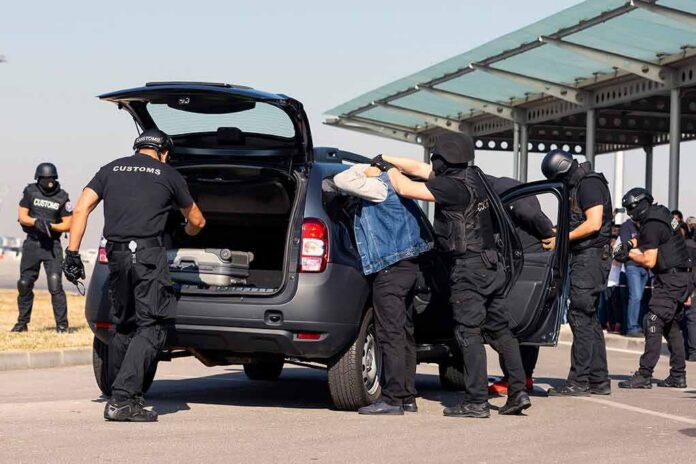
Mexican federal forces raided 19 sites across three states and seized massive fuel assets while detaining a key Los Metros finance operator tied to fuel smuggling.
Story Highlights
- Federal forces ran 19 raids across Chihuahua, Nuevo León, and Tamaulipas.
- Agents detained three people, including Jesús Manuel “N,” alias “Bebo”.
- Authorities reported seizing about 520,000 liters of fuel and other assets.
- The case aligns with a wider shift toward cross-border “fiscal huachicol” schemes.
Coordinated Raids Hit Los Metros Fuel Network
Mexico’s security cabinet said Special Forces from the Defense Ministry, the National Guard, and federal prosecutors executed 19 searches on September 25 and 26. Operations took place in Chihuahua, Nuevo León, and Tamaulipas. Officials reported three arrests, including Jesús Manuel “N,” known as “Bebo.” Authorities identified him as a financial operator for the Los Metros faction of the Gulf Cartel that is linked to illicit fuel activity, according to official and press reports.
Security updates from the Interior Ministry and local outlets detailed broad seizures that targeted fuel logistics. Reports described about 520,000 liters of hydrocarbons, cash, aircraft, and dozens of tanker trailers among the assets secured. Officials also listed ammunition and other items as part of the actions. These numbers suggest a focus on both the product and the tools that move and hide it, which is central to disrupting fuel smuggling revenue.
Why Fuel Smuggling Matters on Both Sides of the Border
Analysts say Mexico’s fuel theft has evolved from simple pipeline taps to a cross-border racket. Networks now mix mislabeled imports, tax evasion, and diverted tankers. United States financial watchdogs warn that oil and fuel smuggling across the southern border feeds these schemes, often called fiscal fuel theft. This activity drains tax revenue, distorts energy markets, and strengthens organized crime, which then spreads violence and corruption in border states and beyond.
For American readers worried about cartel power, border spillover, and high energy costs, the trend is clear. When networks dodge taxes and launder fuel, honest businesses lose ground and prices can swing. When corrupt officials look away, public trust drops. Both conservatives and liberals can agree that crime plus weak oversight hurts working families and fuels the sense that the system favors the well-connected over the law-abiding.
What Authorities Say They Disrupted
Officials linked the main detainee to financial operations for Los Metros that involved fuel smuggling. Press accounts tied the group to moving fuel through shell firms and logistics hubs, including cross-border channels. The items seized in this operation match that profile: bulk fuel, tanker trailers, cash, and aircraft. While formal charges will move through Mexican courts, the scope of the seizures points to a network designed to move product fast and hide its source on the books.
This case also fits a wider pattern seen in Tamaulipas and nearby states, where cartels push beyond drugs to control fuel flows. That shift changes the crime map. Fuel markets touch everyday life more than cocaine routes do. A single group that rigs prices, dodges taxes, and threatens rivals can warp a region’s economy. That is why raids like this draw attention: they aim at the money base that keeps the violence machine running.
What Comes Next and Why It Matters
Prosecutors will now sort financial records, fuel custody logs, and company links tied to the raids. If the case holds, it could weaken the cash lines behind Los Metros in three states. If it stalls, the network may adapt, shift routes, and rebuild. For communities on both sides of the border, the stakes are simple. Honest trade needs clear rules that everyone follows. When crime sets the price of fuel, families and small firms pay the hidden tax.
Sources:
borderlandbeat.com, x.com, infobae.com, lineadirectaportal.com, milenio.com, cloud.sfmc.metro.net, metro.net, latintimes.com, foxla.com