

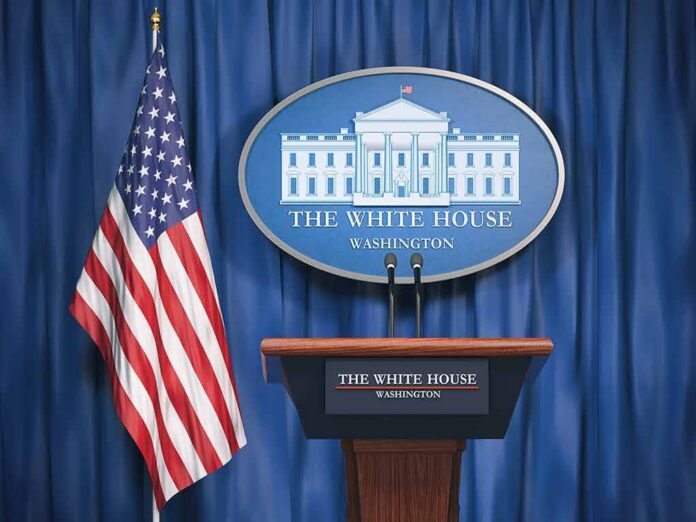
With praise in one hand and a pink slip in the other, the White House asked Ambassador Kimberly Guilfoyle to resign while insisting she had been “a wonderful asset.”
Story Snapshot
- The White House confirmed it asked Ambassador Guilfoyle to resign, while praising her work.
- President Trump said she “was doing a good job,” but officials disliked “what we were reading.”
- Reports linked the request to alleged misconduct tied to a donor and a $100,000 bill.
- Guilfoyle denied the claims and vowed to defend her name and integrity.
White House Confirms Resignation Request Amid Positive Remarks
White House Press Secretary Katie Zacharia said on October 13 that officials asked United States Ambassador to Greece Kimberly Guilfoyle to resign. The press office paired that notice with praise, calling her “a wonderful asset to the team.” The message did not cite poor embassy performance or a policy dispute. That split message sparked questions across the political spectrum about standards, accountability, and transparency inside federal leadership. The White House did not release an investigative report to support the move.
President Trump told reporters that Guilfoyle “went to Greece, she was doing a good job, but we didn’t like what we were reading.” That line suggested her work in Athens was not the central issue. Reporting by several outlets tied the request to alleged conduct, not a specific diplomatic failure. The public record does not show a formal decision memo or ethics finding. That gap leaves uncertainty about whether reputational risk or confirmed facts drove the outcome.
Allegations Involving Donor Payment Dispute Drive Coverage
Politico reported that the request followed claims that Guilfoyle pressed a donor who sought White House access to cover a $100,000 American Express bill. Other outlets also linked the resignation to alleged misconduct. Those reports referenced messages said to be from Guilfoyle, though her team disputed their authenticity. No forensic report or sworn testimony has been released to the public so far. That keeps key details unverified, even as the move carries real career impact.
Guilfoyle’s lawyers pushed back on the donor story. They said any money sought was unpaid compensation for past public appearances and speeches that took place before she became ambassador. They also said reports about her travel and gifts were misleading and that she followed federal rules. Those defenses do not answer every claim, but they highlight open questions that only documents and official reviews can settle. The public has not seen those records.
Guilfoyle Denies Wrongdoing While Supporters Tout Embassy Work
Guilfoyle denied the allegations and said she would “vigorously defend” her name, reputation, and integrity. She called serving as ambassador “the honor of a lifetime” and said her commitment to President Trump and the country would continue. The Associated Press and other outlets framed her departure as following reports of improper conduct. That framing underscores the stakes for public trust, which suffers when facts and findings remain out of sight.
Secretary of State Marco Rubio praised the work of the United States embassy in Greece but declined to address the allegations. The White House also stopped short of alleging poor diplomatic performance. Together, these statements support the idea that performance and conduct are separate tracks. An envoy can advance policy goals while still creating reputational risk. That pattern is not new in diplomacy, where optics and ethics rules weigh heavily on leaders.
Why This Matters to Taxpayers on the Left and Right
Taxpayers want clear rules and fair enforcement, no matter who holds power. This case shows a familiar Washington pattern: warm praise paired with a quiet push to the exit. People across the aisle see that as mixed signals. If misconduct occurred, citizens expect evidence and a public record. If it did not, they expect leaders to say so plainly. When government withholds details, both sides suspect insiders are protecting their own reputations instead of leveling with the public.
The fix is not complex. Officials can release the documents that guided the decision, with redactions for privacy where needed. They can say whether an ethics or inspector general review exists and summarize its outcome. Guilfoyle and her legal team can provide records that back their claims. Clear steps like these would limit rumor and restore trust. Without them, many Americans will see this as another episode where the elite write the rules after the fact.
Sources:
facebook.com, edition.cnn.com, cnn.com, wcnc.com, thehill.com, daytondailynews.com