Iran’s push to choke off the Strait of Hormuz is forcing Washington to move Marines and warships fast—because when energy routes get held hostage, American families feel it at the pump.
Quick Take
- The Pentagon is sending the 31st Marine Expeditionary Unit aboard an amphibious warship group toward the Middle East as the Iran conflict enters its third week.
- The deployment centers on the USS Tripoli and accompanying ships, adding a flexible force for evacuations, maritime security, and rapid-response missions.
- Iran’s escalation around the Strait of Hormuz—through attacks and disruption—raises the risk of a global energy shock tied to a major oil chokepoint.
- Officials have not publicly detailed the exact mission, and the Navy has declined to comment in some reports, leaving key operational questions unanswered.
Marines and Amphibious Warships Shift Toward the Hormuz Flashpoint
Defense officials have confirmed that a Marine Expeditionary Unit and an amphibious ready group are heading from Japan toward the Middle East as fighting with Iran continues into a third week. Reports describe roughly 2,200 Marines as the core force, with totals rising when sailors and ship crews are included. The ships cited include the amphibious assault ship USS Tripoli, alongside USS New Orleans and USS San Diego.
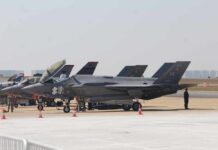
The operational logic is straightforward: an embarked Marine force can arrive with its own aviation, logistics, and command structure, offering options short of a large-scale ground war. The USS Tripoli is also described as carrying F-35B aircraft and helicopters, giving commanders a mobile platform for surveillance, deterrence, and rapid strikes if required. Still, publicly available reporting leaves the precise tasks and rules of engagement unstated.
Why the Strait of Hormuz Drives the Urgency
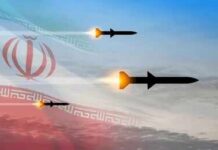
Reporting places the Strait of Hormuz at the center of the crisis, describing intensified Iranian activity that includes harassment, missiles, drones, and attacks affecting shipping. The strait is widely treated as a critical chokepoint for global energy flows, and multiple accounts warn that disruption there can ripple quickly into oil and LNG markets. For U.S. leaders, protecting freedom of navigation is not an abstract principle—it is tied directly to economic stability.
That linkage matters politically and practically. When overseas instability spikes energy prices, inflation pressures can come roaring back into household budgets. Conservative voters remember how quickly “temporary” crises turn into long-term costs, especially when Washington hesitates or sends mixed signals. The current deployment is presented as a way to widen response options—helping secure sea lanes, reassure allies, and keep leverage on Tehran—without immediately committing to a major land campaign.
The Broader U.S. Buildup and What’s Known—And Not Known
This movement of Marines comes alongside reporting that the United States has built up substantial forces in the region, including carrier strike groups and advanced aircraft deployments. Accounts describe the scale as among the largest postures in the Middle East since the Iraq invasion era, with assets spread across key waterways and bases. In that context, a Marine Expeditionary Unit functions as a “plug-in” force: fast to employ, adaptable, and designed for short-notice contingencies.
At the same time, some details are uncertain or vary by report. Estimates of total personnel differ, and public reporting notes that the Navy has declined comment in certain instances. The mission set is described in broad categories—maritime security, raids, evacuations, or crisis response—rather than in a single declared objective. That lack of clarity can be operationally understandable, but it also limits the public’s ability to evaluate risk, duration, and strategic endpoint.
Readiness, Limits, and the Constitutional Stakes of “Not a Ground War” Framing
Some commentary highlighted in reporting argues the move should not be viewed as a classic “boots-on-ground” war, framing it instead as a posture shift meant to keep options open. That distinction can be real—an amphibious force can deter and respond without occupying territory. However, Americans have learned to scrutinize euphemisms, because limited missions can expand when adversaries escalate, hostages are taken, or shipping losses mount.
2nd Marine Expeditionary Unit of around 2,200 Marines, 3 warships headed to Middle East as Iran war continues – CBS News https://t.co/sTvcmQUQDp
— Clint Hale (@ClintHale0u812) March 20, 2026
For conservatives focused on constitutional government, the key issue is transparency and lawful authority if operations broaden. Congress’s role in authorizing sustained conflict is not optional, and neither is honest communication about objectives, costs, and exit ramps. Based on current reporting, the clearest near-term purpose is protecting Americans, allies, and maritime commerce from Hormuz-related disruption—an aim that aligns with national security and economic self-defense.
Sources:
U.S. Marine Unit Heading to Middle East
2026 United States military buildup in the Middle East
US Sends Marines Toward Strait of Hormuz Crisis
Pentagon reportedly sending more warships and Marines to Middle East