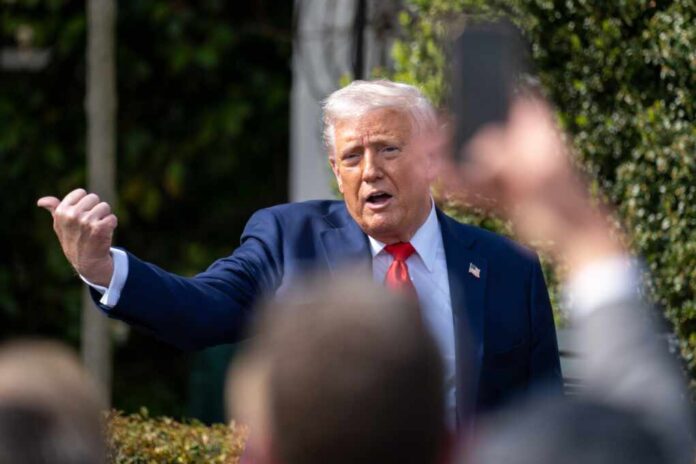
President Trump just turned one of Washington’s most elite cultural galas into a prime-time rejection of woke Hollywood and a celebration of unapologetically American icons.
Story Highlights
- Trump personally reshaped the Kennedy Center Honors, vetoing “woke” contenders and elevating mainstream American legends.
- A full leadership overhaul and a massive funding boost put the Kennedy Center on a new, America-first footing.
- Honorees like Stallone, George Strait, Kiss, Gloria Gaynor, and Michael Crawford connected with heartland audiences, not coastal elites.
- Critics worry about “politicization,” but many conservatives see long-overdue pushback against left-wing cultural gatekeepers.
Trump Rewrites the Rules of Washington’s Swankiest Arts Gala
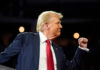
On December 7, 2025, President Donald Trump hosted the Kennedy Center Honors and made it clear this would not be business as usual. Instead of quietly rubber-stamping a closed-door list from arts insiders, Trump openly told Americans he was “very involved” in the selection process and even blocked “a couple of wokesters” pushed by the board. For viewers tired of lectures from progressive celebrities, the message was unmistakable: the cultural deck is no longer stacked only for the Left.
The honorees themselves underscored that shift. Country icon George Strait, rock warriors Kiss, action star Sylvester Stallone, Broadway legend Michael Crawford, and disco great Gloria Gaynor represent decades of work beloved by ordinary Americans. These are performers who entertained factory workers, veterans, small business owners, and churchgoers long before activists demanded ideological litmus tests. By elevating artists with broad, cross-generational appeal, Trump signaled that patriotism and merit still matter more than Twitter approval.
From Boardroom Shake-Up to “Big Beautiful Bill” Windfall
The 2025 ceremony did not appear out of thin air; it followed a major housecleaning at the Kennedy Center. In February, the Trump administration removed the sitting Board of Trustees, longtime chair David Rubenstein, and president Deborah Rutter, replacing a leadership class that had long operated with minimal accountability to voters or taxpayers. For many conservatives, that move answered years of frustration with federally backed institutions drifting left while expecting endless public funding.
Trump followed the leadership shake-up with real money on the line. In July, he signed the so-called “Big Beautiful Bill,” boosting the Kennedy Center’s federal funding to $257 million—roughly six times its usual annual appropriation. Republican lawmakers in the House even tied additional dollars to renaming key venues after Melania Trump and potentially Trump himself. Rather than writing blank checks to an establishment that often sneered at middle America, Trump used leverage: if taxpayers invest more, institutions must reflect and respect the nation that funds them.
Honors Selection Becomes a Front in the Culture War
For decades, Kennedy Center honorees were chosen through a long, insulated process involving board members, public input, and consultations with past recipients. That structure was sold as “nonpartisan,” yet in practice it allowed a relatively small slice of cultural elites to define excellence while nudging selections steadily left. Trump’s open role in choosing the 2025 class shattered that tradition and sparked predictable complaints that he was “politicizing” the arts.
Yet the president’s own description of his involvement reveals a different fight. By vetoing unnamed “wokesters,” Trump was not demanding partisan loyalists but drawing a line against performers who had turned their platforms into megaphones for divisive ideology. Aligning recognition with broadly shared American values—hard work, resilience, patriotism—tracks closely with how many conservatives understand the arts at their best. That contrast helps explain why some in the arts establishment cried foul while millions of viewers saw overdue course correction.
Internal Resistance and Elite Backlash to the New Direction
The pushback was not theoretical. Matthew Winer, the longtime executive producer of the Honors broadcast, resigned after Trump announced his active role in picking recipients. His departure exposed real resistance inside the institution to ceding any control or reconsidering priorities. For staff who had grown comfortable with the old order, an assertive president insisting on ideological balance and respect for traditional audiences represented an unwelcome disruption.
Critics also seized on Trump’s decision to skip the traditional pre-show dinner with honorees, calling it disrespectful and inconsistent with his earlier enthusiasm. That absence clearly disappointed some attendees and handed opponents a talking point. Yet the larger reality remains: the show went forward, the honorees were celebrated on CBS and streaming platforms, and millions of Americans saw a White House willing to stand up to entrenched cultural power centers that rarely answer to the public they claim to represent.
President Trump on Saturday celebrated a star-studded lineup of the nation’s most “acclaimed and renowned performers” as he gave out medals to this year’s Kennedy Center Honorees in the Oval Office.
Dressed in a tuxedo, he awarded gold-and-navy medallions to actor Sylvester… pic.twitter.com/WoqrOnW6YD— Victoria 🇺🇸⏳🗽🚔 (@Loveof1776) December 7, 2025
Those dynamics fit into a broader second-term agenda aimed at rooting out what the administration labels “improper, divisive, or anti-American ideology” from federally funded cultural institutions. Trump has ordered reviews of the Smithsonian, removed the Librarian of Congress, moved to eliminate the National Endowments for the Arts and Humanities, and slashed grants routed through bureaucracy-heavy programs. For conservatives who believe Washington has long subsidized cultural contempt for faith, family, and the Constitution, the Kennedy Center showdown reads less like overreach and more like long-awaited accountability.
Sources:
Trump was ‘very involved’ in Kennedy Center honorees’ selection, vetoed ‘wokesters’
Inside Trump’s transformation of the Kennedy Center
President Trump skips Kennedy Center Honors dinner, facing criticism from attendees