

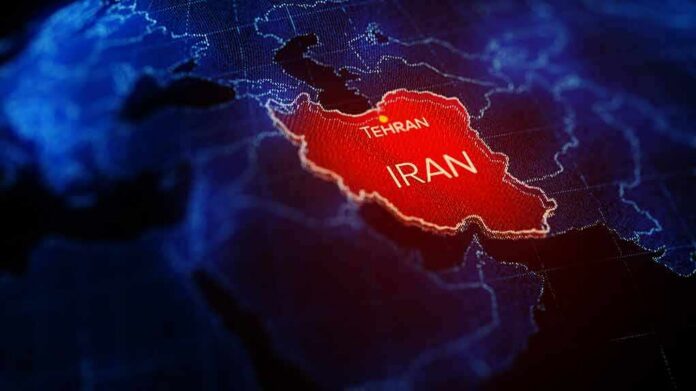
As U.S. strikes pound Iran’s military for the ninth straight day, Secretary of State Marco Rubio now claims Tehran’s navy, air force, and missile forces are “in shambles” — raising hard questions about what victory really means and how long this dangerous standoff over the Strait of Hormuz can last.
Story Snapshot
- Rubio says Iran’s navy, air force, and missile forces are largely destroyed and its economy badly hurt.
- U.S. Central Command reports repeated strikes on Iranian missile, drone, naval, and surveillance sites to protect shipping.
- Independent reporting shows Iran still capable of hitting U.S. bases and allies across the region.
- The war is feeding fears on both right and left that Washington is trapped in endless conflict while everyday Americans pay the price.
Rubio’s Claim: Iran’s Military ‘In Shambles’
Secretary of State Marco Rubio has used recent public remarks to paint a stark picture of Iran’s condition after months of fighting and repeated U.S. airstrikes. He has said Iran “lacks a navy,” has “no air force,” and that its air defenses are “nonexistent,” arguing that U.S. operations have destroyed a large share of Iran’s missile and drone launch capacity. In other comments, Rubio has stressed that the core goal is to wipe out Iran’s ballistic missiles, one‑way attack drones, and naval threat to global shipping.
Rubio also links Iran’s military damage to deep economic pain. He has claimed the U.S. blockade and sanctions are costing Tehran “hundreds of millions of dollars a day” in lost oil sales and have helped trigger hyperinflation and trouble paying its bills. For many Americans, this sounds like a clear win on paper. But it also fits a familiar pattern where Washington declares a foreign foe broken, even as fighting drags on, costs mount, and the real risks to U.S. troops and the global economy remain far from settled.
What U.S. Strikes Have Actually Hit
U.S. Central Command, which runs military operations in the region, says American forces have struck a wide range of Iranian targets near the Strait of Hormuz. Recent statements describe attacks on air defense systems, coastal radar, maritime capabilities, missile and drone launch sites, command centers, communications networks, and coastal surveillance sites meant to “degrade” Iran’s ability to attack commercial ships. Rubio and Pentagon officials frame these strikes as a focused campaign to destroy Iran’s conventional “shield” so it cannot threaten neighbors or hide a possible future nuclear program behind a wall of missiles and drones.
These actions follow repeated Iranian attacks on merchant ships and efforts to close parts of the Strait of Hormuz, a narrow waterway that carries a major share of the world’s oil and gas. U.S. officials argue they are acting to keep that route open and to protect civilian mariners. Critics note that every wave of strikes also risks civilian casualties and further escalation, and that many Americans feel once again dragged into a Middle East war they never asked for, while elites in Washington talk strategy and ordinary people worry about fuel prices and instability.
Iran’s Response: Still Able to Hit Back
Even as Rubio insists Iran is now militarily broken, independent reporting shows Tehran can still strike U.S. bases and regional partners. During this war, Iran has launched missile and drone attacks on American installations across several Gulf states, as well as on Israel and other countries. Satellite and investigative work has found damage or destruction to at least 228 structures and pieces of equipment at U.S. and shared bases in eight countries, including hangars, barracks, fuel storage, aircraft, and key radar and communication systems.
Analysts cited by major outlets say Iran kept a large share of its pre‑war missile inventory, even after heavy U.S. strikes, and that the bigger question is how fast it can rebuild. Some experts estimate that Iran’s missile, drone, and naval defense industrial base has been damaged by more than 80 percent, but not fully erased. This means Iran may be weaker and more stressed, as Rubio claims, yet still dangerous. For Americans watching from home, that gap between “shambles” and “still able to hit back” feeds a growing sense that official victory talk often hides how messy and costly these wars are in practice.
Shared Public Frustration With Washington’s War Footing
Many conservative voters see Iran as a real threat but worry that endless foreign wars, high defense spending, and global entanglements come while Washington fails to secure the border, cut waste, or lower everyday costs at home. Many liberal voters are alarmed by civilian casualties, regional chaos, and what they view as a pattern of “preemptive” wars that bypass serious diplomacy. Both groups increasingly fear that leaders in both parties listen more to defense contractors, lobbyists, and powerful insiders than to working families.
The Iran war fits this deeper worry. On paper, the U.S. has carried out highly successful precision strikes and built a tight blockade around Iranian shipping. In reality, the Strait of Hormuz has seen repeated attacks, global markets stay on edge, and U.S. bases and allies remain under threat. Rubio’s message—that Iran is now “in shambles” and the U.S. is in a strong position—may be partly true militarily. But for many Americans, the bigger question is whether Washington’s war‑first reflex is yet another sign that the federal government serves its own priorities and the deep‑state “strategists” rather than the citizens who bear the risks and pay the bills.
Sources:
redstate.com, cnn.com, npr.org, cnbc.com, aljazeera.com, axios.com, nytimes.com, reuters.com, youtube.com, bbc.com, facebook.com, centcom.mil, omidsouresrafil.substack.com, socialeurope.eu, cfr.org