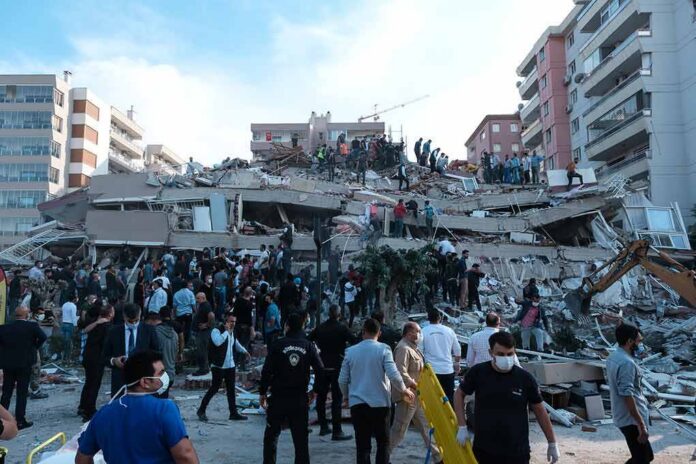
Colombia’s earthquake death toll kept climbing as rescue crews searched collapsed buildings and officials tried to keep up with the damage.
Quick Take
- Local authorities now say the quake has left **240 dead**, far above the first national count.
- The first official briefing listed **111 dead** and **87 injured** as an emergency response began.
- Later reports showed the toll moving through **132**, **169**, **224**, and now **240** as more areas were counted.
- Rescue work is still active, and reports also point to heavy damage, missing people, and overwhelmed local systems.
Death Tolls Rose as More Regions Were Counted
Local authorities in Colombia now report at least 240 deaths after the magnitude 7.4 earthquake that struck western Colombia and the Chocó region. Earlier reports from the same disaster moved from the president’s first count of 111 dead to higher totals as officials in different areas updated their figures. Reuters, the New York Times, NBC News, and ABC News all described the toll as rising during the live response window.
The changing numbers do not point to a new event. They show how fast disaster accounting can move when roads are broken, buildings are still unstable, and some towns are harder to reach than others. The reporting makes clear that the earthquake caused a large mass-casualty emergency, not a small localized incident. That matters because the scale of the deaths shapes how the public judges government readiness, emergency planning, and the speed of rescue.
What Officials Said in the First Hours
President Abelardo de la Espriella first told the country that 111 people had died and 87 had been injured. He also declared a national state of emergency and said the government was deploying all available resources to save lives. Reuters reported that he called rescue work the first priority, and DW said he also described major damage to homes, schools, and health centers.
Those early figures were only a snapshot. Reuters later noted that local media cited 132 deaths, but the source of that figure was unclear. The New York Times then reported growing regional counts across Risaralda, Valle del Cauca, Chocó, Manizales, and Antioquia, while NBC News reported at least 169 dead. ABC News later said the total reached 224, with rescue efforts still underway.
Why the Latest Total Matters
The jump to 240 deaths shows why early disaster numbers often change. The latest reports also point to a wider emergency than a simple body count can show. ABC News said more than 2,700 people were missing, while other reports described trapped residents, damaged hospitals, and collapsed buildings. That mix of missing people, injuries, and structural failures suggests the final toll could still shift as more records are checked.
The number of deaths after the #earthquake in #Colombia has been adjusted upwards to 224 a day after the earthquake. Far more are MISSING
In total, it is estimated that over 3,000 people are #missing and many of them are probably in collapsed buildings.
TV2— Maqsood Asi (@MaqsoodAsi) August 11, 2026
The larger lesson is familiar to anyone who has watched major disasters unfold. Public officials often give the first count before the full picture is known, and the media then updates that count as new local reports come in. In a country already dealing with distrust in institutions, unstable numbers can deepen anger on both the left and the right. Many readers will see the same problem: government systems that react fast in a crisis but still struggle to give one clear, trusted ledger.
Sources:
abcnews.com, reuters.com, nytimes.com, nbcnews.com