

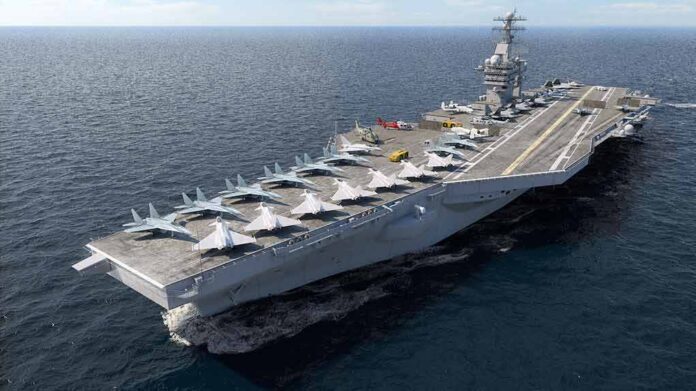
Eight sailors in the USS Abraham Lincoln carrier strike group attempted suicide during a grueling war deployment, according to a letter from the acting Navy secretary to Congress.
Story Snapshot
- Acting Navy Secretary Hung Cao reported eight suicide attempts across the Lincoln strike group.
- The count spans the carrier, air wing, destroyers, and attached staffs, not only the ship’s crew.
- No deaths from suicide were reported during the deployment.
- The deployment included combat operations against Iran and a modern record for time at sea.
What the Navy Told Congress
Acting Secretary of the Navy Hung Cao told Senator Kirsten Gillibrand that eight sailors assigned to the USS Abraham Lincoln carrier strike group attempted suicide during the deployment. Cao said the figure covers the carrier, the air wing, destroyers, and all embarked squadrons. He also said no service members died by suicide during the deployment. Multiple outlets reported the same count from the same letter, giving the number broad public visibility.
The letter followed months of scrutiny of life aboard the Lincoln and its escorts. Reporters and lawmakers focused on long stretches at sea, supply strains, and high operational tempo tied to war operations against Iran. Coverage noted the strike group set a modern record for time at sea while conducting combat missions, adding stress to crews already working intense schedules. These facts form the deployment backdrop, but they do not prove why each attempt occurred.
Scope of the Count and Why It Matters
The eight attempts are not limited to the carrier’s ship’s company. The Navy’s letter says the total includes the air wing, destroyer squadron staff, escorting destroyers, and all embarked aviation units. That detail matters because headlines can imply the cases were on the carrier alone. Clear scope prevents confusion and keeps attention on the broader strike group, where sailors share the same mission load and many of the same stressors.
Earlier public statements from Navy officials said they had not identified an increase in suicidal ideation or attempts aboard the Lincoln, which created a tension with the later figure shared with Congress. That shift fits a known pattern in military mental health reporting: early broad statements, then narrower, official counts released later through formal channels. The new number is now the on-record baseline for this deployment’s attempts.
The Deployment Stress Picture
Research on carrier deployments shows underway life brings long work hours, limited privacy, sleep disruption, and tight medical access, all of which raise stress and mental health needs. Navy medical doctrine has embedded psychologists and technicians on carriers for decades to manage such pressures and triage care at sea. These systems help, but heavy war tempo and long deployments can still strain crews and overwhelm support pipelines, as recent reporting around Navy mental health has described.
8 sailors aboard USS Abraham Lincoln attempted suicide, Navy confirms https://t.co/cDUQAYdn3W
— Cary Nelson (@CaryNelson20) September 24, 2026
The Lincoln strike group’s operational record adds weight to these concerns. The ships conducted combat operations against Iran and spent an unusually long time at sea, which pushes sailors and systems hard. These facts explain why Congress is pressing for answers and why the Navy is documenting attempts across the full strike group. Officials say no deaths occurred during the deployment, a critical point that shows interventions and shipboard response likely saved lives.
What Comes Next
Congress can seek more detail on where and when each attempt occurred, how commands responded, and whether staffing and policies matched the need. The Navy can clarify definitions, improve timely data sharing with lawmakers, and compare this deployment to prior strike groups to see what changed. Those steps would move the debate from headlines to fixes: better access to care at sea, steadier resupply and connectivity, and schedules that do not burn out crews during long war missions.
Sources:
mediaite.com, cnn.com, thehill.com, newsweek.com, ynetnews.com, marineinsight.com, x.com, wsws.org