Washington moved a $2.8 billion, 40,000-bomb sale to Israel forward even as critics warn the weapons could fuel more civilian deaths in Gaza and Lebanon, raising hard questions about U.S. responsibility and oversight.
Story Snapshot
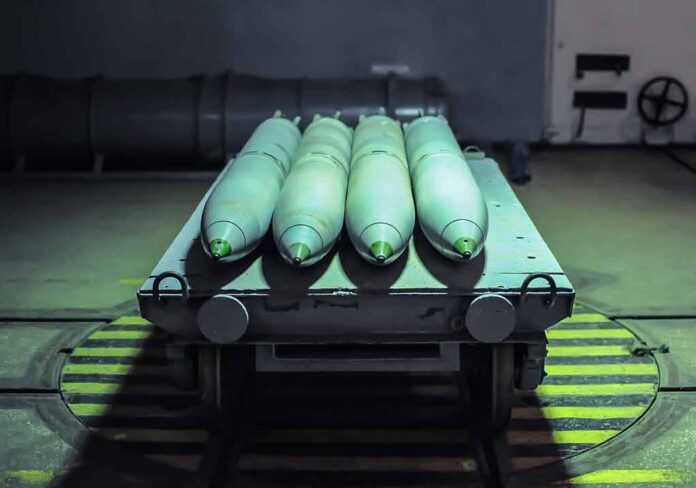
- The package reportedly includes 20,000 MK-84 and 20,000 BLU-117 two-thousand-pound bombs.
- The Biden administration previously paused similar bombs over mass-casualty concerns in Gaza.
- A top House Democrat placed a hold, citing legal and humanitarian risks.
- The State Department says the sale strengthens Israel’s self-defense and U.S. interests.
What the new package includes and why it matters
News reports say the deal totals $2.8 billion and includes about 40,000 heavy bombs, split between 20,000 MK-84s and 20,000 BLU-117s. These are two-thousand-pound munitions with a wide blast radius. Reporters tie them to past Israeli strikes in Gaza and Lebanon that caused large civilian harm. The size and number make this among the largest recent U.S. transfers of such munitions to Israel. These details frame the political and moral stakes of the decision.
The Associated Press reported these are the same bombs the Biden administration paused earlier over mass-casualty concerns. That history adds weight to today’s debate. It shows U.S. officials have long worried about civilian harm tied to large munitions in dense areas. Critics argue this package risks repeating that cycle. Supporters say Israel faces serious threats and needs strong tools to defend itself and deter enemies.
How Congress and the administration are clashing
The fight is not just policy talk; it has real process moves. The top Democrat on the House Foreign Affairs Committee placed an informal hold on the transfer, signaling doubts about how these bombs would be used and whether safeguards exist. That step does not kill the sale on its own, but it raises the political cost. It also spotlights public concern about civilian protection and U.S. law compliance.
The administration’s formal line stresses alliance needs and legal footing. The State Department says the package will strengthen Israel’s defense, protect key sites, and serve United States national interests. It also argues the sale supports Israel’s right to defend itself in line with international law. Those claims echo decades of policy and point to a wider regional threat picture. They also seek to reassure voters that guardrails remain in place.
Legal, ethical, and taxpayer angles at the center
Some coverage says the package would use Foreign Military Financing, which means U.S. taxpayers help fund the purchase. That raises a core concern shared by many on the right and left: whether Washington is careful with public money when lives are on the line abroad. Backers argue the cost supports a key ally against hostile actors. Opponents argue taxpayer funds should not underwrite tools that can kill civilians in crowded neighborhoods.
Advocacy groups and some lawmakers question whether the sale aligns with U.S. statutes that limit aid when partners commit human rights abuses. They point to documented civilian harm in Gaza and argue that very heavy bombs in urban zones pose known, unacceptable risks. However, the reporting provided does not establish a court-tested finding that this specific package makes the United States legally complicit. The evidence links bomb types to harm, but not serial numbers to specific strikes.
What is known, what is missing, and why it divides Americans
Reporters rely on officials and summaries for key facts. The public still lacks the full transfer documents, any end-use conditions, and monitoring plans. We also do not have strike-level data linking these exact bombs to any single attack after this sale. Those gaps do not erase the risk questions. But they limit firm legal conclusions about U.S. complicity. The strongest case today rests on scale, weapon type, and recent battlefield history, not on disclosed targeting files.
This story lands in a weary public mood. Many Americans see a Washington machine that moves giant deals fast but struggles with care, clarity, and accountability. Conservatives worry about blank checks, global entanglements, and elites who never pay a price for bad calls. Liberals worry about civilian deaths, unequal power, and policies that ignore human rights. Both camps doubt Congress can check the executive branch when emergencies are invoked and oversight gets rushed.
Sources:
military.com, nytimes.com, abcnews.com, thehill.com, aljazeera.com, dawnmena.org