

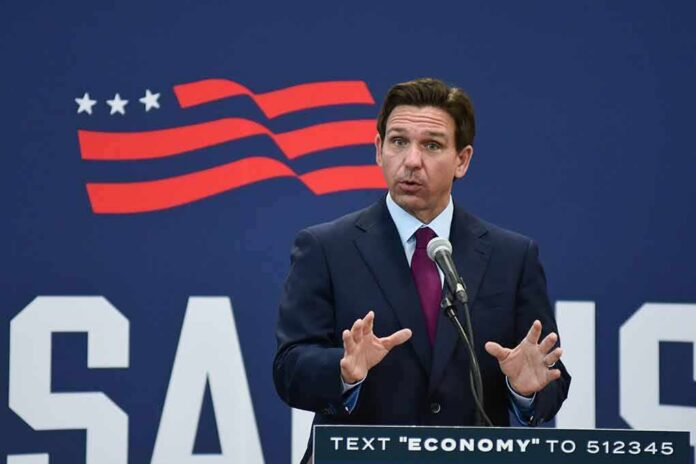
Ron DeSantis renewed his attacks on Anthony Fauci, highlighting years of sharp clashes that turned pandemic policy into a proxy fight over trust in government.
Story Highlights
- DeSantis repeated that Florida “chose freedom over Fauci-ism,” a theme he used for years.
- Records show DeSantis praised Fauci early in 2020, then shifted to hard criticism later.
- The feud reflects a larger blame battle over pandemic rules and who paid the price.
- Merch, ads, and viral clips helped turn policy debates into culture-war symbols.
What DeSantis Said And Why It Landed
Florida Governor Ron DeSantis again framed Anthony Fauci as the face of lockdowns, mandates, and school closures. DeSantis said Florida rejected that approach and “chose freedom over Fauci-ism,” a line he used across speeches, ads, and campaign stops. He argued that top federal voices hurt livelihoods and learning. He also said he would have fired Fauci if he had been president. Those points reinforced a message aimed at voters who blame Washington for pandemic-era harm.
DeSantis did more than speeches. His team sold “Don’t Fauci My Florida” shirts and koozies. The slogan turned policy anger into a brand and a rally cry. The items sold as cases rose, drawing cheers from supporters and criticism from opponents who saw it as mockery during a surge. The merchandise showed how public health debates shifted from medical charts to culture-war signals that fit on a shirt.
The Record: From Early Praise To Open Warfare
In spring 2020, as the virus spread and uncertainty was high, DeSantis publicly praised Fauci for “really doing a good job.” Those remarks, later surfaced by national media, showed that the governor’s stance evolved as conditions and politics changed. By 2021 and 2022, DeSantis blasted Fauci over masks, school rules, and restrictions, and said Florida took a different path. The arc, from praise to attack, mirrors how many leaders adjusted messages as data and public mood shifted.
DeSantis also tried to draw a contrast with President Trump. He argued Trump “turned the country over to Fauci” in March 2020. He said he would have removed Fauci and kept society more open. That line became a key wedge in Republican debates over who handled the crisis better. Fact checks and reporting revisited claims on mandates and awards, adding detail and pushback to the back-and-forth.
Why Voters On Both Sides Care
Parents, workers, and small business owners still carry the costs of closures and sudden rules. Many believe Washington agencies changed guidance too often and answered to politics. Others believe early cautions saved lives when hospitals were strained. The DeSantis–Fauci clash taps both views. It asks whether centralized authority protected health or trampled daily life. It also asks who gets blamed for lost jobs, learning gaps, and frayed trust in experts.
Despite realizing by June 2020 that lockdowns, masks and school closures weren't impacting the spread of COVID, Fauci went on to criticize Ron DeSantis and other politicians months and years later for reopening their states or refusing to mandate masks
Unforgivable dishonesty https://t.co/5ZlcWZhowg
— Ian Miller (@ianmSC) July 27, 2026
Evidence battles also continue. Supporters of DeSantis cite Florida’s quicker reopening and bans on vaccine passports. Critics say the governor’s ads and barbs left out context on why guidance changed over time as scientists learned more. One review of a DeSantis ad said it clipped Fauci’s remarks and missed reasons behind updates on masks and schools, which evolved with new data and variants. These disputes show how complex facts often get reduced to simple clips.
How The Fight Became A Symbol Of Bigger Problems
National outlets described how Trump and DeSantis, once aligned, began “gaslighting each other” over their Covid records. Each tried to paint the other as too strict or too lax. That struggle tracked a larger trend: leaders recasting the past to fit voter anger today. The result pulled attention from hard audits of what worked and what failed, and toward viral lines and social media skirmishes that reward heat over detail.
The story also fits a wider public mood. Many Americans on the right and left think the federal government put politics over people. Conflicting messages, slow data releases, and moving targets on rules fed that view. When leaders fight over Fauci, they are also fighting over trust in institutions, who bears risk in a crisis, and who pays when decisions go wrong. Until those questions get honest answers, the clash will keep replaying in new forms.
What To Watch Next
Watch for fresh document releases, hearing transcripts, and state-level reviews that compare health outcomes with policy timing. Look for clear timelines that tie guidance changes to data shifts, not headlines. Also follow how leaders in both parties talk about school loss, excess deaths, and small business closures. These measures, not slogans, will help voters judge choices made in 2020 and 2021 and decide what playbook to use in the next crisis.
Sources:
youtube.com, foxnews.com, thehill.com, paragoninstitute.org