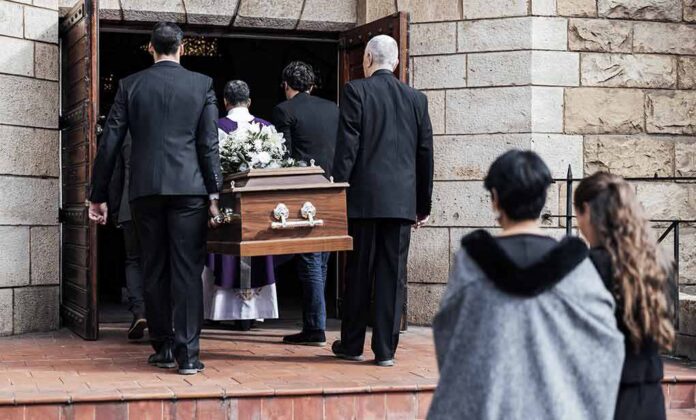
As four F-16s roared low over Columbia’s State House to honor Lindsey Graham, many Americans saw both a powerful tribute and a reminder of how far Washington has drifted from the people those ceremonies are supposed to serve.
Story Snapshot
- An F-16 flyover over South Carolina’s State House honored the late Senator Lindsey Graham as part of his state funeral.
- The jets came from the 169th Fighter Wing at McEntire Joint National Guard Base and were framed as a salute to Graham’s long Air Force service.
- The flyover paused the funeral procession in Columbia around 11 a.m. before it moved on to First Baptist Church for the service.
- The ceremony highlights how grand military honors for political leaders clash with growing anger at a federal government many see as serving elites, not everyday citizens.
How the F-16 tribute unfolded over Columbia
On the morning of July 29, crowds lined the streets around the South Carolina State House in Columbia as Lindsey Graham’s flag-draped casket left the building at about 10:45 a.m. His remains were carried in a formal procession, with South Carolina State Guard caisson units and law enforcement honor guards leading the way. Coverage from local and national outlets described a pause in the procession for one of the day’s most symbolic moments: a planned F-16 fighter jet flyover above the State House grounds.
Reports from Greenville media and others said the procession from the south side of the State House toward First Baptist Church would “begin at 10:45 a.m. with a F-16 flyover at 11 a.m.” A separate live segment explained that the procession would stop on the north side, facing Gervais Street, for a “military tribute” before continuing down Main Street toward the church. In this script, the aircraft pass was not a casual airshow but a key marker in the funeral timetable, timed to the minute and woven into the route.
The jets, the unit, and Graham’s military legacy
Broadcasters identified the aircraft as four F-16 fighter jets from the 169th Fighter Wing based at McEntire Joint National Guard Base outside Columbia. During live coverage, one commentator called the flyover “a traditional military salute” and said it was a fitting way to honor Graham’s more than thirty years of service in the United States Air Force, where he retired as a colonel. As the jets passed overhead, a voice on the broadcast recalled Graham’s own phrase for their thunderous sound: “the sound of freedom.”
Major outlets had previewed the unit’s role days earlier. CNN reported an F-16 flyover would precede the transfer of his remains from the State House to First Baptist Church of Columbia, presenting the pass as part of a carefully planned honors package. A local news story likewise noted the ceremony was “expected to include an F-16 flyover by the 169th Fighter Wing from McEntire Joint National Guard Base, scheduled for approximately 11 a.m.” Together, these accounts show a clear link between Graham’s identity as a defense-focused lawmaker and his long Air Force career, and the decision to bring front-line jets into a public farewell.
Ceremony, symbolism, and public frustration with Washington
The flyover’s strong symbolism lands in a country where many conservatives and liberals now share a deep mistrust of the federal government. Older conservatives watching the jets may admire the show of strength yet still resent years of “forever war” spending, globalist trade deals, and Washington’s failure to secure the border. Older liberals may honor Graham’s service but see in the spectacle another sign of a government that finds money for military displays while cutting social programs and leaving the poor further behind.
The late Sen. Lindsey Graham was honored with a F-16 flyover via the 169th Fighter Wing from McEntire Joint National Guard Base during a funeral procession for the senator in Columbia, South Carolina. pic.twitter.com/LZaEzj5Sgx
— ABC News (@ABC) July 29, 2026
For both groups, the flyover exposes a widening gap. On one side stand elite rituals: state funerals, precision flyovers, and carefully scripted tributes to powerful officials. On the other side stand people who struggle with high living costs, uncertain jobs, and leaders in both parties they feel have stopped listening. Many see large public honors for senators as proof that the political class takes care of its own, while broken veterans, working families, and small-business owners fight alone for a piece of the American Dream.
Military honors and the “deep state” concern
The jets over Columbia also touch a growing fear about an entrenched “deep state” of permanent insiders. Some viewers look at the tight coordination between the military unit, state officials, and national media and see a well-oiled machine that springs into action when an elite figure dies but rarely moves as quickly for everyday citizens. That feeling does not deny Graham’s service; instead, it questions why the same level of focus and respect is so rare when veterans seek mental health care or when ordinary people face disasters.
This funeral pattern is not unique. In Washington and state capitals, high-ranking leaders often receive elaborate honors—motorcades, gun salutes, and flyovers—while ordinary funerals pass in silence. The Lindsey Graham ceremony fits that mold: a caisson procession, an F-16 flyover, and a major church service, all broadcast live. For many Americans, such events now carry a double message. They show real gratitude for one man’s service, but they also reinforce the fear that the system is built mainly to celebrate and protect itself.
What this moment says about the country’s direction
The F-16 tribute in Columbia reminds us how much power and attention the federal government can command when it chooses. It can coordinate military flights, road closures, and national media in a single morning. Yet that same system struggles to fix broken immigration rules, rein in debt, or bring down energy and housing costs. The spectacle of jets over a State House, honoring a senator who helped shape many of those policies, raises hard questions about who government truly serves.
For readers across the political spectrum, the lesson is not to reject every ceremony, but to demand that the same sense of duty and urgency be aimed at solving real problems. If leaders can choreograph four F-16s to pass over Columbia at exactly 11:00 a.m., they can also work across party lines to rebuild trust, restore fairness, and give ordinary Americans a better chance at the future they were promised.
Sources:
facebook.com, foxcarolina.com, cnn.com, youtube.com, instagram.com