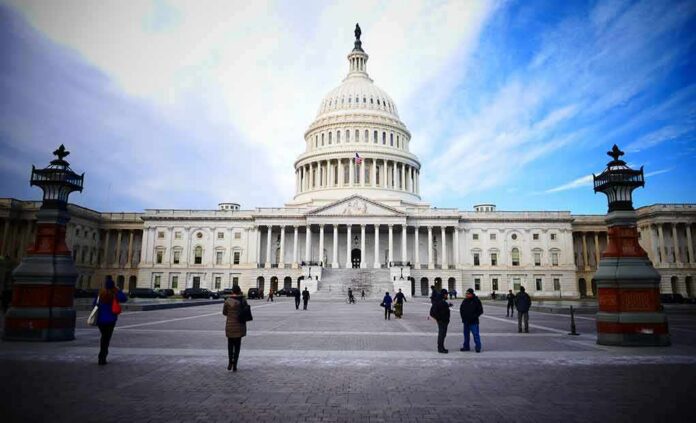
More than $1 billion in health care money for poor and disabled Americans is now frozen while Washington and two blue states fight over Medicaid fraud and documentation.
Story Snapshot
- Trump’s Health Department paused over $1 billion in Medicaid payments to California and Minnesota, citing suspected fraud and missing documentation.
- Officials say they will not send “another taxpayer dollar” until the states prove the disputed services are legitimate.
- The freeze hits high‑risk in‑home care and other services, raising fears for seniors, people with disabilities, and low‑income families.
- The move fits a broader crackdown that is cutting Medicaid spending nationwide and deepening distrust between states and the federal government.
Federal Officials Freeze Medicaid Payments Over Suspected Fraud
United States Health and Human Services Secretary Robert F. Kennedy Jr. announced that the Trump administration is pausing more than $1 billion in federal Medicaid payments to California and Minnesota because of “suspected fraud and noncompliance.” He said the Centers for Medicare and Medicaid Services would hold back over $867 million from California and more than $200 million from Minnesota until both states provide documents proving the questioned payments meet federal rules. At a news conference, Kennedy warned that the states “won’t receive another taxpayer dollar” until they show the services are legitimate and not fraudulent.
According to federal officials, the paused money targets what they call “high‑risk” Medicaid services rather than the entire programs. In California, reviews focused on certain in‑home care programs after spending growth in these services rose much faster than national trends. In Minnesota, the Department of Health and Human Services said it examined claims across 14 high‑risk service areas and found expenditures that raised billing and eligibility concerns or involved providers previously flagged in program‑integrity checks. Officials have not yet named specific providers or released detailed case examples.
California and Minnesota Programs in the Crosshairs
California’s main trouble spot is its In‑Home Supportive Services and related home‑based care, which help roughly 900,000 seniors and people with disabilities stay in their homes instead of entering nursing facilities. Federal reviewers say state spending on these services is growing at about twice the rate seen elsewhere, and they want California to explain the surge and justify the claims before money flows again. The administration had already frozen about $1.3 billion in Medicaid reimbursements to California earlier this year, making that deferral the largest of its kind in agency history.
Minnesota’s Medicaid program, known locally as Medical Assistance, covers low‑income adults, children, pregnant women, seniors, and people with disabilities. There, federal concerns center on 14 high‑risk service categories that state auditors had previously flagged, including cases of billing for care provided to deceased people and providers charging for many patients at the same time. The Trump administration had earlier suspended roughly $259 million in Medicaid payments to Minnesota over similar fraud worries, prompting state officials to warn that the threats to their Medicaid funds were unprecedented and could spread to other states.
Broader Crackdown on Fraud and Growing Federal–State Tension
The Medicaid freeze in California and Minnesota is part of a larger Trump administration push to crack down on what it calls rampant fraud in safety‑net programs. The White House recently warned all 50 states it could also freeze funding for their Medicaid Fraud Control Units if they do not aggressively pursue cases. At the same time, Health and Human Services has frozen $10 billion in child‑care funding to five Democrat‑run states, including California and Minnesota, again citing fraud and accusing some programs of “giving money to illegals.” These steps have fueled complaints that Washington is using anti‑fraud efforts to punish political rivals and cut social spending more broadly.
🚨FOX NEWS ALERT: HHS Secretary RFK Jr. and CMS Administrator Dr. Oz announce they are pausing on more than $1 billion in Medicaid payments to California and Minnesota, citing concerns over widespread fraud.
Officials say funding will resume once the states demonstrate they are… pic.twitter.com/hQvejpmyyh
— Outnumbered (@OutnumberedFNC) July 21, 2026
Behind these clashes sits a new federal strategy for Medicaid “program integrity,” which now leans on pausing and withholding funds up front instead of fixing problems after payments go out. Policy analysts note that the “One Big Beautiful Bill Act” already cut federal Medicaid funding by about 15 percent over ten years, with millions expected to lose coverage. That reality makes any added freezes feel less like simple fraud control and more like part of a long‑term squeeze on health care for the poor and sick. States, hospitals, and patient advocates warn the uncertainty could disrupt care, delay payments, and push already‑strained systems closer to the breaking point.
What It Means for Ordinary Americans and the Trust Gap
For people in California and Minnesota who rely on Medicaid, the immediate question is whether their care will stop or be delayed while politicians argue over paperwork. Federal officials insist the money is only paused and will restart once states prove the disputed claims are valid. But state leaders and health advocates say repeated freezes and threats make it harder to plan budgets, keep clinics open, and assure patients their services are safe. Both conservatives and liberals who already feel the federal government serves elites first may see this latest fight as more proof that regular Americans are the ones caught in the middle when Washington flexes its power.
Sources:
facebook.com, theguardian.com, youtube.com, foxnews.com, calmatters.org, thehill.com, nytimes.com, npr.org, mn.gov, fox5ny.com