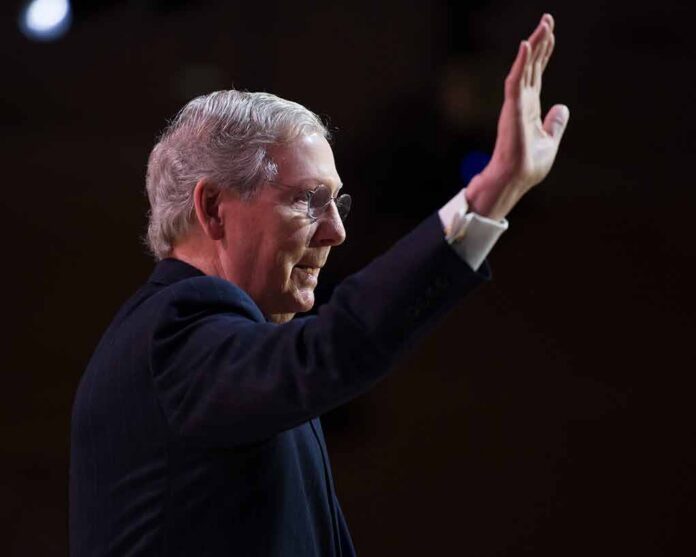
John Thune’s Senate sent a blunt message to the GOP base Saturday morning: the chamber would not be bullied into rewriting its rules for the SAVE Act.
Quick Take
- Senate Republicans moved quickly on a pre-dawn schedule, then chose adjournment instead of a longer fight over the SAVE Act.
- Thune has repeatedly said the votes are not there to end the legislative filibuster or force the bill through by procedure.
- The fight has become a public loyalty test inside the Republican Party, with Trump and his allies pressuring Thune to do more.
- The clash shows how Senate math, not just political will, is shaping one of Trump’s top priorities.
What Happened Saturday Morning
Senate Republicans held an early morning vote around 5 a.m. to confirm Todd Blanche as the 88th attorney general, then moved to adjourn instead of stretching the session into a fight over the August recess. The move gave Thune and the Senate GOP the break they wanted, but it also deepened the anger of activists who wanted the chamber to stay in Washington and keep pushing the SAVE Act.
The result was not a surprise in the Senate itself. Thune has said the chamber does not have enough votes to end the legislative filibuster, and other reporting said he has framed the issue as a simple math problem, not a lack of effort. That has frustrated Trump supporters who want tougher action on the bill and see the delay as another sign that GOP leaders are protecting the rules instead of forcing a win.
Why Thune Says the Votes Are Missing
Thune’s defense rests on the Senate’s 60-vote threshold and on the lack of support for changing it. He has said Republicans are not getting rid of the legislative filibuster, and he has also pushed back on the idea that a talking filibuster would solve the problem. In his view, the chamber lacks the votes for either move, which makes a hard push look more symbolic than real.
That argument matters because it shifts the blame away from leadership and onto Senate arithmetic. The House already passed the SAVE Act, which would require proof of citizenship for voter registration, but the Senate is built to slow bills down when one party lacks broad support. For Thune, forcing a doomed vote would waste time and likely fail anyway. For his critics, that is exactly the excuse they have heard too often from Washington.
The Base Wants a Fight, Not a Floor Lesson
The dispute has turned into a bigger test of Republican loyalty. Trump has attacked Thune’s handling of the issue, White House voices have raised the pressure, and conservative media has treated the standoff like a referendum on whether Senate leaders still answer to the base. That kind of fight reflects a wider distrust on both sides of the aisle, where many voters believe elected officials care more about power than results.
Pay attention to your supporters, Mr President.@realDonaldTrump . Call the Senate back ASAP. Fire Thune. Pass the Save Act. We are losing patience and faith in who we voted for.
— JustKristy (@JustKristy5) August 9, 2026
Saturday’s adjournment will probably be read through that same lens. Supporters of Thune will say he is protecting Senate procedure and refusing to pretend there is a shortcut that does not exist. Opponents will say he is hiding behind procedure to avoid a fight the base clearly wants. What is clear from the record is that the Senate GOP chose not to keep the chamber open for the kind of procedural showdown Trump demanded.
The Bigger Cost of the Standoff
This fight also shows how little trust remains between party leaders and their own voters. The SAVE Act has become more than a voting bill. It is now a symbol of whether Republicans will use power aggressively or settle for process talk. That is why the clash has spread far beyond the Capitol. It speaks to a public mood that sees Washington as cautious, slow, and too comfortable with excuses.
For Thune, the math is the message. For the GOP base, the message is that Senate leaders can still say no, even when Trump says go. That tension is likely to keep shaping the rest of the year, especially if the Senate keeps treating major promises as fights it cannot or will not finish.
Sources:
townhall.com, thehill.com, politico.com, facebook.com, time.com, pbs.org, foxnews.com, cnn.com, electionlawblog.org, youtube.com, axios.com, congress.gov, democracydocket.com, breitbart.com, punchbowl.news, nbcnews.com, abcnews.com, instagram.com