

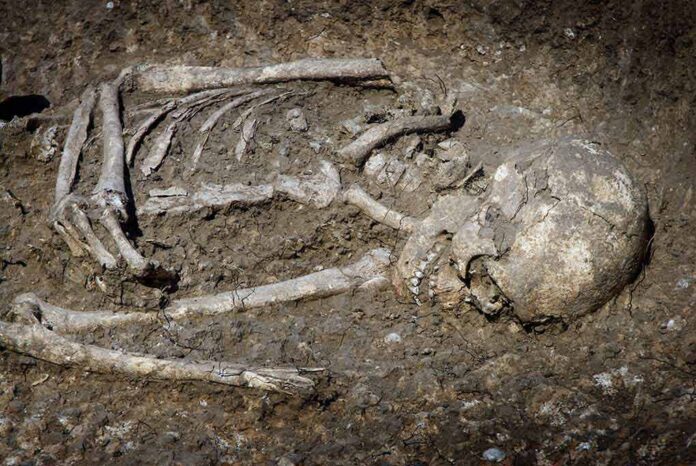
A new forensic study reports lethal head wounds on 5,000-year-old skulls from royal tombs in Egypt, renewing evidence of human sacrifice.
Story Snapshot
- Researchers found likely fatal trauma on 18 of 46 skulls from graves near First Dynasty rulers.
- Injuries include fractures and sharp-force blows consistent with deliberate violence.
- Subsidiary graves cluster around royal tombs at Umm el-Qa’ab, supporting an attendant-burial link.
- Scholars still debate causes of death for people without skull injuries and the scale of sacrifice.
What the new study found in the royal cemeteries
Roselyn Campbell’s team reexamined 46 skulls from subsidiary graves near the tombs of early Egyptian rulers at Umm el-Qa’ab. Eighteen showed fractures and other wounds that could have caused death. The patterns include linear breaks across the skull, a penetrating injury to one side, and a chopping blow near an eye. The skulls came from graves arranged around rulers like Djer, Djet, and Meretneith. The findings strengthen the case that some attendants died violent deaths tied to royal burial rites.
The subsidiary graves formed dense rings around First Dynasty royal tombs. Early excavators argued these were retainer burials, meaning people were killed to serve the king in the afterlife. The new trauma data offers physical support for that idea. The practice also seems time-bound. Clusters are strong in the First Dynasty and fade by the Second Dynasty. That pattern points to a short-lived institution linked to the rise of the united state and new royal power at Abydos.
Where the debate stands and what remains uncertain
Not every skull showed injuries. That gap matters. Some people may have died naturally, or by methods like asphyxiation, which leave few bone marks. Earlier arguments noted that some graves were sealed alone or in small groups, not as one mass event. The new study narrows the debate by showing clear violence in many cases, but it does not prove that all attendants were sacrificed. The cause of death for the others remains open to test and evidence.
The sample also carries limits. The skulls came from a historical collection, not a full census of the cemetery. Preservation and past digging choices may bias which skulls survived and were studied. The study reports trauma, but it cannot yet name the exact weapons or steps used. No known First Dynasty text states that attendants were killed for a king. The case rests on injuries, grave layout, and timing rather than a direct written order or eye-witness record.
Why this matters beyond ancient Egypt
The story shows how power treats people as means to an end when checks are weak. Royal image and ritual needs shaped life and death for court members. Many Americans see echoes today when elites protect their own status while regular people bear the cost. This research is a sober reminder. When leaders claim a higher purpose, citizens should ask who pays the real price, and demand proof, transparency, and limits that defend human dignity.
Purdue reexamined 46 skulls from First Dynasty royal tombs at Abydos: 18 show probable lethal head trauma.
• Fractures are mostly linear. A mace, the king's weapon in art, would leave depressed ones
• Petrie read the cracks as natural damage, then reburied most skeletons pic.twitter.com/fwTVv2o7q1— BoB (@bob_thinks) November 14, 2026
The next steps are clear. Experts can scan all available skulls, map fractures in detail, and test for weapon signatures. Teams can recheck grave notes, sealings, and labels to learn who these people were. Broader bone studies can compare age, sex, and burial rows. Each new record makes the picture sharper. The aim is not shock. It is truth that stands up to challenge, the kind that honors the dead and helps the living spot warning signs in any age.
Sources:
phys.org, smithsonianmag.com, dailynewsegypt.com