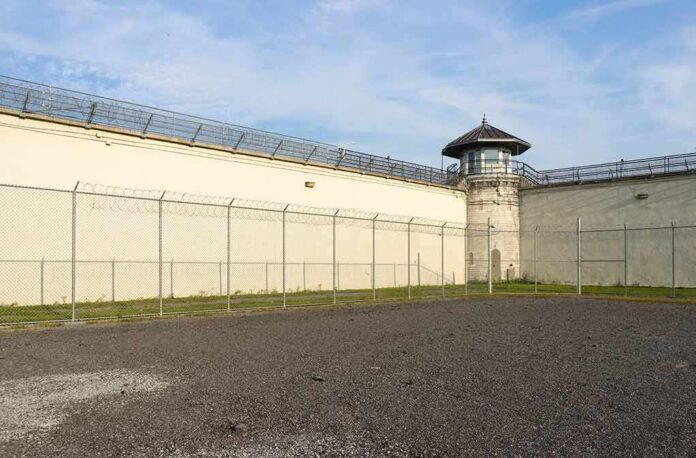
Israel cleared a legal roadblock to ring prisons holding Palestinian detainees with crocodile-filled moats, turning a fringe idea into an active plan confirmed by multiple outlets.
Story Snapshot
- Israel’s government reclassified Nile crocodiles to allow use around prisons holding Palestinian detainees.
- National Security Minister Itamar Ben-Gvir is advancing the crocodile moat concept as a deterrent.
- Reports say prison officials visited a crocodile site to study feasibility.
- The move echoes “spectacle security” tactics that draw support and backlash at home and abroad.
What Israel Changed To Make Crocodile Moats Possible
Israel’s Environmental Protection Minister Idit Silman changed the legal status of the Nile crocodile to a “cultivated” or “domesticated” wild animal. The shift removed a key barrier that had limited use of the species near detention sites. Israeli media said ministry legal advisers and the Israel Nature and Parks Authority raised concerns, but the order still went forward. The change gives the Israel Prison Service room to test moats or pens as part of perimeter security around facilities holding Palestinian detainees.
National Security Minister Itamar Ben-Gvir supports the plan and argues it would cut escapes and lower staffing costs. Israeli reporting linked the idea to a proposed high-security facility, with moats serving as a living barrier outside walls and fences. Advocates frame the reptiles as a low-tech guard force that never sleeps. Critics argue the optics are alarming and risk harm to people and animals while offering little real gain beyond shock value.
Steps Toward Implementation And Who Is Involved
Press accounts say senior Israel Prison Service officials visited the Hamat Gader crocodile site to learn about captive care and husbandry. The visit suggests the government is not only floating a headline-grabbing idea but also studying costs, conditions, and liability if crocodiles are placed near prisoners. Reports describe the concept as aimed at Palestinian “security prisoners,” and note discussion of siting in the occupied Golan Heights area near Hamat Gader.
Coverage from international and regional outlets describes a policy track that has moved from proposal to regulatory action. One summary noted that several mainstream publications verified the legal shift toward allowing crocodile deployment. That reporting tied the move to a broader political trend: using dramatic security imagery to send a strong message to the public and to prisoners, even when practical details remain unsettled.
Supporters’ Case: Deterrence And Lower Costs
Supporters say crocodile moats could scare off escape attempts and reduce the need for more guards on the outer perimeter. They claim the plan could save millions in operating costs by replacing part of the human presence with a natural barrier. Some point to past examples of harsh perimeter concepts used as deterrents elsewhere, arguing that fear can work better than more fences or cameras. Backers also say the steep public reaction proves the message is reaching would-be escapees.
Officials who favor the idea also argue that legal reclassification brings needed clarity. They say regulated captivity can protect both animals and people while granting the state more options. The plan’s defenders frame it as a measured next step, not an immediate rollout. They claim further study, staged pilots, and strict handling rules could address animal welfare and safety. They also insist any deployment would remain inside secured areas, away from the general public.
Opposition’s Case: Spectacle Over Substance And Legal Risks
Opponents argue the move favors “spectacle security” over real solutions. They say the crocodile moat is more about headlines than performance. Animal welfare groups and legal advisers reportedly warned about cruelty, escapes, and liability if a reptile injures a detainee or staff member. Critics also say the legal reclassification looks like a workaround to dodge environmental rules rather than a sound policy step grounded in evidence and best practices.
🟩KNESSET FINISHES and LEGAL SYSTEM TAKES OVER, US-IRAN ATTACKS, a LIZARD INFILTRATION, and CROC-A-TRAZ APPROVED! – Fri morn July 17 🅸🆂🆁🅰️🅴🅻 🄽🄾🅆 HEADLINES
✡️Erev (before) Shabbat, Pashat (Torah reading) Devarim – Moses begins his repetition of the Torah to the assembled…
— Israel Now news (@akivapaths) July 17, 2026
Rights groups and some security experts warn the plan could deepen tensions and raise new claims of abuse. They point to prior reports and investigations into harsh conditions in Israeli detention, arguing this policy would inflame global opinion and distract from reforms that address overcrowding, due process, and oversight. They add that crocodiles cannot replace trained staff who de-escalate conflict, respond to medical crises, and apply rules fairly inside secure zones.
Why This Story Resonates Beyond Israel
The proposal echoes a wider concern many Americans share about governments choosing flashy fixes over hard work. People on the right and left worry that leaders chase viral moments while core systems break down. This story shows that risk in clear form: a simple solution that looks tough but may not solve root problems. It also spotlights how fast a regulation can reshape policy, even over expert objections, when political pressure is high.
What To Watch Next
Watch for budget requests tied to site studies, enclosure builds, and animal sourcing. Look for court challenges targeting the reclassification order or any pilot program that follows. Track whether Israel Prison Service documents share performance data, like escape attempts, injuries, or cost changes. Monitor diplomatic reaction, since prison policy often draws global review. Finally, see if this approach spreads to other sites or fades after testing, which will show whether it was theater or a lasting change.
Sources:
telegraph.co.uk, jpost.com, abcnews4.com, israelnationalnews.com, ynetnews.com