
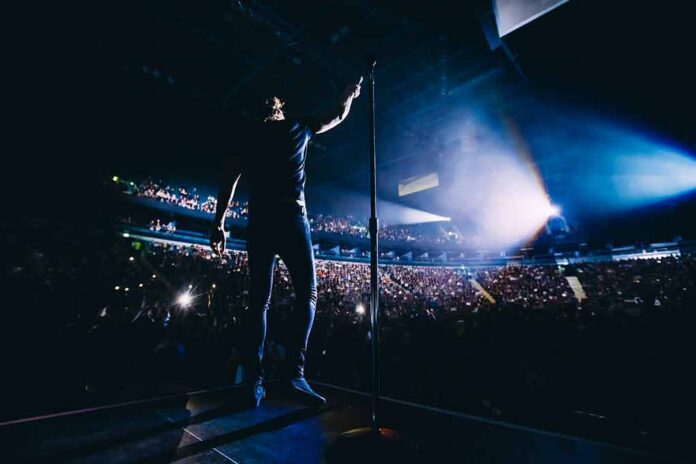
A private stadium owner’s veto over one opener helped reshape a major tour and sparked street protests in Philadelphia.
Story Highlights
- Robert Kraft said Gillette Stadium would not host Macklemore, citing “hate speech,” after pro-Palestinian messaging on stage.
- Ed Sheeran said the decision to remove Macklemore was made by the tour promoter, not by him.
- Protesters gathered outside Lincoln Financial Field and framed the move as censorship and a free-speech issue.
- Several support acts quit the tour in solidarity after the removal, showing industry fallout.
Venue Power Shapes a High-Profile Lineup
Robert Kraft, who controls Gillette Stadium, confirmed he opposed Macklemore’s slot at Sheeran’s Massachusetts shows. He said the venue should not “provide a platform for hate speech,” and argued Macklemore’s recent stage visuals and comments crossed that line. Public reports tied the removal to Macklemore’s pro-Palestinian remarks and Gaza imagery at earlier shows. These facts place the power with venue owners who can accept or reject who takes the stage on their property.
Ed Sheeran addressed the controversy and said he did not make the call. He stated the tour promoter removed Macklemore, and he wants concerts to feel safe and apolitical for young fans. Sheeran added that attendees do not expect a political forum at his shows. That message tracked with his past stance: keep the focus on music, not politics. But the timing, and the fallout, kept the debate alive as the tour moved to Philadelphia.
Philadelphia Protest Centers on Free Speech and Censorship
Outside Lincoln Financial Field, demonstrators rallied over Macklemore’s removal. Organizers from several activist groups said the decision was censorship and urged fans to speak up. Signs and chants echoed a “free Palestine” message and accused the music industry of silencing political speech. Local coverage documented the groups that planned the rally and the free-speech framing they used to mobilize people to the stadium’s gates.
Protesters argued that wealthy venue owners should not decide which views are heard at mass events. Many saw a double standard: speech about a hot war was blocked while the headliner continued. Others countered that a private stadium can set content rules, especially if it sees speech as hateful or risky. The protest showed deep frustration with gatekeepers and a belief that cultural platforms are controlled by elites, not fans or artists.
Industry Fallout and What It Signals
Several support acts left the tour after Macklemore’s exit, citing solidarity. Their response signaled that artists saw the removal as a political act with speech costs. That move also raised the business stakes for the tour, since openers help sell tickets and shape a show’s story. The mass withdrawal underscored how one booking decision can ripple through contracts, schedules, and fan trust across cities in days.
Ed Sheeran Tears Up on Stage at First Concert Since Macklemore Row; Fans Rally Behind Him
New York, Sept 20: British singer Ed Sheeran became emotional on stage at his first US concert since the controversy over rapper Macklemore's removal from his tour. Fans in Philadelphia said… pic.twitter.com/iH8O83EwlC— Voice of Germany (@NewsVOG) September 20, 2026
The larger trend is clear: private venues wield broad control that can mute political messages without a court fight. That is legal in most cases, since the First Amendment limits government, not private landlords. But fans on both left and right see a pattern they distrust. They think elites make the rules, then hide behind brand safety to avoid hard debate. Philadelphia’s protest showed that anger now follows the tour, not just the headlines.
What to Watch Next
Watch for documents that show who pushed first: the stadium, the promoter, or management. Emails, rider clauses, or security memos could clarify if “hate speech” concerns or brand risk drove the action. Also track whether more venues echo Kraft’s line, which would lock in a de facto blacklist. If more artists walk, promoters may rethink content rules, or double down. For now, the music plays inside while the speech fight grows outside.
Sources:
foxnews.com, inquirer.com, aljazeera.com, variety.com