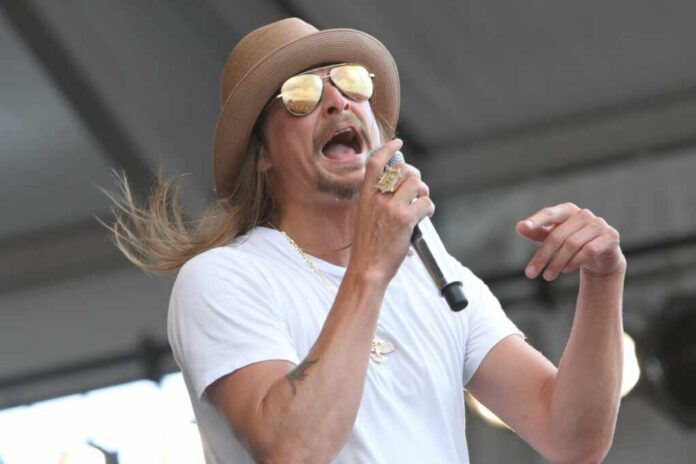
A resurfaced lyric from Kid Rock’s late-1990s catalog is being weaponized again—this time to pressure conservative events into cancelations and corporate-style “morality audits.”
Quick Take
- Lyrics from Kid Rock’s 1999 track “Cool Daddy Cool” are recirculating online, with critics pointing to a line that references “underage” girls.
- The renewed controversy is tied to conservative-facing appearances, including chatter about Turning Point USA-related events, though publicly available research here does not confirm a specific 2026 booking.
- The primary verified facts are the lyric itself, the song’s late-1990s release, and a long pattern of past controversies that repeatedly resurface during political flashpoints.
- The episode highlights a broader tactic: dredging up old material to delegitimize today’s alliances and pressure venues, sponsors, and organizers.
What the Resurfaced Lyric Is—and What’s Confirmed
Kid Rock’s 1999 song “Cool Daddy Cool,” released on the Osmosis Jones soundtrack, includes a line that critics quote as: “Young ladies, young ladies, I like ’em underage see, Some say that’s statutory (But I say it’s mandatory).” The lyric has circulated for years and periodically returns during moments of heightened attention around the artist. The available research does not include a fresh statement from Kid Rock addressing the specific line.
The documented timeline places the track’s release in 1999 and notes its later exposure through the 2001 film. The same research also indicates the resurfacing pattern: the lyric is repeatedly shared online when Kid Rock is in the news or tied to political cultural battles. Because the provided material relies heavily on a single compiled source, details about exactly who reignited the controversy in 2026 and how widely it spread remain limited here.
Why Turning Point USA Mentions Raise the Temperature
Turning Point USA is described in the research as a conservative youth organization associated with high-profile, pro-America programming—an environment where critics often try to create guilt-by-association campaigns. The research suggests that Kid Rock’s alignment with anti-woke themes and his more recent political signaling makes him a draw for conservative audiences, while opponents use his earlier shock-era lyrics to argue he should be unwelcome at “family-friendly” conservative events.
The key factual constraint is that the research itself acknowledges uncertainty: it does not confirm a specific 2026 TPUSA show date, and some claims about recent event tie-ins are described as part of an inferred pattern rather than a fully documented, current schedule. That matters for readers trying to separate verified developments from online momentum. When controversy is driven by recirculated clips and screenshots, the story often becomes less about a new action and more about applying pressure through repetition.
Kid Rock’s Broader Controversy Record Is Well-Documented
Kid Rock (Robert James Ritchie, born 1971) came up through Detroit’s late-1980s and 1990s underground scene, where shock-value lyrics were common and often designed to provoke. The research lists a range of disputes and incidents across decades, including backlash tied to performances and remarks, legal and personal controversies, and periodic flare-ups connected to public appearances. The pattern described is not a single, isolated “gotcha,” but recurring re-litigation of past behavior.
That history cuts two ways. Critics cite it to argue the “underage” lyric reflects something deeper than crude humor. Defenders, by contrast, often treat the resurfacing as another example of selective outrage aimed at a performer whose politics irritate the cultural gatekeepers. The research does not provide direct expert analysis of the “Cool Daddy Cool” lyric’s intent, nor does it document an apology or retraction tied to that specific line.
What This Means for Conservatives Watching the Culture Fight
For conservative audiences, the practical issue is less about replaying a decades-old track and more about the method: opponents frequently attempt to block conservative events by portraying organizers as endorsing every line, joke, or controversy in an artist’s back catalog. The research also notes that cancelation attempts do not always succeed, and it describes limited evidence of career-ending consequences from prior flare-ups. That reality suggests the controversy functions more as a pressure campaign than a settled public verdict.
@gregnfoster 😳 Kid Rock-Cool, Daddy Cool! You all were SOOOO right! WTF! 😂😳 #fyp #foryou #foryoupage #fypシ #creepycringylyricsseries #viral #tiktok #cringe #creepy #waitforit #whatthehell #ohno #music #rock
Even so, conservatives who care about family standards and protecting kids should be clear-eyed about the difference between defending free expression and celebrating content that crosses obvious moral lines. The available information confirms the lyric exists and that it is explicit in referencing “underage” girls, while leaving unanswered questions about context, intent, and whether any current event promotion is accurately described. With limited sourcing in the research package, the safest conclusion is narrow: the lyric is real, the resurfacing cycle is real, and the political weaponization is predictable.