A 300-year-old sealed crypt suddenly burst open beneath a historic English churchyard, revealing centuries-old secrets and raising urgent questions about the stability of aging burial grounds across Britain.
At a Glance
- An 18th-century tomb collapsed on November 9, 2025, at All Saints Church in Martock, Somerset, exposing a previously sealed underground stone crypt
- The 12-foot cavity revealed rare Ham stone limestone construction and 300 years of undisturbed burial history
- Reverend Paul Fillery and Martock Parish Council moved swiftly to secure the site and coordinate with the Diocese of Bath and Wells
- Experts attribute the collapse to gradual soil erosion from years of rainfall, raising concerns about similar risks in other historic burial structures
- The discovery has drawn significant public interest while presenting challenges for cemetery management and heritage preservation
Centuries-Old Tomb Gives Way, Exposing Hidden Chamber
The collapse occurred on November 9, 2025, just one day before Remembrance Sunday, creating an unexpected archaeological discovery at All Saints Church in Martock. The 300-year-old burial structure, constructed from rare Ham stone limestone found in only limited regions of England, suddenly failed beneath the churchyard. The dramatic structural failure created a 12-foot cavity that exposed a previously sealed underground stone crypt, revealing an archaeological window into 18th-century burial practices and construction techniques that had remained hidden and undisturbed for three centuries.
Swift Response Secures Site and Mobilizes Authorities
Reverend Paul Fillery, the vicar of All Saints Church, described the burial structure as having collapsed “quite suddenly” into what he characterized as a “large sinkhole.” The parish council responded immediately by installing protective barriers around the hazardous area to prevent public access and ensure safety. Fillery emphasized that the church is “working together with the parish council and taking expert advice from the diocese as to the best way forward,” committing to ensure the site “will be safely secured until all essential repairs are complete.” The Diocese of Bath and Wells, the ecclesiastical authority overseeing the church, has provided expert guidance and oversight for the discovery and site restoration planning.
Environmental Erosion Likely Culprit Behind Structural Failure
Expert analysis reveals that gradual soil erosion, specifically years of rainfall weakening the soil beneath the tomb, likely contributed to the structural failure. This assessment indicates the collapse resulted from long-term environmental factors rather than sudden catastrophic events. Surveyors are conducting ongoing studies to determine the full extent of damage and evaluate the stability of surrounding terrain. Questions remain regarding potential damage to adjacent burial plots and the overall stability of the surrounding ground, raising concerns about similar risks in other historic burial structures across England.
Historic Church Attracts Attention for Archaeological Significance
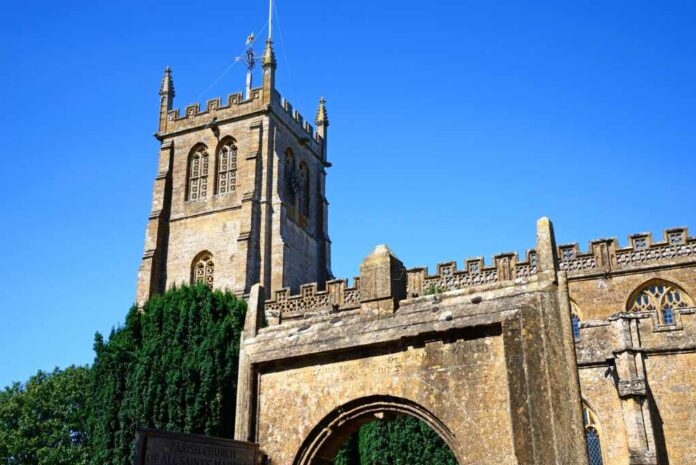
All Saints Church in Martock holds Grade I listed building status, indicating exceptional architectural and historical interest. The church’s oldest sections originate in the 13th century, with substantial reconstruction during the 15th and 16th centuries creating the complex architectural form visible today. The church’s striking four-tiered tower, completed around 1505, exemplifies the region’s medieval craftsmanship. Historical records document that the building was briefly occupied by Oliver Cromwell’s soldiers following the 1645 Battle of Bridgwater during the English Civil War, connecting the site to significant national historical events.
Public Fascination Meets Heritage Preservation Challenges
Since the discovery, the fenced-off site has drawn streams of visitors eager to glimpse the exposed crypt. Local residents and observers have expressed fascination with the discovery, with one onlooker noting, “You don’t often see something from the 1700s resurface like this. It’s eerie but incredible.” However, the discovery presents significant challenges for cemetery management. Martock Parish Council maintains responsibility for the churchyard’s upkeep, and the cemetery has reached full capacity, presenting ongoing management challenges for the parish. The complete destruction of the tomb has rendered its memorial inscription illegible amongst the scattered stonework, eliminating a potential source of historical information about the burial.
300-year-old sealed crypt opens up at historic English church after earth collapses https://t.co/kJCXCSqXbw pic.twitter.com/7ox5UQVIbX
— New York Post (@nypost) November 26, 2025
Rare Opportunity for Archaeological Study and Heritage Understanding
Archaeologists view the collapse as providing a rare opportunity to study burial practices and construction techniques from the 18th century, despite the unfortunate circumstances of the discovery. The exposed crypt offers direct evidence of period-specific construction methods and materials, including the specialized Ham stone limestone used in its construction. Local historians have noted the significance of the vault’s stonework, suggesting the tomb’s construction reflected significant investment and craftsmanship. The discovery raises awareness about the potential for hidden archaeological features in historic churchyards and the importance of heritage preservation in managing aging burial structures, highlighting the need for careful assessment of aging cemetery infrastructure in historic locations.
Sources:
Archaeology Breakthrough as 300-Year-Old Crypt Uncovered After Church Tomb Collapses – GB News
Collapsed 18th-Century Tomb Uncovers Hidden Crypt Beneath Historic Churchyard – Arkeo News
Tomb Collapse England – Ancient Origins