
Iran’s regime is choking off a waterway that fuels the global economy—while Americans are left sorting out whether “everything’s fine” matches what ships and markets are actually experiencing.
Story Snapshot
- Iran’s IRGC declared the Strait of Hormuz closed as attacks on commercial shipping escalated, including strikes on tankers with multiple national flags.
- Maritime traffic reportedly fell 94% by March 6, with more than 200 tankers stranded, signaling a major disruption to energy logistics.
- President Trump was reported to have said the strait was “in great shape,” a line that drew attention because conditions on the water deteriorated rapidly afterward.
- Brent crude was reported around $84 a barrel, up roughly 5%, with analysts warning prices could climb further if the closure persists.
Hormuz Closure Turns a Regional Fight Into a Global Economic Test
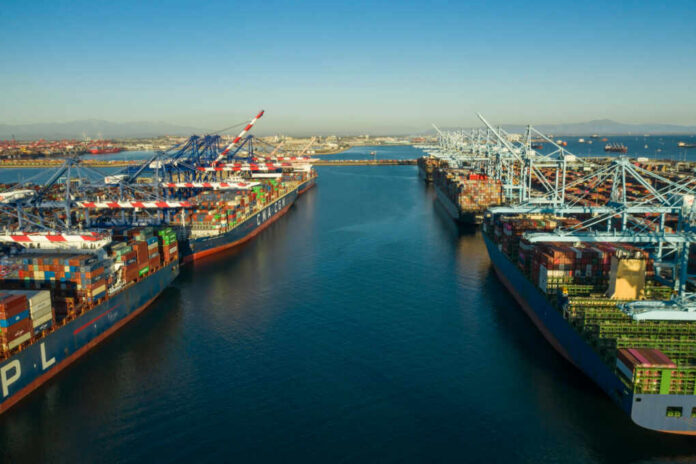
Iran’s Islamic Revolutionary Guard Corps moved beyond harassment into a declared shutdown of the Strait of Hormuz, a narrow passage between Iran and Oman that carries a huge share of global oil and LNG trade. Reports describe missile and drone threats paired with direct hits on tankers, creating a risk environment insurers and ship operators can’t ignore. By early March, vessels were anchoring or holding position rather than transiting, tightening the world’s energy arteries.
The timeline in multiple reports places the current spiral after U.S.-Israeli strikes on Iranian targets in late February, followed by Iran’s retaliation across the region. Shipping risk assessments described targeting as unpredictable across flags, which matters because it transforms the crisis from a U.S.-Iran standoff into a broad threat against neutral commerce. For American families, the practical issue is simple: when global energy corridors seize up, price shocks don’t stay overseas.
Trump’s “Great Shape” Remark Collides With On-the-Water Reality
Coverage of President Trump’s reported “in great shape” remark about Hormuz has become a flashpoint because the operational picture described by maritime and news sources is bleak. Iran’s commanders issued threats to burn ships attempting passage, and subsequent days brought additional reported strikes and a steep collapse in traffic. The available sourcing does not provide a precise timestamp or full transcript for the remark, limiting how definitively it can be framed.
Even with that limitation, the bigger takeaway is measurable: ships halted, tankers stranded, and a declared closure that forced operators to treat the strait as a war zone. From a constitutional, limited-government perspective, Americans should focus less on political one-liners and more on whether U.S. policy delivers deterrence that prevents foreign regimes from holding global trade hostage. The public also deserves transparent, time-stamped briefings when energy security is at stake.
Attacks, Port Strikes, and Spillover Risk Across the Gulf
Reports cite attacks on specific vessels and strikes affecting ports, underscoring that the crisis is not confined to open water. Tankers including the Stena Imperative (U.S.-flagged), Athe Nova (Honduras-flagged), and Prima (Malta-flagged) were cited among ships hit as the situation escalated. Separate reporting referenced strikes on Gulf-area locations after March 7, raising the stakes for neighboring states and commercial infrastructure.
This matters strategically because Iran doesn’t need to defeat U.S. forces to inflict damage; it can impose costs by making routine commerce too dangerous to attempt. Maritime risk analysts have warned that commercial shipping effectively halted under the threat environment, calling it among the highest-risk periods in decades. With multiple countries’ assets and ports affected, the pressure for a coordinated response grows—along with the chances of miscalculation in a congested battlespace.
Energy Prices, Supply Chains, and the Limits of Reassurance
Energy impacts are already visible in the early pricing moves described in the research: Brent crude around $84 a barrel, up roughly 5% amid the disruption. The International Energy Agency’s leadership publicly downplayed an immediate “world oil crisis,” but also emphasized uncertainty—an important qualifier when shipping lanes are materially constrained. If the closure persists, forecasts of higher prices become more plausible, though exact outcomes depend on duration and alternative routing.
Trump Claims Key Waterway Is 'In Great Shape' as Iran Continues Attacking Vessels in It https://t.co/F3pFd68jnS
— Mediaite (@Mediaite) March 12, 2026
For U.S. voters who spent years watching inflation chew through paychecks, this episode is a reminder that foreign-policy weakness and energy vulnerability hit the middle class first. The research describes evacuations, embassy disruptions, and regional instability layered on top of shipping paralysis. Limited data remains on precise casualty totals and some strike details, but the central facts—closure, attacks, and a traffic collapse—are sufficiently consistent across sources to treat the economic risk as real.
Sources:
Chronology of IRGC attacks on US tankers and the closure of the Strait of Hormuz in March 2026
Iran Strait of Hormuz shipping crisis 2026
Strait to war: A timeline of how the Strait of Hormuz became the world’s most dangerous waterway