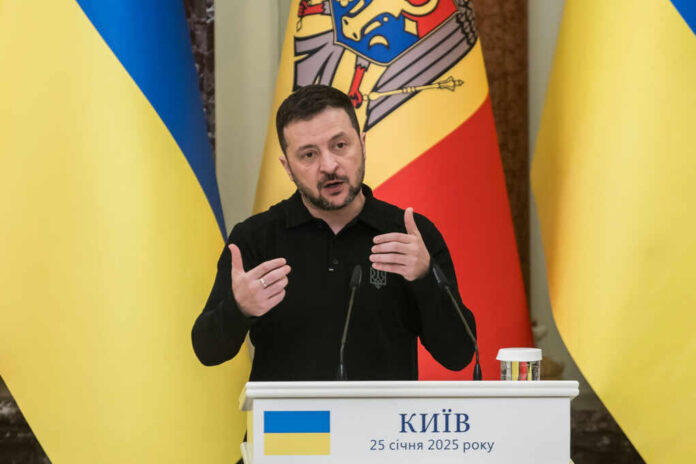
Ukrainian President Volodymyr Zelenskyy is leveraging his nation’s hard-won battlefield experience against Iranian drones to extract pressure on Russia for a ceasefire, turning Ukraine from aid recipient into strategic asset for America and its Middle Eastern allies.
Story Snapshot
- Zelenskyy offers to send drone defense specialists to US, Israel, and Gulf allies to counter Iranian Shahed drones
- Ukraine’s expertise stems from defending against tens of thousands of Russian-launched Iranian drones since 2022
- Aid is conditional on partners pressuring Russia for a 1-2 month ceasefire to protect Ukrainian civilians
- Iran recently launched over 800 missiles and 1,400 drones against US-Israeli targets in Middle East escalation
Ukraine’s Battle-Tested Drone Defense Expertise
Ukraine has developed unmatched capabilities in neutralizing Iranian Shahed-136 loitering munitions after defending against relentless barrages since fall 2022. The nation has successfully intercepted the majority of tens of thousands of these drones through layered defense systems combining electronic warfare and interceptor technology. This real-world experience surpasses theoretical knowledge held by other nations. Iran now deploys identical Shahed models against American and Israeli targets throughout the Middle East, mirroring the tactics Russia employed against Ukrainian infrastructure. Ukraine’s countermeasures, refined through trial-and-error under fire, represent invaluable intelligence for allies facing similar threats.
Zelenskyy’s Conditional Offer to Western Allies
On March 4, 2026, Zelenskyy announced consultations with the United States, Israel, and Middle Eastern partners including UAE, Qatar, Bahrain, Jordan, and Kuwait regarding their requests for Ukraine’s drone defense expertise. He proposed sharing intelligence, dispatching specialists, or deploying drone-interceptor operators to assist allies combating Iranian drone threats. However, Zelenskyy explicitly conditioned this assistance on Western partners pressuring Russia for a ceasefire lasting one to two months. “We assist those who help us,” Zelenskyy stated, emphasizing reciprocity while ensuring Ukraine’s own defenses remain uncompromised. British Prime Minister Keir Starmer endorsed deploying Ukrainian experts to the Gulf region.
Strategic Leverage Against Russia-Iran Axis
This proposal fundamentally shifts Ukraine’s position from supplicant to strategic partner, inverting traditional aid dynamics. The timing is deliberate—Russia-Ukraine peace negotiations have stalled amid the Middle East crisis, with Iran launching massive drone and missile strikes following US-Israeli operations against proxy forces. By linking drone assistance to ceasefire pressure, Zelenskyy creates diplomatic leverage at a moment when allies desperately need Ukraine’s battlefield-proven tactics. The move also highlights the Russia-Iran weapons partnership, demonstrating how Tehran’s drones threaten American interests globally. This reciprocity-based diplomacy resonates with conservative principles of mutual benefit over one-sided dependency.
Implications for American National Security
Iranian drone threats extend beyond the Middle East battlefield to global energy security, with Houthi forces disrupting Red Sea shipping lanes using Iranian technology. Ukraine’s expertise could rapidly enhance American and allied defenses against drone swarms that overwhelm traditional missile defense systems. The proposal also exposes the troubling alignment between Moscow and Tehran, with Russia serving as conduit for Iranian weapons technology that now threatens American troops and allies. If Western partners fail to pressure Russia for a ceasefire while accepting Ukraine’s assistance, it validates concerns about one-sided alliances that drain American resources without strategic reciprocity—a key frustration for taxpayers weary of endless foreign commitments lacking clear mutual benefit.
As of March 5, 2026, no formal responses have emerged from Washington, Jerusalem, or Gulf capitals regarding Zelenskyy’s conditional offer. Russia continues rejecting unconditional ceasefires, maintaining military pressure while its Iranian partner escalates regional conflicts. The proposal remains open, with Ukraine prepared to deploy specialists once partners demonstrate commitment to securing a temporary truce. This diplomatic gambit tests whether America’s leadership under President Trump will leverage Ukraine’s expertise to protect American interests while demanding concrete results—a ceasefire—rather than perpetuating endless conflict subsidized by taxpayer dollars without strategic gains.
Sources:
Zelenskyy Offers Help to Stop Iranian Drones in Return for Truce – SAN
US and Mideast countries seek Kyiv’s drone expertise as Russia-Ukraine talks put on ice – WRAL
Zelenskyy says US and Middle Eastern countries are seeking Kyiv’s drone expertise – WFTV
US, Ukraine, Shahed drone defence, Iran war, Zelenskyy – PhileNews