

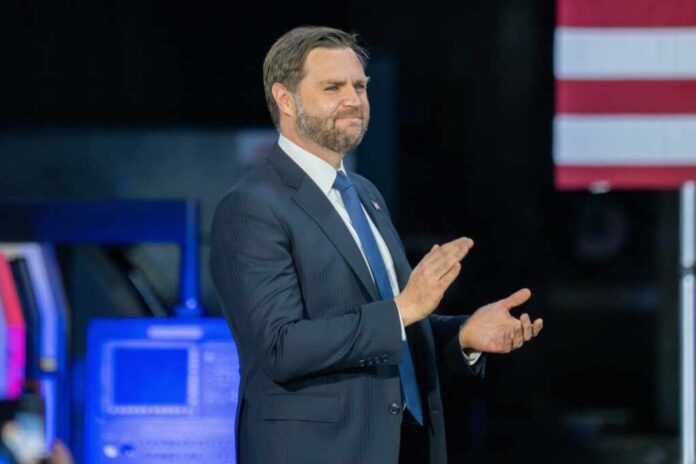
Europe’s Olympic “unity” message collapsed in real time when Vice President JD Vance was blasted with boos on the world’s biggest winter sports stage.
Quick Take
- Vice President JD Vance and Second Lady Usha Vance were loudly booed when shown on the stadium screen during the Milano Cortina 2026 opening ceremony.
- The International Olympic Committee urged spectators ahead of time to avoid heckling, citing a tense geopolitical backdrop.
- Multiple reports described the moment as unusual for an Olympic opening, with veteran observers calling public booing “very rare.”
- Italian protests the next day targeted reported U.S. ICE-linked security presence tied to Games operations in Milan.
Booing at the Opening Ceremony Puts U.S. Delegation in the Crosshairs
Milano Cortina’s opening ceremony turned political when the broadcast showed Vance and his wife during the Parade of Nations and the crowd responded with sustained boos, whistles, and jeers. One NBC voice on the international feed remarked on-air that there were “a lot of boos,” underscoring that this wasn’t a minor murmur. Reporting also suggested Vance’s name was not announced at the moment, unlike other leaders.
The immediate significance is less about hurt feelings and more about what it signals: a foreign audience using a supposedly apolitical ceremony to register anger at the sitting U.S. administration. The Olympic stage is designed to elevate athletes and national teams, not partisan disputes. Yet the reaction showed how quickly national politics can follow American officials overseas, even when the event is meant to celebrate sports.
JD Vance was booed at the Olympics games in Italy.
He must have felt right at home.
This arrogant POS is booed every he goes.
Vance is such a horrible VP and person he actually deserves to be booed. pic.twitter.com/JdMKjJSoAm
— Martha (@MGonigle) February 7, 2026
IOC Tried to Head Off Heckling as Politics Shadowed the Games
The boos landed after an explicit warning from IOC President Kirsty Coventry, who urged respect during the ceremony and framed the request as necessary given the geopolitical climate. That advisory matters because it confirms organizers anticipated tension and wanted the opening night to project unity. The crowd’s response to the U.S. vice president, despite that message, shows how limited the IOC’s cultural influence can be once a stadium becomes a live referendum.
Veteran Olympic observers have stressed how uncommon this kind of booing is at an opening ceremony, especially when the target is a visiting dignitary rather than a controversial sports ruling. One report cited a longtime reporter who has covered 22 Olympic Games and characterized booing at this setting as “very rare.” That context is essential for understanding why the incident drew attention: it wasn’t merely noise, it was a break from modern Olympic norms.
Protests in Milan Focused on ICE-Linked Presence and U.S. Enforcement Image
The following day, protests in Milan targeted the reported presence of U.S. Homeland Security Investigations personnel—described as ICE-linked—operating out of the U.S. Consulate to support Games security. Italian political figures associated with the center-left Democratic Party were quoted describing the issue in sweeping terms, arguing they did not want ICE in Milan and tying the dispute to “justice” and democratic values. The reporting framed the demonstrations as sizable.
The research also ties the anger to broader controversies around U.S. immigration enforcement, including public reactions to images and accounts described as ICE “brutality” connected to a Minneapolis crackdown and reported deaths of U.S. citizens. Those are serious allegations, but the available material does not provide full case documentation, independent investigative findings, or adjudicated outcomes. What is clear is that the perception of U.S. enforcement tactics—fairly or unfairly—has become a political flashpoint overseas.
Domestic Politics Followed the Moment, Fueling the 2026 Messaging War
Back home, Democrats quickly used the clip as political ammunition. A social post linked to the incident was amplified by Kamala Harris-aligned accounts, framing the boos as a symbol of international rejection. That is a predictable tactic in an era when viral clips substitute for substantive debate. At the same time, the available reports do not document a public, on-camera response from Vance after the ceremony, leaving a gap in how the administration chose to address it.
For conservatives watching this unfold, the central takeaway is that American sovereignty and law enforcement policies are now being litigated in foreign venues that were never meant to host that argument. Whether one views ICE’s role as necessary security cooperation or as “overreach,” the political reality is that U.S. officials will face public pressure abroad—and the media ecosystem will weaponize it instantly at home. The Olympics didn’t start the conflict, but it put it on display.
Sources:
JD Vance Brutally Booed on Winter Olympics Global Stage
Harris to speak to tearful supporters as they leave watch party
“A lot of boos”: JD and Usha Vance face hostile reception at Winter Olympics opening ceremony
Olympics boss addresses possible booing