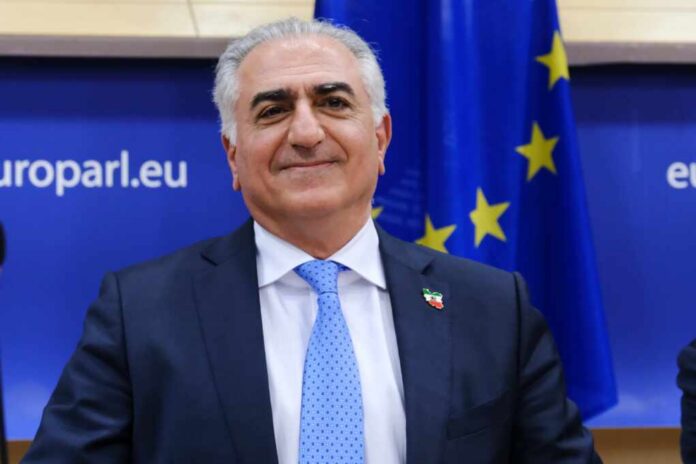
An exiled Iranian prince is openly pressing President Trump to help “bury” Tehran’s radical regime—putting U.S. power, Iranian street protests, and the world’s energy supply on a collision course.
Story Snapshot
- Reza Pahlavi, the exiled son of Iran’s last shah, used the Munich Security Conference spotlight to urge President Trump to accelerate regime change in Iran.
- Pahlavi’s asks center on targeting the IRGC, tightening sanctions (including “ghost tankers”), freezing regime-linked assets, and expanding internet access for protesters.
- Trump has signaled openness to regime change while also weighing diplomacy, as U.S.-Iran nuclear talks continue amid increased U.S. military posture.
- Some core protest-casualty figures circulating publicly remain difficult to independently verify due to Iran’s information controls.
Pahlavi’s Munich appeal: a public push for decisive U.S. pressure
Reza Pahlavi’s latest message to Washington was direct: help Iranian citizens end the Islamic Republic sooner by applying targeted force and maximum economic and diplomatic pressure. Speaking alongside the Munich Security Conference events, he argued that outside help could save lives as protests expand and the regime responds with arrests and violence. His proposals emphasized disabling the IRGC, pressing the regime’s finances, and supporting communications tools that keep protesters connected.
Pahlavi also attempted to answer the question that usually stalls foreign-policy debates: what comes after a collapse. He described himself not as a returning monarch, but as a transitional “bridge” toward a referendum and free elections. Supporters point to a more detailed transition roadmap than earlier opposition efforts, including plans to restructure state bodies and seek international oversight. How broadly that framework plays inside Iran is harder to measure from abroad.
Trump’s posture: deterrence, leverage, and the shadow of military escalation
President Trump’s comments and deployments have added urgency to Pahlavi’s campaign. Trump has publicly framed regime change as a positive outcome while signaling that Iran should fear U.S. resolve. Reporting around the period describes intensified U.S. military positioning in the region, including the movement of major naval assets and planning for operations that could last weeks if ordered. That posture strengthens U.S. leverage, but it also raises the stakes for miscalculation.
At the same time, nuclear diplomacy has not disappeared. Talks have been discussed alongside the military buildup, creating a familiar tension: negotiations can buy time for a hostile regime, while strikes risk wider war. For conservative Americans who watched years of soft-touch engagement empower adversaries, the central question is whether pressure will be sustained and results-based—or diluted into open-ended talks that allow Tehran to regroup, rearm, and continue threatening U.S. interests and allies.
What Pahlavi is asking for: sanctions enforcement, isolation, and internet access
Pahlavi’s recommended measures lean heavily on U.S. strengths short of a full invasion: financial enforcement, energy interdiction, and diplomatic isolation. His public list includes freezing assets tied to regime elites and cracking down on oil smuggling networks often described as “ghost tankers.” He also emphasized helping Iranians stay online, including expanding access to satellite internet options so protests cannot be quietly crushed in the dark. Those tools align with a strategy of empowering citizens while tightening the regime’s oxygen supply.
For Americans wary of endless Middle East wars, this menu matters because it suggests alternatives between appeasement and large-scale ground conflict. Still, each lever has tradeoffs. Strict sanctions enforcement can disrupt oil flows and spike prices, while cyber and communications support can invite retaliation against U.S. interests. The research also reflects an internal debate among Iranian rights voices, with at least one prominent activist rejecting foreign military intervention even while condemning regime abuses.
Credibility checks: casualty figures, opposition unity, and the “who leads next” problem
Some of the most shocking figures in circulation—large reported death tolls and mass arrests tied to the first days of unrest—are difficult to independently confirm because Tehran restricts information and outside verification. That uncertainty does not erase the reality of repression, but it does require caution when measuring scale and momentum. Separate reporting also notes skepticism about opposition cohesion and questions about how much support any exile figure truly commands inside Iran.
“Reza Pahlavi is Playing OFFENSE” – Trump PUSHING For Regime Change In Iran https://t.co/WUAJurrpMD
— NA404ERROR (@Too_Much_Rum) February 16, 2026
Even with those limits, Pahlavi’s approach is notable for treating regime change as an operational plan rather than a slogan. He is courting international legitimacy, diaspora energy, and U.S. leverage simultaneously. If Trump chooses stronger action, the constitutional and strategic burden will be proving it advances concrete U.S. security interests—protecting Americans, deterring terrorism, and reducing nuclear risk—without writing a blank check for another open-ended mission.
Sources:
Iranian Crown Prince makes new appeal to Trump to weaken Ayatollah’s regime as killing continues
The Jerusalem Post – International article 886609
Exiled son of Iran’s last shah calls on Trump to help ‘bury’ the Islamic Republic
Iran International – 202602164117
Pahlavi appeals to Trump as top Iranian rights activist rejects military intervention