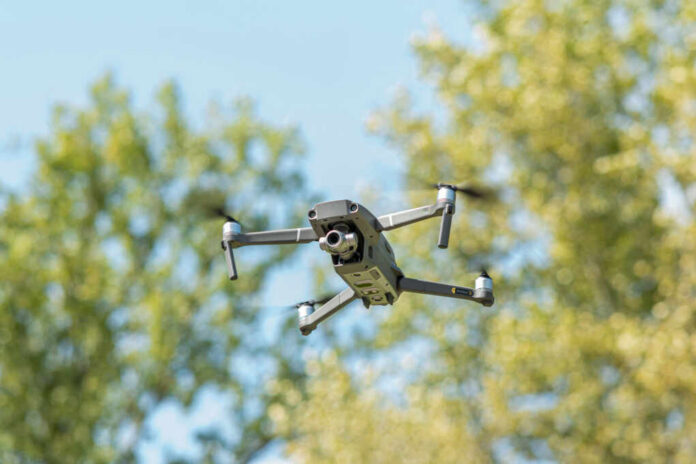
A new wave of artificial intelligence landmine-hunting drones can scan war zones for cellphone-sized plastic mines in minutes, raising hopes for safer demining but also fresh questions about who controls this powerful technology.
Story Snapshot
- AI-powered drones are learning to spot tiny plastic landmines that traditional tools often miss.
- Systems tested in Ukraine and by Western researchers can scan tens of thousands of square meters per day.
- Companies and universities report detection rates from about 70% up to around 90%, but most results are still early-stage.
- The same defense-tech model that worries Americans at home now shapes life-and-death decisions in foreign minefields.
How AI Drones Hunt Cellphone-Sized Plastic Mines
Researchers at Binghamton University and partner institutions are building systems that let a drone fly low over suspected minefields and search for Russian-made PFM-1 “butterfly” mines, which are roughly the size of a modern cellphone. These mines are encased in plastic, so metal detectors and many standard tools often fail to spot them. The team uses a drone camera to stitch together aerial photos and then runs them through an object-detection algorithm called You Only Look Once, or YOLO, to flag likely mines.
The software is trained on real but inert PFM-1 mines and three-dimensional printed copies, placed in many different spots and lighting conditions to teach the algorithm how they look in the real world. Once trained, the system can run on a basic laptop in the field, without internet access, which matters in war zones where GPS and communications are often jammed or destroyed. The researchers describe the tool as a “first-pass” scan that marks suspected hazardous areas so human demining teams know where to focus their work.
Speed and Accuracy: What the Numbers Really Mean
Several research groups report that artificial intelligence can reach or beat human-level performance when spotting mines from the air, but the details matter. One published study using drone imagery and a convolutional neural network first reached about 71.5% detection accuracy for PFM-1 mines, later improving to roughly 91.8% as the dataset grew. Another Binghamton-linked effort using thermal and visual imaging boosted detection to around 90%, after drones first found about three-quarters of the mines with simpler methods.
Private companies now advertise even higher numbers. Safe Pro AI claims its software can detect more than 150 types of mines and unexploded shells from drone imagery with “over 90%” accuracy and map 80% to 90% of surface explosives so teams can plan safer clearance operations. A different project reports a drone system with about 92% average accuracy, improving on a manual method that only reached about 70%, and surveying twenty times more ground per day. These figures are promising, but they are mostly self-reported by the developers and rarely verified by independent auditors.
From Lab Tests to Real War Zones
Some of these systems are already moving from theory to practice in Ukraine, which many experts now call one of the most heavily mined countries on earth. Safe Pro Group says its SpotlightAI tool has scanned more than a million drone images there, helping partners flag over 23,000 explosive threats across thousands of hectares of land. The company has signed long-term agreements with Ukraine’s Center of Excellence for Mine Action and Environmental Security to train teams on “next-generation” demining based on these tools.
Humanitarian organizations are testing similar ideas. A project linked to the International Committee of the Red Cross reports that traditional deminers clear about 50 square meters per day, while an artificial intelligence-driven drone survey could eventually scan and process about 100,000 square meters daily. Academic groups working with Ukrainian partners are also combining drone cameras, magnetic sensors, heat measurements, and machine learning to reduce human risk and speed up surveys by nearly tenfold, while still insisting that “humans must decide what is a mine” in the end.
Why This Matters for Ordinary Citizens
Landmines are not just a distant threat; they are a symbol of conflicts that never truly end. At least 57 countries still have active antipersonnel mines, which killed 1,945 people and injured 4,325 in 2024 alone, with civilians making up about 90% of victims and nearly half being children. That hard reality speaks to a frustration many Americans share across party lines: governments and global elites wage wars and sign deals, but ordinary families live with the danger for decades after the shooting stops.
The new landmine-hunting drones show both the promise and the risk of artificial intelligence in war. On one hand, they can keep human deminers out of the most dangerous zones and speed up clearance, which aligns with basic moral instincts about protecting life. On the other hand, most performance claims come from defense companies and research teams themselves, part of a wider pattern where tech firms build “epistemic authority” over warfare by controlling data and metrics that outsiders cannot easily check.
Trust, Transparency, and the Shadow of “Smart War”
Ukrainian officials now rely on platforms from major United States data companies to combine government records, cell phone data, and drone images into models that decide which minefields to clear first, and even where contamination likely is not. Advocates say this can save lives and protect the economy, but it also deepens a troubling trend: critical decisions about safety and freedom are handed to opaque systems built by corporations and approved by distant governments.
Experts warn that artificial intelligence in conflict zones can also fuel disinformation, blur the line between truth and propaganda, and erode public trust. For Americans who already suspect that “deep state” actors and global tech elites play by their own rules, the spread of unverified “smart war” tools abroad should raise hard questions at home. Who checks these systems? Who owns the data they collect? And will the same logic that now scans foreign minefields soon guide how our own borders, communities, and even protests are policed?
Sources:
military.com, safeproai.com, safeprogroup.com, facebook.com, reddit.com, instagram.com, binghamton.edu, blackthorn.ai, techpolicy.press, opiniojuris.org, pmc.ncbi.nlm.nih.gov, time.com, linkedin.com