

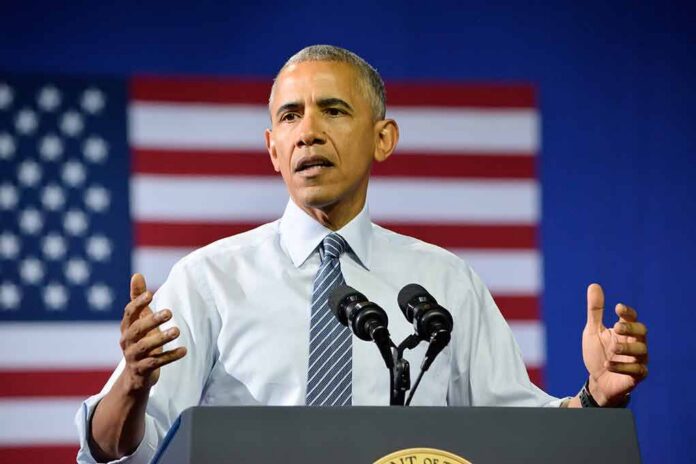
Two former presidents attacked the sitting president on the trail, and President Trump hit back in minutes with insults and a claim that politics, not policy, is driving the fight.
Story Snapshot
- Barack Obama and Bill Clinton criticized President Trump at campaign events days before midterms.
- Trump replied that they are “critical because we beat them,” and called Obama “a lousy president”.
- Obama blamed Trump’s actions for rising costs and cited chaos, cruelty, and corruption.
- The exchange shows how campaign season turns policy disputes into sharp personal attacks.
What sparked the clash: Campaign-trail broadsides
Barack Obama campaigned for Democrats in Ohio on October 24 and said President Trump’s actions were directly responsible for rising costs. He also framed Trump’s second term as marked by chaos, cruelty, corruption, and incompetence. Bill Clinton joined the pile-on with quips about Trump’s changes to the White House grounds and decor, arguing that Congress should have protested permanent alterations to a historic site. These were partisan events designed to boost Democratic turnout before the midterms.
President Trump answered questions about the attacks on October 25. He argued the criticism was sour grapes, stating, “They’re critical because we beat them,” and adding he would be “out there fighting” if roles were reversed. He also said, “Obama was a lousy president,” shifting the focus from policy claims to job performance. Trump’s brief remarks did not directly address Obama’s cost-of-living argument or Clinton’s concerns about the Rose Garden.
The competing claims: Costs, conduct, and credibility
Obama’s charge targeted people’s wallets. He said Trump’s actions drove up prices, tying the pocketbook squeeze to the White House’s choices. Some outlets reported Obama linked higher prices to Trump’s tariffs and the war with Iran, calling the war unnecessary. Those claims are serious, but the available reports do not include detailed economic data or a formal analysis in these speeches that proves policy-to-price causation. They functioned as rally messages, not technical briefings.
Clinton’s line of attack focused on norms and heritage rather than budgets. He criticized Trump’s Rose Garden renovation and broader White House changes, calling them inappropriate and hard to reverse. He said Congress should have pushed back at the time, underscoring worry about lasting changes to a civic symbol. The remarks aimed to paint Trump’s stewardship as careless with tradition, but did not claim a clear financial harm to taxpayers in the near term.
Trump’s rebuttal: Politics over policy and the restraint claim
Trump centered his response on motive and rivalry. He said Obama and Clinton are hitting him because Republicans beat them, making the fight about winning and losing rather than policy evidence. He also pushed a familiar theme that he showed restraint toward political opponents out of respect for the presidency, saying he could have done “very bad things” to Hillary Clinton, Joe Biden, and Obama but did not. Those comments were reported previously and serve to cast him as holding back state power.
President Trump just dropped this FIRE response
Q: Obama and Clinton being critical of you today. Your response?
TRUMP: "They're critical because we've beaten them."
"You know, when I started, we had a very much weaker Republican Party, a smaller weaker Republican Party."… pic.twitter.com/ZLNgPnYm4h
— Trumpusa1 (@Trumpusa1A1) October 24, 2026
The weakness in Trump’s reply is the lack of direct answers on prices, corruption, or competence. Calling Obama “lousy” does not test the cost claim or offer numbers to counter it. The weakness in Obama’s case, as delivered on the trail, is the absence of cited data that separates global forces from policy effects in that moment. Voters are left with sharp lines and little proof, which feeds a common view that elites trade barbs while families struggle.
Why it matters: Attention over answers in a tired system
Research on political rhetoric shows both parties use personal attacks because they draw coverage, even if they do not solve problems or move votes much. This exchange fits that pattern. Obama and Clinton sought to frame Trump as costly and reckless. Trump framed them as bitter and failed. None of this gives a homeowner relief on energy bills, a retiree a lower grocery tab, or a parent safer streets. It rewards attention, not accountability.
What to watch next: Proof, policy, and pocketbooks
Watch for hard numbers and plain sourcing. If Obama’s team argues Trump policies raised costs, they need data from the Bureau of Labor Statistics, the Federal Reserve, or the Congressional Budget Office to back it up. If Trump argues his record beats Obama’s, he needs comparable measures and timelines, not one-liners. Until leaders trade claims for proof, many Americans will see a ruling class that talks loud while daily life gets harder.
Sources:
thegatewaypundit.com, upi.com, gdnonline.com, thehill.com, ground.news, rte.ie