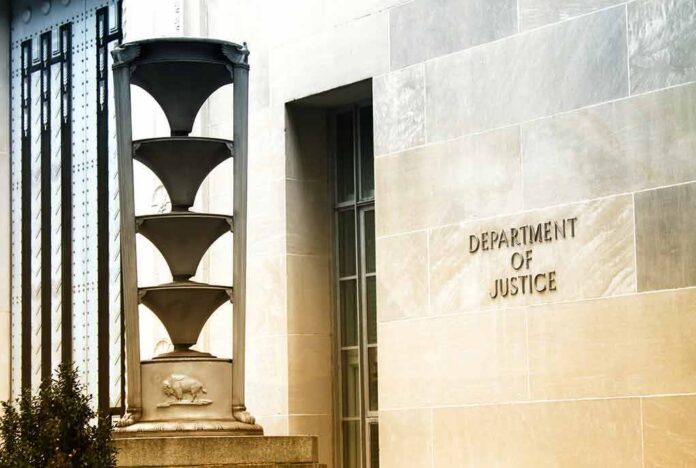
U.S. prosecutors say a Russia-run network tried to hire killers inside America, including for a hit near Washington, D.C., and two Latin American men now face U.S. indictments tied to that plot.
Story Snapshot
- Justice Department unsealed charges alleging a Russia-backed murder-for-hire network targeting dissidents, including on U.S. soil.
- Indictment describes recruitment, surveillance, financing, and planned killings dating back to 2024.
- Five defendants are charged; authorities say they remain at large as the case moves forward.
- Kremlin spokesperson dismissed the claims, saying there is no evidence to comment on yet.
What Prosecutors Say Happened
The Department of Justice unsealed an indictment alleging that five people worked for Russian intelligence services to plan attacks and murders worldwide, including inside the United States. Prosecutors described a murder-for-hire scheme, recruitment of operatives, and paid surveillance of a target in the Washington, D.C., area. The filing says the group sought contractors, moved money, and gave tasking linked to Russian services. The charges include conspiracy to finance terrorism and to commit murder for hire, among other counts.
Officials said the network’s activity dates back to at least 2024 and involved spotting targets, testing routes, and paying for “pre-operational” work. The alleged goal was to silence Kremlin critics and intimidate communities who oppose Moscow. Prosecutors said plots stretched beyond the United States to Europe, fitting a pattern Western security services have warned about in recent years. Authorities stressed the allegations are not yet proven in court, and no trials have begun at this stage.
Who Is Charged And What Comes Next
Federal filings name five defendants tied to the scheme, and prosecutors say all remain at large. Court papers describe roles such as tasking, recruiting, and moving funds, including through digital channels, to pay would-be operatives. The Justice Department said the five worked on behalf of Russian services while using cutouts and messaging apps to manage assignments. The case now moves through pretrial steps, including efforts to locate and arrest the defendants abroad.
Reporters who reviewed the indictment said the government links the plots to a larger campaign against dissenters and supporters of Ukraine in the West. The case echoes recent prosecutions in Europe tied to sabotage or attempted killings that officials there linked to Russian services. While each case turns on its own facts, these allegations match a broader security picture that European and United States agencies have described since the start of Russia’s war in Ukraine.
How This Fits A Wider Pattern—and The Caveats
European and United States authorities have documented repeated efforts to intimidate or harm Kremlin critics abroad, including cases tied to attempted murders and parcel bomb plots in the European Union. Analysts and past congressional testimony have also pointed to a structured program by Russian security services targeting enemies outside Russia’s borders. Those histories do not prove this indictment’s facts, but they explain why officials take the new claims seriously and why the public concern is high.
Russia’s government has pushed back. Kremlin spokesperson Dmitry Peskov said there was no evidence to comment on and rejected the charges in broad terms. Prosecutors also note that charges are only allegations until proven. The five named defendants have not appeared in a United States court, and the government has not shown all of its evidence in public yet. That gap between strong claims and proof at trial is common in national security cases and bears watching.
Why This Matters For Americans
Federal officials say a foreign intelligence network tried to arrange a killing near the nation’s capital. If true, this is not only a threat to one dissident but a test of U.S. sovereignty. Voters on both the right and the left worry that elites and bureaucracies fail at core duties. Stopping foreign hit teams on American streets is a core duty. The case will turn on evidence. The stakes, however, are simple: the government must protect people here, no matter who they are.
Sources:
military.com, aljazeera.com, rferl.org, bbc.co.uk, reuters.com, nbcnews.com, the-independent.com