

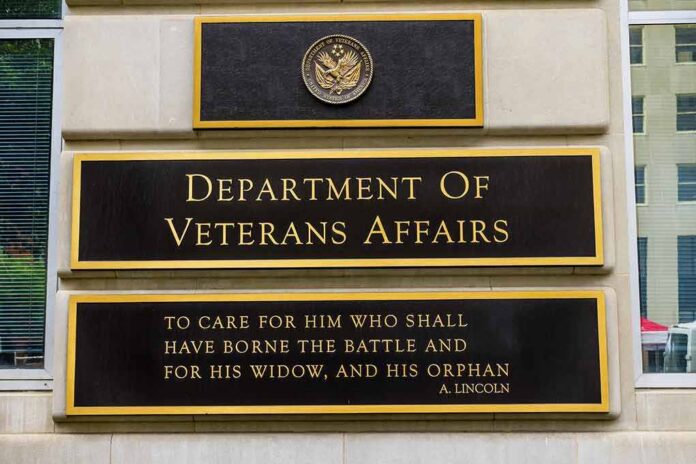
An 80-year-old Missouri man admitted he faked Vietnam combat service, medals, and medical records to collect $124,262 in disability payments from the Department of Veterans Affairs.
Story Highlights
- James Lyon pleaded guilty to defrauding the Department of Veterans Affairs of $124,262 through false combat claims.
- Prosecutors say he claimed three Marine Corps tours and medals he did not earn; records show he never served in Vietnam.
- The case fuels public anger over fraud, even as watchdog data show a small number of disability-fraud cases each year.
- Officials warn that fraud cases harm trust and can slow help for veterans with real needs.
Guilty Plea and False Combat Claims
Federal prosecutors said James Lyon, 80, of Independence, Missouri, admitted he lied about serving three separate Marine Corps periods, including combat in Vietnam. He pleaded guilty to defrauding the Department of Veterans Affairs of $124,262 in disability-related payments. A local report summarized court records that say Lyon never served in Vietnam and was discharged in 1966 as unsuitable for service, despite his claims that he earned high-level medals. The court will decide his sentence at a later date.
The U.S. Attorney’s Office stated Lyon refused Marine Corps training in 1966 as a conscientious objector, yet decades later claimed combat experience and decorations to back his disability claim. Court documents described a scheme that included false statements and records to support his story. Prosecutors said those lies unlocked tax-funded payments intended for veterans who were injured, sick, or traumatized due to real service. Lyon’s plea ends the dispute over what he did, while punishment remains pending.
How the Scheme Fits a Wider Pattern
This case lands in a tense debate over fraud and waste in veterans’ benefits. A Washington Post investigation reported that, since 2020, the Department of Veterans Affairs inspector general has opened an average of 63 disability-fraud probes each year. That is a tiny share of more than two million annual claims, but each case gets strong public attention because it strikes a nerve about fairness and accountability. Fraud cases also feed anger that the system often moves slow for honest veterans.
Department of Veterans Affairs watchdog summaries list hundreds of open investigations across all benefit areas at any time, from kickbacks to billing scams to fake disability claims. Officials say each fraud case can erode trust and delay care for veterans with real needs. That message resonates across the political spectrum: people want help to reach those who earned it and tough penalties for cheaters. Yet the data show that measured disability-fraud caseloads remain limited compared to the size of the system.
Why This Case Stings: Stolen Valor and Public Trust
Prosecutors said Lyon’s story included combat he never saw and medals he did not earn. That kind of lie is more than paperwork fraud. It disrespects those who went, fought, and never returned. It also pressures a benefits system already under heavy load. When people fake records, examiners must spend time sorting fact from fiction. That work can slow payments for families who need help now, and it feeds the sense that the system favors paperwork games over real sacrifice.
Confusion also grows when names match true veterans from a past war. Public records show that other men named James Lyon did serve in Vietnam, including an Army pilot listed by the Defense POW/MIA Accounting Agency and a Hall of Valor entry. Those are different people, not the Missouri man who pleaded guilty in this case. Clear identification matters so we do not smear someone else’s service or let a fraud borrow honor that is not his.
Accountability Without Smearing Real Veterans
Many readers worry that government programs are too easy to game and too slow to fix. This plea gives them one more reason. At the same time, the numbers suggest most claimants are not fraudsters. Watchdog reporting shows a small stream of disability-fraud cases each year, not a flood. The right balance is tough but vital: tight checks that stop lies fast, plus fast, fair care for the veteran who really earned it. Both can be true at once.
James Lyon, 80, admitted to submitting fraudulent documents to the VA, collecting over $124,000 in disability payments. https://t.co/juiyhDid5A
— Navy Times (@NavyTimes) September 16, 2026
Next steps include sentencing and restitution. Courts often order full payback in fraud cases. That can deter others who might try the same scheme. Still, enforcement alone cannot carry the load. Better data checks, faster record sharing with the Department of Defense, and strong case-building by inspectors can help protect the honest while catching the fakes. Taxpayers deserve that. So do veterans who gave the country their best years—and sometimes their last.
Sources:
military.com, justice.gov, kctv5.com, oig.dot.gov, oig.ssa.gov