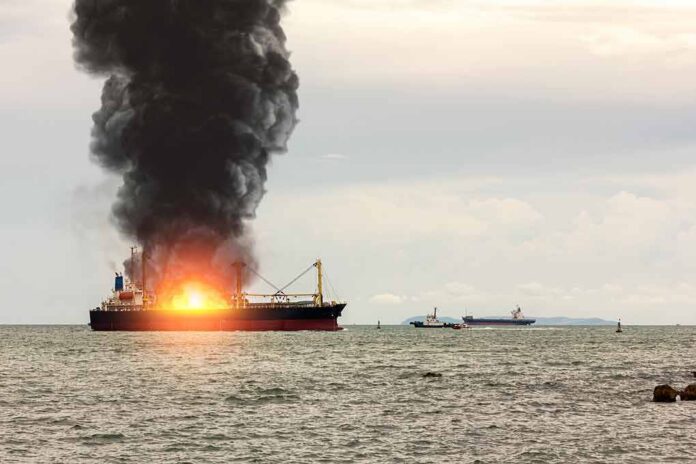
Rescuers in the Philippines raised the confirmed death toll from a burned ferry to 76 as recovery teams brought more bodies ashore and kept searching for the missing.
Story Snapshot
- Officials confirmed 76 dead after a ferry fire off Palawan, with recovery ongoing.
- Early counts rose quickly as teams reached the wreck and retrieved more remains.
- The Philippine Coast Guard reported 43 survivors while dozens remained unaccounted for in early updates.
- Inaccurate passenger lists often slow counts in Philippine ferry disasters.
Confirmed Toll Climbs As Recovery Teams Reach The Wreck
Philippine authorities said the death toll rose to 76 after teams recovered more bodies from a passenger ferry that burned near Coron in Palawan province. The fire broke out midweek and left the vessel a charred shell. As divers and responders gained safer entry, the count increased from initial reports to the latest confirmed figure. Officials said identification will take time due to burn damage and water exposure to the remains.
Reporters on the ground described a step-up in operations once the ship cooled and seas allowed safer access. Earlier, rescue teams could only search the waters near the hull. Once inside, they found additional victims in cabins and corridors. This shift explains the sharp rise from early numbers of five and then 35 dead to the current confirmed toll. Authorities emphasized the work is not yet done, and more recoveries are possible.
Survivors, Missing, And The Challenge Of Passenger Counts
The Philippine Coast Guard said at least 43 people were rescued soon after the blaze, with many taken for treatment. At the same time, officials warned that dozens were missing in early tallies. That gap reflects a familiar problem in the region: incomplete or inaccurate passenger lists that make it hard to match names to bodies and survivors during the first days of a disaster response.
Past incidents show why counts shift. Local leaders and maritime regulators have cited errors in ship manifests during ferry fires in recent years. People sometimes board late or off the list, while others listed never sail. That mismatch can mislead early estimates and widen the range between “missing” and “accounted for.” Investigators and disaster teams must reconcile the manifest with family reports, hospital logs, and remains recovered from the site.
A Recurring Ferry Safety Problem With Human Costs
Researchers who track ferry accidents say the Philippines ranks among countries with a high share of deadly incidents worldwide. Studies point to recurring risks, including human error, overcrowding, weak loading control, and aging vessels. Weather and maintenance also play roles. These patterns do not explain a single fire by themselves, but they describe the environment where a fire can turn into a mass casualty event before help arrives.
Philippine Ferry Fire Death Toll Rises to 76..
The death toll from a ferry fire in the #Philippines has risen to 76, after the Philippine Coast Guard confirmed the recovery of 41 additional bodies from the burned-out vessel off Palawan. pic.twitter.com/5FL8OiG59G
— Ayman Mat News (@AymanMatNews) September 13, 2026
Families of the dead and missing now face a long wait for identification and answers. Officials will review safety records, crew actions, equipment, and oversight. People across the political spectrum know this script too well: when systems fail, ordinary travelers pay the price. Whether you worry about lax enforcement or corporate corner cutting, the shared concern is simple. Trust grows when rules are clear, counts are accurate, and leaders fix what is broken after tragedy strikes.
Sources:
nytimes.com, trtworld.com, independent.co.uk, newsinfo.inquirer.net, lrfoundation.org.uk