

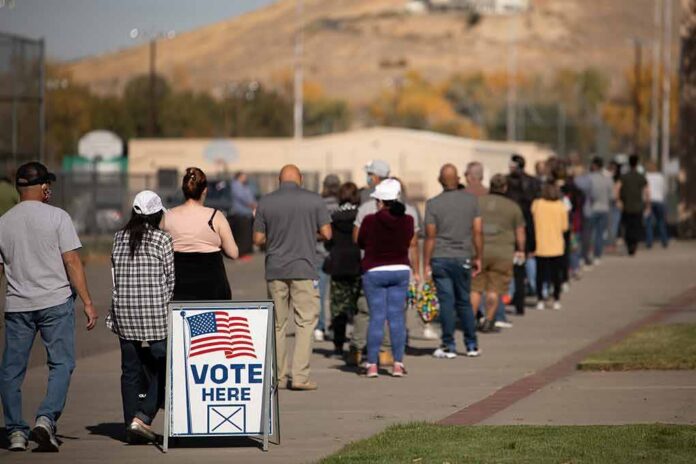
Voters in four states sent a split message on abortion rights, approving protections in some places while rejecting rollbacks elsewhere.
Story Highlights
- Virginia voters approved a constitutional amendment protecting abortion rights.
- Missouri voters rejected a measure that would have repealed abortion rights and added new limits.
- Nevada voters weighed a second vote to lock abortion rights into the state constitution.
- Idaho voters faced a proposal to scale back the state’s abortion ban, which was reported defeated.
What Each State Put Before Voters
Idaho, Missouri, Nevada, and Virginia all had abortion-related questions on the 2026 ballot. The measures were not the same. Idaho considered loosening a strict ban. Missouri weighed repealing a 2024 abortion-rights amendment and restoring a ban with limited exceptions. Nevada and Virginia asked voters to place abortion rights into their state constitutions. These differences shaped voter choices and legal outcomes in each state.
Virginia’s measure, labeled Question 1, asked whether to add abortion rights to the state constitution. Voters approved it by a wide margin, with reports citing about 2.1 million yes votes to 1.3 million no votes. That result moves abortion protections above normal politics in Virginia, since a future legislature cannot change a constitutional right by simple majority vote.
Missouri’s Repeal Effort Falls Short
Missouri voters faced Amendment 3, a complex proposal that sought to repeal and replace the abortion-rights language added in 2024. Unofficial results reported on election night showed voters rejecting the measure, with more no votes than yes votes. The defeat preserved the 2024 protections for now. The ballot language had drawn scrutiny earlier in the year, underscoring how wording can sway big choices on rights and limits.
Missouri’s process also highlights a caution. The state’s official results page is the final word, but election-night tallies often come first. Early reports carried the margin of defeat for Amendment 3, while formal certification follows later. That timeline does not change the core takeaway from election night reporting: voters did not back the repeal push as presented to them this year.
Nevada’s Two-Election Rule and Idaho’s Defeat
Nevada voters considered Question 6, a constitutional measure to protect abortion rights. Nevada law already allows abortions through 24 weeks. But changing the state constitution requires two separate statewide approvals in different elections. Voters had approved the measure once in 2024. The 2026 vote served as the second step to finalize those protections at the highest level of state law.
This is an election where the deeper you look into results, the more good news you find.
We're *thrilled* about the seismic, game-changing wins at the federal level, AND we're excited to highlight some down-ballot wins that are particularly salient for abortion rights.
— Vote Pro-Choice (@VoteChoice) November 4, 2026
Idaho voters reviewed a proposal that would soften the state’s near-total abortion ban. Election-night reporting said the measure was defeated. That outcome, if held through certification, keeps Idaho among the stricter states on abortion access. The contrast with Virginia and the reported Missouri result shows how voters in different states are drawing different lines on this issue in 2026.
Why These Results Matter Beyond State Lines
Since the Supreme Court’s Dobbs ruling, voters have used ballot measures to set policy directly. Researchers have tracked a trend where most successful measures expand or protect abortion rights, though not all do. In some cycles, these measures also shape who wins other races down the ballot. The four-state split this year fits that bigger pattern: direct democracy is active, varied, and changing state law in real time.
What Unites Voters Across the Divide
People on the right and left often feel national leaders dodge hard problems while protecting the powerful. These votes show citizens taking control where they can. Voters set clear rules in Virginia and Missouri and weighed pivotal moves in Nevada and Idaho. The process is not tidy. The legal texts differ. Certification takes time. But the message is steady: when leaders stall, voters use the tools they have to decide core rights and limits themselves.
Sources:
facebook.com, ewtnnews.com, fresnobee.com