

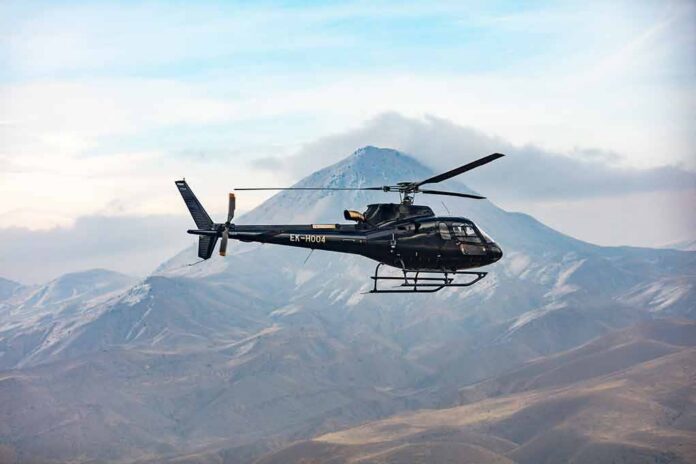
A landing collision between two commercial helicopters near Mount Everest killed a 47-year-old tourist and injured several others, underscoring safety risks on one of the world’s busiest mountain routes.
Story Snapshot
- Two helicopters collided while landing at the Pheriche helipad in Nepal’s Everest region.
- Nepal Police identified the deceased as Indian national Vasant Kumar Balramudu, age 47.
- Officials said the rotors struck during landing; an investigation is underway.
- The crash highlights persistent safety strains in Nepal’s high-altitude aviation market.
Confirmed Collision And Casualties In Everest Region
Nepal Police and aviation officials said two helicopters operated by Fishtail Air and Air Dynasty collided while attempting to land at the Pheriche helipad in Solukhumbu around 8:11 to 8:12 a.m. local time on November 3, 2026. Police and media reports said one passenger died and several others were injured. Officials identified the deceased as Indian national Vasant Kumar Balramudu, 47, of Chennai, who died at the scene. Early injury counts varied in first reports by different outlets.
Civil Aviation Authority of Nepal information officer Gyanendra Bhul said the authority received information that the rotor blades of the helicopters struck during landing. A district police inspector said both pilots appeared to aim for the same helipad, leading to rotor contact. Outlets reported injuries among passengers and both pilots, with later updates naming three injured: passenger Selishkumar Patel and pilots Ravindra Prajapati and Prajal K.C.. Authorities said an investigation is in progress.
Who Was Involved And What We Know So Far
Reports named the operators as Fishtail Air and Air Dynasty, companies that fly rescue, cargo, and tourist routes in the Everest corridor. Media accounts differed on aircraft registration numbers and some flight details, which often happens in the first hours after a crash. The core facts are consistent across outlets: a rotor strike during landing at Pheriche caused the fatality and injuries, and police confirmed the victim’s identity and nationality. Officials have not issued a final cause.
The Pheriche helipad sits on a busy trekking route below Everest Base Camp, where quick weather shifts and thin air stress pilots and machines. Local reporting said the area lies outside direct air traffic control coverage from Lukla, so pilots coordinate approaches by radio, which raises the stakes for clear timing and communication. Nepal Police and aviation officials urged patience as they gather records and statements for a formal report. Families began repatriation steps for the deceased Indian national, according to Indian media.
Why Mountain Flying In Nepal Remains High Risk
Nepal’s helicopter sector mixes hard terrain, sudden winds, and remote landing zones with steady tourist demand. Government safety records show repeated helicopter accidents in mountain regions over decades, reflecting the environment and operational pressures, not one single cause. A civil aviation safety review published in recent years documented numerous Nepal-registered helicopter accidents across areas such as Langtang and Solukhumbu, reinforcing the need for strict procedures at small helipads like Pheriche. Those patterns form background context, not a verdict on this case.
🚁 Everest Region #HelicopterCollision
A tragic helicopter collision at #Pheriche helipad near #MountEverest killed 1 Indian tourist and injured 3 others, including a #NewZealand national and pilots.@FishtailAir @AirDynasty @NepalPoliceHQ pic.twitter.com/4aVOYsdQ8q
— jarvis ☠️ (@Vishii14) November 3, 2026
For travelers and operators, the near-term questions are practical. Investigators will examine radio calls, approach paths, and helipad procedures to see if timing, spacing, or visibility played a role. Companies may revisit sequencing rules at single-pad sites, especially during peak hours. Trekkers and guides can ask carriers about their approach policies at busy helipads and about contingency plans when weather and traffic change fast. These steps help reduce risk without shutting down life-line flights that local communities and visitors rely on.
Sources:
facebook.com, ianslive.in, thehimalayantimes.com, uk.news.yahoo.com, aerotime.aero, thelogicalindian.com, caanepal.gov.np, english.onlinekhabar.com