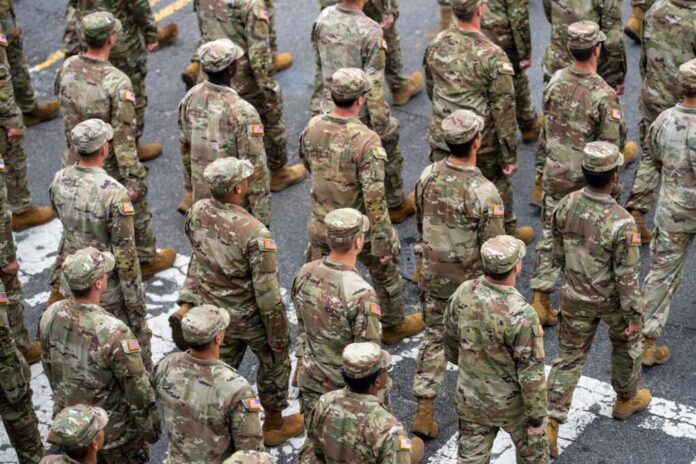
A National Guard member’s alleged attempt to assist Russian intelligence raises questions about insider vulnerability in U.S. military ranks, at a time when calls for strengthened protection of sensitive systems are increasing.
Story Snapshot
- Federal prosecutors charged a National Guardsman with attempting to send sensitive radio equipment and military intelligence to Russia.
- The case underscores the persistent insider espionage threat within U.S. military ranks, especially as foreign adversaries escalate efforts to undermine American security.
- The Department of Justice and FBI are intensifying efforts to root out and prosecute insider threats, reflecting a broader crackdown under the Trump administration.
- This incident comes amid renewed calls for tighter security protocols, export controls, and robust national defense measures.
Espionage Plot Uncovered Within the National Guard
On October 28, 2025, federal agents arrested an individual identified as “Canyon Anthony Amarys,” a 28-year-old National Guard member from Alamogordo, New Mexico, on allegations of attempting to provide Russia’s military intelligence with export-controlled radio equipment and sensitive information regarding a U.S. Army base. Prosecutors allege he violated the Export Control Reform Act, seeking to transmit U.S. military information to a foreign adversary. The DOJ and FBI have said the investigation is ongoing. If confirmed, the case would reflect evolving tactics by foreign intelligence services that focus increasingly on insider access within America’s armed forces.
National Guardsman Schemed To Help Russia Spy On US Military, DOJ Says https://t.co/69ZjzkYeEG via @dailycaller
— MakeSFGreatAgain (@SfMake) October 31, 2025
Insider Threats and the National Security Response
Insider espionage has long posed a threat to U.S. military operations, with foreign powers like Russia and China reportedly seeking to recruit U.S. personnel or contractors who have access to classified systems. For example, in March 2024 the DOJ announced that Jack Douglas Teixeira, a member of the U.S. Air National Guard, pleaded guilty to sharing classified national-defense information via social-media channels. The DOJ describes such conduct as undermining national-security interests. In response, the DOJ and FBI have increased counterintelligence investigations, tightened export-control enforcement, and pledged vigorous prosecution of individuals suspected of insider threats.
Broader Implications for Defense and Policy
The case occurs amid a broader strategic review of U.S. military and security protocols. With Donald J. Trump back in office, his administration has reiterated a zero-tolerance stance on espionage and the unauthorized transfer of military technology. Insider threats not only compromise classified information but can also erode public trust in the armed forces. Short-term, the National Guard and other military branches may implement more stringent vetting procedures and increase monitoring of personnel with access to sensitive equipment. Longer-term, members of Congress and defense analysts anticipate new legislation to further restrict exports of sensitive technology and bolster domestic counterintelligence resources. The defense sector—including military contractors and technology firms—may also face expanded compliance requirements as the government moves to close vulnerabilities adversaries might exploit.
Expert Perspectives and the Path Forward
Security analysts and senior law-enforcement officials argue that aggressive prosecution coupled with preventive measures is essential to deter insider threats. The FBI’s Counterintelligence Division has described insider espionage as a “serious and growing” risk that demands coordinated efforts across federal agencies. Legal scholars suggest that existing statutes such as the Export Control Reform Act will continue to serve as key tools for prosecuting offenders. Meanwhile, some experts caution that stricter vetting and surveillance could adversely affect military morale or recruitment. Still, there is broad agreement among national-security professionals that robust oversight, clear leadership and sound policy are crucial to defending military secrets and preserving the rule of law. The DOJ and FBI have made it clear that any attempt to aid foreign adversaries or undermine U.S. interests will be pursued to the fullest extent of the law.
Sources:
National Guardsman Schemed To Help Russia Spy On US Military, DOJ Says
Betrayed US and its allies: Australian executive pleads guilty to selling American cyber secrets to Russia
US soldier tried to leak info on Abrams tank to Russia: DOJ
National Guardsman Schemed To Help Russia Spy On US Military, DOJ Says
US soldier gave M1A2 Abrams tank secrets to Russia for citizenship
Active Duty Soldier Arrested and Charged: Espionage and Export Violations
Justice Department Implements Critical National Security Program to Protect Americans’ Sensitive Information
Former U.S. defense contractor convicted of attempting to pass military secrets to Russia