Iran’s regime didn’t just crack down on protests—it tried to erase the evidence with an internet blackout, and the numbers now emerging are hard to ignore.
Story Snapshot
- Iran’s January 2026 internet shutdown is now being linked to a violent crackdown whose death toll remains heavily disputed.
- Tehran’s official figure stands at 3,117 killed, while independent estimates range from roughly 5,000 to more than 36,500.
- Human rights groups and journalists say martial law, curfews, and checkpoints still restrict daily life as families report intimidation around funerals.
- Outside verification remains limited because reporters and observers have faced access barriers, making documentation difficult even as connectivity returns.
Internet Blackout Lifted, and the “Missing” Story Starts Surfacing
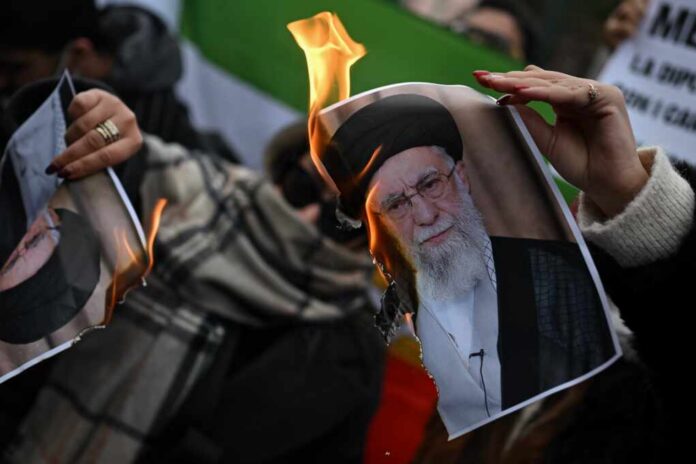
Iran’s near-total internet shutdown that began January 8, 2026, is gradually easing, and what comes into view is a familiar playbook: control communication first, then control the narrative. As service returns, activists, medical sources, and international outlets have begun compiling accounts that were impossible to share in real time. Those accounts describe nationwide violence concentrated around January 8–9, when security forces reportedly escalated to lethal force during the peak of the blackout.
Iran’s government says 3,117 people died, a figure issued by state security leadership after days of mounting scrutiny. Independent reporting and human rights monitoring, however, describe far higher totals—ranging from a verified minimum in the thousands to claims exceeding 30,000. The gap matters because authoritarian governments rely on uncertainty; when citizens cannot share footage, confirm identities, or coordinate basic facts, the regime’s version becomes the default—at least temporarily.
Disputed Death Tolls: What Different Counts Actually Measure
The competing tallies are not simply “who is lying.” They reflect radically different access and methods. Iran’s official count appears designed as a final answer, while independent groups treat their numbers as evolving. HRANA, an activist network with past credibility during unrest, has reported thousands of confirmed protester deaths while also tracking additional cases still under investigation. Other estimates rely on hospital records, eyewitness accounts, and claims of classified documentation reviewed by journalists.
International organizations have also offered ranges rather than a single number. A UN special rapporteur described at least 5,000 dead with the possibility of far more, while Amnesty International has documented evidence consistent with mass unlawful killings and ongoing enforcement operations. A major challenge remains that some deaths may bypass normal reporting channels, including military hospitals and direct morgue transfers, while families report pressure not to hold public funerals that could restart protests.
Martial Law Tactics: Curfews, Checkpoints, and Fear as Policy
Reports describe Iran under martial-law conditions, with nighttime curfews and armed patrols backed by an implicit threat of lethal enforcement. Checkpoints and security sweeps have continued after the most intense days of violence, signaling the regime’s priority: deter any regrouping. Families seeking to retrieve bodies have described intimidation and, in some accounts, fees to recover remains—an allegation that, if accurate, turns grief into another instrument of state control and further discourages public mourning.
Why U.S. Conservatives Should Pay Attention to the Information War
Iran’s crackdown is a reminder that the first casualty in any authoritarian surge is the public’s ability to speak and verify reality. When a regime can flip an “off switch” on communications, it can isolate communities, suppress evidence, and buy time to craft propaganda. For Americans who value constitutional liberties, this is a cautionary case study: the tools of censorship are not theoretical, and the people paying the price are often families simply trying to mourn, assemble, and tell the truth.
Mullahs will kill every single protestor and never go away.https://t.co/cgkqjxIcvo
— A Dying Breed – CK (@RSMeyers1776) February 1, 2026
At the same time, readers should treat the highest-end death toll claims with careful discipline. Multiple credible sources agree the official number is likely too low, but outside observers still cannot fully audit Iran’s internal records. That means the most responsible takeaway is also the most sobering: even the conservative estimates involve thousands of dead, and the regime’s decision to blackout the internet suggests it understood exactly how damaging open documentation would be to its credibility at home and abroad.
Sources:
Iranians detail ‘bloodbath’ crackdown said to have killed 5,700 protesters, as internet blockade eases
https://www.iranintl.com/en/202601301063
Iran News in Brief – January 31, 2026
2026 Iran massacres
What happened at the protests in Iran?
Human Rights Council adopts resolution extending mandates / fact-finding
https://www.iranintl.com/en/202601277218