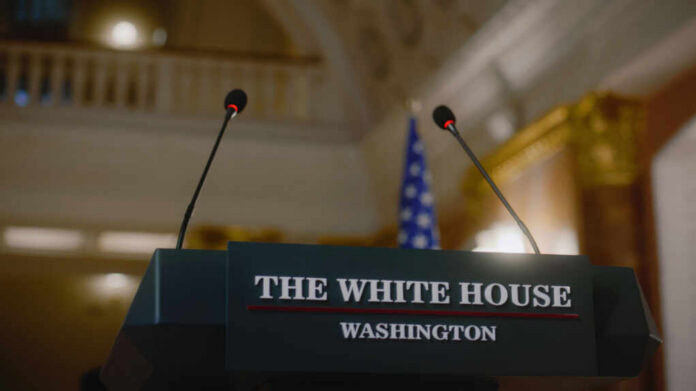
After gunfire shut down the White House Correspondents’ Dinner, organizers are pressing ahead with a rescheduled event to signal defiance — but questions about security readiness still loom.
Story Highlights
- White House Correspondents’ Association reschedules the dinner following April shooting, casting it as a stand against intimidation [2].
- New July date and enhanced safety measures announced after consultations with law enforcement and members [4][6].
- Law enforcement halted the original event and evacuated high-profile attendees after shots near security screening [6][1].
- Suspect Cole Allen pleaded not guilty to charges tied to the attack, keeping legal questions active [3].
Rescheduled Dinner Framed as Resolve, Not Retreat
White House Correspondents’ Association President Weijia Jiang announced the dinner will proceed on a new July date, describing the return as a direct rejection of intimidation and a reaffirmation that violence cannot silence a free press [2]. Reporting describes the move as a deliberate decision after board consultations, not an automatic reset, signaling institutional intent to push forward despite the disruption [4]. The rescheduling occurs six weeks after the interrupted event, emphasizing continuity while acknowledging the shock of the April attack [6].
Politico reported the rescheduled dinner would include enhanced safety measures, reflecting input from security professionals and the membership [4]. Coverage from national outlets reiterated that the White House Correspondents’ Association is “officially moving forward,” underlining that the organization weighed optics, mission, and risk before locking in the new date [7]. That stance aligns with a common crisis-response pattern in which institutions adapt while continuing core activities to deny perpetrators the symbolic victory of cancellation [6].
April Disruption Exposed Security Gaps Authorities Now Aim to Close
Law enforcement halted the original dinner after shots rang out near the main screening zone, ordering press and attendees to leave the premises and moving senior officials to safety [6]. Wikipedia’s incident summary notes the gunfire occurred by the primary security checkpoint, underscoring that the attack targeted a critical bottleneck where crowds and screening converge [1]. That location complicates any security plan because perimeter lines can create predictable choke points vulnerable to disruption, a risk officials are now addressing with changes for July [4].
CBS reporting indicates the evacuation included the President, First Lady, Cabinet officials, and other dignitaries, demonstrating how seriously authorities treated the breach [6]. The swift decision to clear the venue likely prevented further harm but also highlighted vulnerabilities at the threshold of the secured area. The White House Correspondents’ Association’s public commitment to additional safeguards suggests greater coordination with law enforcement, layered access control, and revised crowd management to reduce exposure at points of entry [4].
Legal Proceedings Keep Public Focus on Motive and Method
Video reports identify the accused gunman as Cole Allen, who pleaded not guilty to the charges arising from the attack, setting up a legal process that will explore motive, planning, and any lapses that enabled the assault [3]. A not-guilty plea preserves the presumption of innocence, but the case will force a granular review of the security sequence at the April event. Those facts matter for July, when agencies and organizers must translate lessons into practical controls without paralyzing the event’s civic function [3].
White House Correspondents’ Dinner rescheduled after assassination attempt
President Donald Trump is made of sterner stuff than many Americans. After leftist lunatic Cole Allen attempted to kill Trump at the White House Correspondents’ Dinner in April, the president urged for the…— Patrick Laidlaw (@patrick_laidlaw) June 3, 2026
CBS and other outlets confirm the July 24 target for the rescheduled gathering, giving security teams weeks to implement procedural upgrades and conduct rehearsals [6]. The White House Correspondents’ Association’s insistence on moving forward positions the dinner as a test of whether open civic ceremonies can proceed under credible protection. For conservatives who demand both safety and normalcy, the standard is clear: deter copycats, harden entry points, and keep political and media institutions accountable for their own risk decisions [4][6].
What Conservatives Should Watch Next
Conservative readers should track how the enhanced measures affect real-world throughput and deterrence, not just press releases. Verification matters: Did planners reduce choke points, introduce randomization, and deploy counter-surveillance to spot pre-operational behavior? Transparent coordination with the Department of Homeland Security and the United States Secret Service, plus clear lines of command, should be visible on event day. If those elements are present, the dinner’s return will read as prudent resilience rather than theatrical risk-taking [4][6].
Sources:
[1] Web – THE ESSEX FILES: The Show Must Go On – WHCA Reschedules Dinner After …
[2] Web – 2026 White House Correspondents’ Dinner shooting – Wikipedia
[3] YouTube – White House Correspondents’ Dinner rescheduled after shooting
[4] YouTube – White House Correspondents’ Dinner shooting suspect pleads not …
[6] YouTube – White House Correspondents’ Dinner to be Rescheduled
[7] Web – White House Correspondents’ Dinner is rescheduled after initial …