Two Republican senators just forced the Justice Department to kill a $1.8 billion fund in writing before they would help confirm President Trump’s next attorney general.
Story Snapshot
- Senators John Cornyn and Thom Tillis used Todd Blanche’s attorney general nomination to pressure the Justice Department over a controversial settlement fund.
- The deal requires a formal written order ending the “anti-weaponization fund” and tightening Trump’s tax immunity settlement.
- The agreement shows how a few senators can stall major nominations to demand clearer limits on government power.
- The fight reflects wider anger on both right and left over secret deals and special treatment for political elites.
Senators Force Written Deal Before Blanche Nomination Moves
Senators John Cornyn of Texas and Thom Tillis of North Carolina blocked acting Attorney General Todd Blanche’s nomination, demanding changes to a Justice Department settlement that gave President Trump tax immunity and set up a large “anti-weaponization” fund. Their hold meant the Senate Judiciary Committee canceled a planned vote and left Blanche’s future in doubt as both men insisted the Trump administration could still revive the fund without stronger written limits.
Acting Attorney General Todd Blanche met privately with Cornyn and Tillis after weeks of tense public back-and-forth. Aides and news reports described “active conversations” between the senators, Blanche, and the White House about modifying the deal, with Cornyn emphasizing they wanted the Justice Department to match Blanche’s own sworn testimony and “put that in writing.” That testimony had promised the fund would not survive and that the Internal Revenue Service immunity would be narrowed.
The Anti-Weaponization Fund And Why It Set Off Alarm Bells
The settlement at the center of the fight involved an estimated $1.8 billion “anti-weaponization fund” tied to claims that the Justice Department had targeted Trump for political reasons. Cornyn and Tillis warned that the fund looked like a special carve-out for one powerful politician and worried it could be revived or misused later, even if Blanche said it was dead. Their demand was simple on paper: end the fund outright and lock the promise into a binding written order that could not be quietly changed later.
For many Americans, the idea of a huge fund built around “weaponization” fears cuts close to existing frustration about double standards in Washington. Conservatives fear federal agencies target them while elites get off easy, and liberals see wealthy insiders using private deals and settlements to dodge rules that ordinary people must follow. The Blanche dispute landed in the middle of that shared anger because it raised the question of whether the Justice Department was cutting a side deal to protect Trump instead of enforcing tax laws fairly.
How Cornyn And Tillis Used Confirmation Power As Leverage
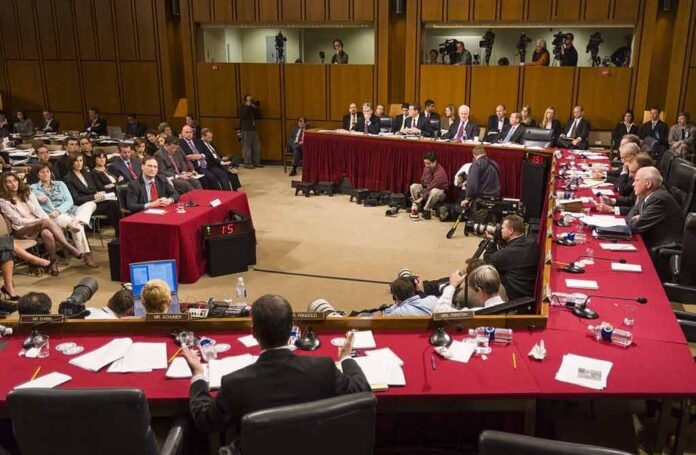
Cornyn and Tillis sat on the Senate Judiciary Committee, giving them key power over Blanche’s path to the top Justice Department job. They signaled early they would not vote for Blanche until the settlement was fixed, creating a standoff that forced committee leaders to delay votes and consider dropping the nomination entirely. President Trump even floated pulling Blanche’s nomination until the next Congress, a move seen as both pressure and payback against the senators who had already lost favor with him.
The senators then used that leverage to push for narrow but precise changes instead of a broad rewrite. Reports say Cornyn gave the Justice Department a new offer to resolve the dispute and asked only that officials sign an order that matched Blanche’s own public promises. That focus on written language, rather than just speeches or press releases, shows a deeper worry about how quickly verbal assurances can vanish in Washington once the headlines fade and the cameras leave.
What The Final Deal Does — And What It Does Not Settle
News outlets later reported that Cornyn reached a deal with Blanche and the Justice Department on an “in-writing order” that ends the anti-weaponization fund and narrows the audit immunity arrangement with Trump. With those changes, Cornyn and Tillis agreed to let Blanche’s nomination move forward, and committee leaders prepared to restart the confirmation process that had been frozen for days. The written order is described as guaranteeing that the fund cannot be revived under the current settlement terms.
Cornyn, Tillis back Blanche for attorney general after deal on DOJ fund https://t.co/s8U3jTwefM
— Maurizio (@HonestMau) August 3, 2026
Even with the agreement, some questions remain about how far the changes go and whether future officials could find new ways around them. Critics worry that the Justice Department deal still signals that political insiders can negotiate their own special rules, even if certain parts are rolled back. Supporters counter that forcing the department to sign a public order is at least a step toward clearer limits and more transparency, and shows that a few lawmakers are willing to stand up to their own party when they see a problem.
Why This Fight Matters Beyond One Nomination
This clash fits a wider pattern where senators use confirmation hearings to demand firm written commitments from the executive branch on hot-button issues. In this case, the Blanche nomination became a tool to press for guardrails on a controversial settlement deal that many saw as favoring the sitting President. That kind of power struggle fuels the sense on both sides that major decisions are made through backroom bargaining, not open debate and clear laws the public can easily understand.
For Americans who already feel the federal government serves the “deep state” more than regular citizens, this episode is a warning and a lesson. It shows that large secretive funds and immunity deals can move forward until someone with leverage forces them into the light, but it also shows how hard it is to get full details or lasting change. Whether you worry more about government abuse or elite impunity, the Blanche settlement fight underlines a shared fear: special deals for the powerful can bend the system far away from the country’s basic promise of equal treatment under the law.
Sources:
youtube.com, politico.com, thehill.com, nytimes.com, foxnews.com, punchbowl.news, notus.org, usatoday.com, semafor.com, forbes.com, thenationaldesk.com