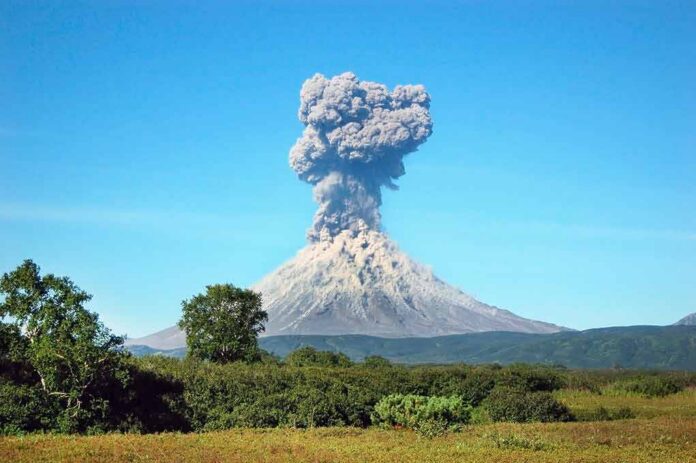
Guatemala raised a nationwide orange alert and began evacuations as Volcán de Fuego sent ash and lava downslope, threatening nearby towns.
Story Snapshot
- Authorities set a national orange alert and moved people from two villages near the volcano.
- Eruption strengthened overnight, with ash and gas columns and lava flows reported.
- Orange is the second-highest alert in Guatemala’s four-step system.
- Past alerts show evacuations follow when activity spikes, to avoid repeat tragedy.
Officials Order Evacuations As Activity Intensifies
Guatemala’s disaster agency said the country is under an orange alert as Volcán de Fuego’s activity grew stronger. Officials began evacuating two villages near the volcano, which sits about 35 kilometers from Guatemala City. Reporters on the ground described larger ash and gas plumes and lava moving down the slopes. Emergency teams warned residents to leave fast and avoid river ravines, which can funnel deadly flows during eruptions. Local shelters prepared to receive families overnight.
National warnings focused on the departments closest to the cone, where ash fall can choke air and reduce visibility. Authorities cautioned drivers and told communities to protect water supplies from ash. Power and cell service can fail during heavy fall, so officials urged families to set meeting points and keep radios ready. The government asked airlines to monitor aviation advisories because volcanic ash can damage engines and force reroutes over Central America’s busy corridors.
What Orange Alert Means In Practice
Guatemala uses four alert levels: green, yellow, orange, and red. Orange is the second highest. It signals a dangerous phase that can worsen in hours or days, and it can trigger evacuations in high-risk zones. Global monitors also listed Fuego’s situation as orange, reflecting a serious hazard, though not yet the maximum level that mandates the largest-scale evacuations. In this event, the orange alert aligned with on-the-ground moves to clear people from exposed villages.
Volcán de Fuego is among the most active in Central America, and it has a record of fast shifts from steady explosions to violent surges. That history drives caution. In recent years, official alerts have suspended access near the crater, paused tourism, and closed trails when activity spiked. United States Embassy notices from 2025 and 2026 show that when ash, rocks, and hot gases increase, authorities restrict zones and prepare evacuations to limit loss of life.
Key Facts That Cut Through The Noise
Wire services reported specific steps: a national orange alert, intensified eruptive activity, and evacuations in two nearby communities. Another outlet, citing Agence France-Presse, described stronger lava flows and large ash and gas columns, consistent with a rising hazard. These reports match the known alert structure used by Guatemala’s Coordinadora Nacional para la Reducción de Desastres and scientific inputs from the National Institute of Seismology, Volcanology, Meteorology, and Hydrology.
Some coverage used the term “danger” and others emphasized “orange.” That wording gap can confuse the public. But the core facts line up: the government raised the alert to the second-highest level and started limited evacuations near the slopes. For families living under ash clouds, word games do not matter. Clear steps do. Pack documents and medicine. Wear a mask or cloth to avoid breathing ash. Follow official routes. The faster the move, the safer the outcome.
Sources:
livinginguatemala.com, rtl.fr, france24.com, democrata.es, volcanodiscovery.com