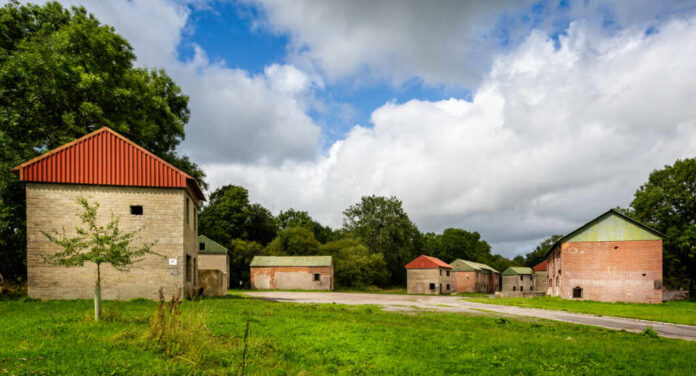
A village, once vibrant, now echoes with silence as it remains locked under military control, barely opening its gates to the world 12 days a year.
Story Highlights
- Imber village was evacuated in 1943 for military purposes and remains under Ministry of Defence control.
- Residents were promised a return that never materialized, leaving the village a ghostly reminder of wartime decisions.
- St Giles Church, a rare preserved structure in Imber, draws thousands of visitors during its brief open days.
- Custodian Neil Skelton has dedicated his life to maintaining the church’s history and welcoming visitors.
History of Imber’s Evacuation
In 1943, during the heat of World War II, the residents of Imber, a quaint village in Wiltshire, were given just 47 days to vacate their homes. This abrupt evacuation was a strategic move by the Ministry of Defence (MoD), which sought to convert the area into a military training ground. The villagers were assured they could return post-war, but as decades passed, it became clear that this promise would remain unfulfilled.
The MoD’s expansion of the training area after the war ensured that the village remained deserted. Over time, the quaint cottages deteriorated, their thatched roofs collapsing, leaving behind haunting shells. Despite the village’s ghostly silence, its historical significance has not been forgotten.
The Role of St Giles Church
St Giles Church, a Grade I-listed building, stands as a testament to Imber’s past. Managed by the Churches Conservation Trust (CCT), the church is one of the few structures maintained amidst the ruins. The church opens its doors to the public just 12 days a year, attracting thousands of visitors eager to explore its history and contribute to its upkeep. Neil Skelton, the church’s custodian, has been integral in preserving its legacy, driven by a personal connection that dates back to his first visit at age 16.
Visitors flock to Imber during open days, with crowds often reaching thousands. These events are not only about exploring the village’s history but also serve as crucial opportunities for fundraising, generating between £15,000 to £20,000 annually for the church’s conservation efforts.
The Impact of Military Control
Despite the rich history and the tireless efforts of volunteers, Imber remains under the tight grip of the MoD. The village’s transformation into a military training ground has meant a permanent loss of community life, with the area now serving as a historical and wildlife preserve. The situation exemplifies the post-war expansion of military influence over civilian rights, raising questions about the balance between national security and community preservation.
In the short term, Imber’s few open days boost local tourism and fundraising. However, the long-term implications are more profound, as the village remains a poignant reminder of wartime decisions that prioritized military needs over civilian promises.
Sources:
https://en.wikipedia.org/wiki/Imber?utm