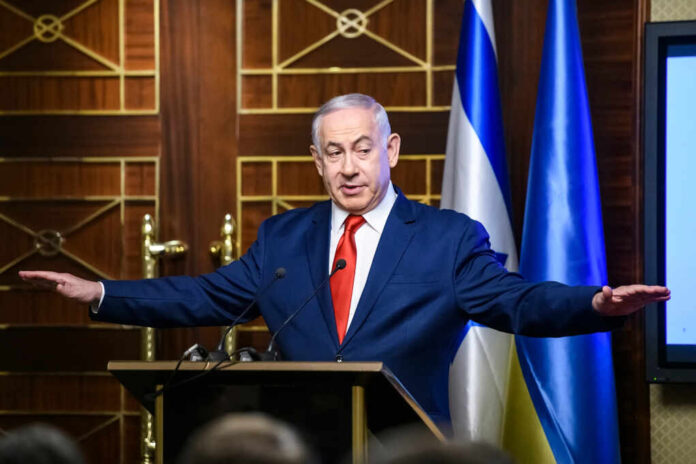
A strategic shift in the U.S.-Israel relations is on the horizon as Netanyahu aims to eliminate U.S. military aid within a decade, signaling self-reliance.
Story Highlights
- Netanyahu proposes ending U.S. military aid to Israel within 10 years.
- The plan includes a 350 billion shekel investment in Israel’s arms industry.
- This move is a departure from historical reliance on U.S. aid.
- Israel seeks to bolster its defense capabilities independently.
Netanyahu’s Bold Proposal for Self-Reliance
In a groundbreaking interview with The Economist, Israeli Prime Minister Benjamin Netanyahu announced his intention to taper U.S. military aid to Israel to zero within the next decade. This significant proposal aims to enhance Israel’s self-reliance and foster economic maturity, marking a pivotal shift in the historically aid-dependent U.S.-Israel defense relationship.
Netanyahu’s plan is underpinned by a substantial investment of 350 billion shekels (approximately $110 billion) into Israel’s burgeoning arms industry, aiming to reduce reliance on foreign military assistance. This move aligns with his vision of Israel as a technologically advanced nation capable of sustaining its security needs independently. Netanyahu conveyed this vision to former President Donald Trump during a December meeting, emphasizing Israel’s economic growth potential.
🇮🇱🇺🇸 NETANYAHU: ISRAEL PLANS TO END U.S. MILITARY AID – THE MUCH APPRECIATED $3.8B A YEAR
Netanyahu says Israel plans to slowly end U.S. military aid over 10 years, calling it a dramatic shift as Israel grows stronger and richer.
"I want to taper off military aid within the… pic.twitter.com/OCKZZwoNMQ
— Mario Nawfal (@MarioNawfal) January 10, 2026
Historical Context of U.S.-Israel Military Aid
Since the 1967 Six-Day War, U.S. military aid has been a cornerstone of Israel’s defense strategy. The 2016 Memorandum of Understanding (MOU) between the U.S. and Israel secured $38 billion in military aid from 2019 to 2028. Traditionally, these agreements have either expanded or maintained aid levels. Netanyahu’s proposal to reduce aid marks an unprecedented initiative, seeking to transform the Israel-U.S. relationship from one of dependency to partnership.
Israel’s defense sector has been rapidly advancing, with exports increasing by 13% annually. This growth supports Netanyahu’s confidence in Israel’s ability to sustain its defense capabilities without U.S. aid. The proposed reduction in aid reflects a strategic pivot towards enhancing domestic arms production and export capacity.
Implications and Future Outlook
Should Netanyahu’s proposal be realized, the impact on both Israeli and U.S. defense industries could be profound. Israeli defense firms stand to benefit from increased domestic orders, fostering innovation and employment. Conversely, U.S. defense contractors may face decreased demand from Israel, potentially affecting their order books.
Netanyahu’s initiative is likely to resonate with conservative audiences in the U.S., aligning with values of self-reliance and fiscal responsibility. However, it may also raise concerns about regional stability and the future of U.S.-Israel strategic cooperation. While the existing MOU remains in effect until 2028, discussions for a post-2028 framework are reportedly underway.Ultimately, Netanyahu’s proposal to taper U.S. aid represents a bold step towards redefining Israel’s position on the global stage, emphasizing economic independence and strategic autonomy.
Sources:
Jerusalem Post: Netanyahu declares aim to end US military aid
Jewish Insider: Netanyahu seeking to end U.S. aid within 10 years
Channel NewsAsia/Reuters: Israel’s Netanyahu hopes to taper military aid
TRT World: Netanyahu’s strategic shift