

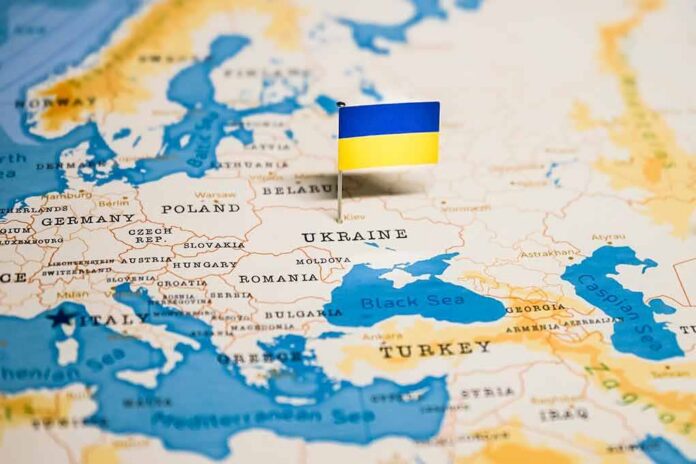
A deadly blast in a Polish village drew a swift show of European unity, even as investigators worked to confirm who launched the missile that exploded there.
Story Snapshot
- The European Union pledged “unwavering” solidarity with Poland after a missile killed two people near the Ukraine border.
- The incident occurred during a large Russian missile barrage on Ukrainian cities the same day.
- Poland said a Russian-made missile fell in Przewodów, without confirming where it was launched.
- European leaders backed Poland’s investigation while staying in close contact with allies.
EU Signals Full Support After Blast in Poland
European Union leaders voiced strong support for Poland after a missile explosion killed two people in the village of Przewodów on November 15, 2022. A formal statement issued the next day pledged “unwavering unity, resolve and full solidarity” with the Polish people. The message also tied the blast to a massive wave of strikes on Ukrainian cities that day. Leaders linked arms politically while stressing that facts on the ground still needed to be confirmed by Polish authorities.
European Commission President Ursula von der Leyen expressed condolences and support on November 15. She said European Union institutions were monitoring events and staying in touch with Polish authorities, partners, and allies. Her message emphasized care and coordination rather than rushing to assign blame. That tone aligned with the union’s call to let Poland lead the technical review before any next steps by Europe or the North Atlantic Treaty Organization were set.
What Poland Reported in the First Hours
Poland’s Foreign Ministry stated that a Russian-made missile landed in Przewodów, near the Ukraine border, killing two citizens. The announcement gave a clear location, time, and the origin of manufacture. It did not claim the launch point. United States President Joe Biden later said initial information suggested the missile was unlikely to have been fired from inside Russia. Polish leaders also described the blast as a single act, with no evidence of more strikes that day.
The difference between “Russian-made” and “Russian-launched” mattered. Many countries have held Russian-made systems for decades. During Russia’s wide barrage on Ukraine’s cities and grid that day, air defenders on both sides fired. That chaotic environment can produce tragic errors. Later briefings by European and North Atlantic Treaty Organization officials, reported by major outlets, pointed to a likely Ukrainian air defense missile fired amid Russia’s attacks, while holding Moscow responsible for starting the chain of events.
Why This Incident Grabbed Europe’s Attention
The explosion happened on North Atlantic Treaty Organization soil, which raised immediate concern about escalation. The alliance treats any strike on a member’s territory as a grave event. That is why leaders moved fast to show unity while avoiding hasty claims. The union backed Poland’s investigation to set facts first. That balance—support and restraint—helped cool tensions while still honoring the lives lost and the duty to defend allied territory.
🚨🇵🇱🇺🇸🇪🇺 BREAKING: Poland plans to issue a formal request to NATO for enhanced Eastern Sentry support from the United States and the European Union following the Russian missile airspace violation incident.
Poland Defence Minister Kosiniak-Kamysz and Prime Minister Tusk called… pic.twitter.com/tIj8ttVoHX
— Bedouin Report (@BedouinReport) November 20, 2026
For many readers in the United States, this episode highlights a challenge that crosses party lines. Wars produce confusion, and fast claims can outpace proof. Governments sometimes appear slow, secretive, or political. Here, officials did two things that many citizens expect. They stood with an ally that suffered deaths. They also held space for investigators to confirm what happened. That approach may not fix trust overnight, but it tracks with basic, shared values: protect people, then get the facts.
Sources:
independent.co.uk, nbcbayarea.com, audiovisual.ec.europa.eu, cnn.com