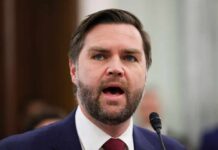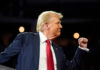


President Trump and Vice President-elect JD Vance are slamming Democrat policies as a ‘scam,’ claiming they are fixing the economic mess left behind.
Story Highlights
- Trump and Vance criticize Democratic economic policies as ineffective.
- Republicans propose deregulation and tax reforms as solutions.
- Affordability remains a key issue as the new administration takes charge.
- The Republican message centers on correcting perceived Democratic failures.
Trump-Vance Critique of Democratic Policies
President Donald Trump and Vice President-elect JD Vance have launched a scathing critique of Democratic economic policies, labeling them a “scam” that has exacerbated affordability issues. This rhetoric, emerging during the 2025 transition, underscores a Republican pledge to rectify what they see as severe economic mismanagement by the previous administration. As inflation and housing costs remain high, Republican leadership is positioning deregulation and tax reforms as vital to restoring economic stability.
The Republican critique highlights the perceived failures of Democratic policies implemented from 2021 to 2024, such as the Inflation Reduction Act and the Infrastructure Investment and Jobs Act. These initiatives, according to Trump and Vance, have fueled inflation through excessive spending without delivering tangible improvements in affordability. Instead, they argue, a market-driven approach emphasizing deregulation and reduced governmental intervention is the key to economic recovery.
JD Vance just challenged the democrat narrative of an ongoing affordability crisis by highlighting economic progress under the Trump administration.
He noted, “Under the Biden administration, the average American family lost over $3,000 of household income. Under the first 10… pic.twitter.com/lKoDyBAYb1
— Media Lies (@MediasLies) December 2, 2025
Republican Economic Strategy
In response to the affordability crisis, the incoming administration plans to roll back regulatory measures and implement tax cuts aimed at stimulating economic growth. The Trump-Vance team argues that reducing bureaucratic red tape will lower business costs, thereby increasing competitiveness and lowering prices for consumers. This strategy is set against a backdrop of continued inflationary pressures and debates over wage growth and housing costs, which remain elevated despite previous Democratic efforts.
Republicans are framing their economic agenda as a corrective measure, promising to prioritize policies that support job creation and economic expansion. This includes a renewed focus on energy independence and trade policies designed to bolster American manufacturing. By addressing these core issues, the administration aims to alleviate the financial burdens faced by working-class families, a demographic that played a crucial role in the election outcome.
Political and Economic Implications
The Trump administration’s policy shift is likely to face significant Democratic opposition, both in Congress and the media. Democrats have defended their fiscal policies as necessary responses to unprecedented economic challenges, emphasizing the benefits of targeted assistance programs. However, with a Republican majority in Congress, the Trump administration is poised to enact substantial changes that could redefine the economic landscape over the coming years.
The political ramifications of these policy debates will extend into the 2026 midterm elections, where affordability and economic performance will undoubtedly be pivotal issues. The effectiveness of the Republican agenda in delivering tangible improvements to voters will be closely scrutinized, influencing future electoral dynamics and party strategies.
Sources:
Trump calls affordability a ‘Democrat scam’ amid inflation concerns persist nationwide
JD Vance Slams ‘Disgraceful’ Suggestion
Today’s Table Of Contents