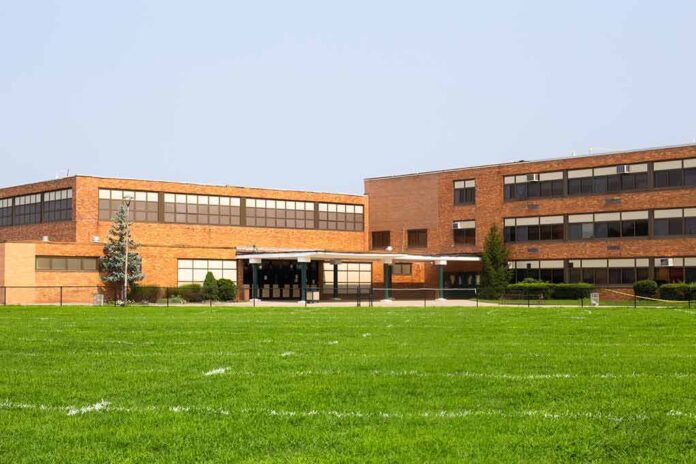
A 15-year-old Alaska high school athlete collapsed during gym class, went into cardiac arrest, and later died after being declared brain dead, stunning his school and community.
Story Highlights
- Levi Curry, 15, collapsed during a physical-education class at Eagle River High School near Anchorage.
- Reports say he suffered cardiac arrest, was hospitalized, and was later declared brain dead before his death.
- Family and church statements cite a pre-existing heart condition that had been managed by doctors.
- The family chose organ donation, and the community held large memorials and tributes.
What Happened At Eagle River High School
People reported that freshman football player Levi Curry collapsed during a gym class at Eagle River High School on November 6 and went into cardiac arrest. Alaska’s News Source identified him as a student-athlete at the school in the Anchorage area. Reports say he was taken to Providence Hospital after emergency care efforts at the school and in transit. TMZ later reported he was declared brain dead and died after the collapse and hospitalization.
The New York Post reported that the family thanked school staff and paramedics who gave cardiopulmonary resuscitation during transport to the hospital. People reported the family’s GoFundMe stated he was declared brain dead at 9:49 p.m. and that the family chose organ donation. Local coverage said hundreds gathered to mourn, describing him as a dedicated teammate and friend. Together, these accounts outline a rapid medical crisis followed by an outpouring of support.
Family And Community Accounts
The Nightly reported that Curry had a known heart condition that his family and church said was managed by a pediatric cardiologist. His father said an earlier surgery had “basically healed it,” according to those reports. While some headlines said he “died of cardiac arrest,” the reporting describes a sequence of collapse, cardiac arrest, hospitalization, brain-death determination, and organ donation rather than a formal cause-of-death ruling. Outlets consistently place the incident at Eagle River High School.
Some details differ across reports, including whether the collapse occurred on November 5 or November 6. The core facts remain stable: a sudden collapse during gym, a cardiac arrest, swift response, and a later death after brain-death declaration. The family-centered accounts also stress gratitude toward first responders and the school community. Those themes match common community responses after youth cardiac events, where clarity on exact medical causes often emerges later, if at all.
Why This Tragedy Resonates Nationally
Sudden cardiac arrest in student-athletes is rare but can be fatal without fast action. A study in Circulation found that when high schools planned for cardiac emergencies and used on-site automated external defibrillators, nearly two-thirds of victims survived to hospital discharge. Another analysis reported survival rates as high as 40 percent with strong public access to defibrillators. Early cardiopulmonary resuscitation and quick defibrillation are the key links that save lives.
💔 TEEN FOOTBALL PLAYER COLLAPSED AND DIED DURING GYM CLASS, TEAM DUG HIS GRAVE WITH THEIR BARE HANDS
A family is mourning the unimaginable loss of their 15-year-old son, who had overcome a childhood heart condition, only to suddenly collapse and die while playing football… pic.twitter.com/Wuw13eu7Qm
— Abby Blabby (@abbyblabby11) November 15, 2026
National athletic and medical groups stress simple steps: know the signs, start chest compressions fast, and use an automated external defibrillator as soon as possible. Studies show survival can rise sharply when a certified athletic trainer is present and an automated external defibrillator is used on-site. Communities often ask hard questions after a loss like Curry’s. Strong planning, working equipment, and trained staff are practical answers that cross politics and help protect every student.
Sources:
nypost.com, people.com, thenightly.com.au, wlox.com, alaskasnewssource.com, ghanamma.com, news.today, pmc.ncbi.nlm.nih.gov, ahajournals.org