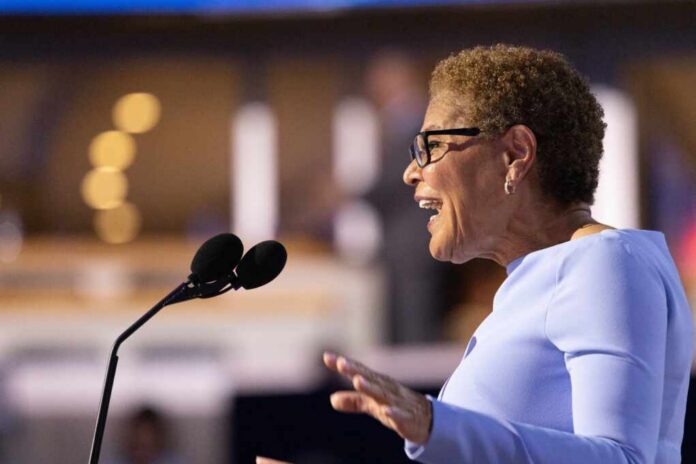
A viral claim tying Los Angeles Mayor Karen Bass to a Don Lemon court hearing while fire victims were ignored collapses under basic fact-checking—yet the real record still raises hard questions about priorities, budgets, and bureaucracy.
Quick Take
- No credible reporting supports the specific allegation that Bass skipped fire victims to attend a Don Lemon hearing amid profane crowd chants.
- Verified reporting instead centers on the one-year aftermath of the 2025 Palisades Fire and the slow, frustrating rebuild for displaced residents.
- Documents and coverage describe executive actions to speed recovery, but also highlight red tape, insurance disputes, and stalled relief measures.
- Controversy over Los Angeles Fire Department budgeting and leadership changes remains a major political pressure point as Bass faces 2026 scrutiny.
The Viral Claim vs. the Verifiable Timeline
Searchable coverage from major outlets and official city communications does not match the headline-style accusation that Mayor Karen Bass “ignored fire victims” to attend a Don Lemon hearing while a crowd shouted profanity at her. The available reporting provides no date, location, video, or corroborated account for that scene. What is documented is a detailed timeline around the January 2025 Palisades Fire, the city’s emergency actions, and the long, uneven rebuild that followed.
That matters for conservatives who are tired of media distortion from every direction. Bad information doesn’t help displaced families rebuild, and it doesn’t strengthen public accountability. If critics want to challenge Bass, the strongest argument comes from provable decisions: staffing and preparedness questions, permit delays, and the city’s ability to cut through bureaucracy in a state famous for turning “rebuilding” into a paperwork marathon.
What the Palisades Fire Changed—and What Hasn’t Changed
Los Angeles’ Palisades Fire became the city’s most destructive wildfire, leaving 12 people dead, destroying thousands of homes, and forcing mass evacuations amid extreme winds reported at 60–90 mph, with higher gusts in some areas. The crisis unfolded alongside other regional fires, including the Eaton Fire in Los Angeles County. By the January 2026 anniversary, reporting still described thousands displaced and a recovery process moving slower than many residents expected.
Officials emphasized emergency declarations, debris removal planning, and steps to enable temporary housing options such as RVs and modular units. Bass also issued an executive order branded around “Return and Rebuild,” aimed at accelerating permits and allowing “like-for-like” rebuilding in impacted areas. These moves reflect a common post-disaster playbook: suspend some fees, speed approvals, and try to keep people from permanently leaving the community. The deeper question is whether these steps produced results quickly enough.
Budget Cuts, Fire Department Turmoil, and Public Trust
The aftermath also exposed a sensitive political fault line: the Los Angeles Fire Department’s resources and leadership. Reporting highlighted criticism connected to city budget decisions, including cuts cited at $17.6 million, and how those choices were viewed during the disaster response. Coverage also described leadership turbulence, including Bass firing LAFD Chief Kristin Crowley after public friction over budgets and performance expectations, and later appointments meant to bolster disaster preparedness.
Official after-action documentation praised evacuation efforts and described operational successes under punishing conditions, while also committing to improvements in staffing, technology, and coordination. For many taxpayers, the unresolved issue is confidence: when the government expands in size and spending for years, citizens expect core services—fire protection and emergency response—to be unquestionably ready. When residents instead hear about budget fights and reorganizations, it intensifies skepticism about competence and priorities.
Rebuilding Collides with Red Tape, Insurance Denials, and Delayed Relief
The most consistent theme across sources is not a courtroom spectacle, but a grinding recovery. Reporting and analysis pointed to insurance disputes and delays that complicated families’ ability to rebuild, along with procedural hurdles tied to permitting and environmental review requirements. Even when leaders publicly promise to “cut red tape,” the reality is that California’s regulatory culture can slow rebuilding to a crawl, leaving working families stuck in limbo.
Some reporting described “false starts” in relief efforts and political wrangling over fee exemptions and administrative changes. Legal analysis supportive of the city’s executive order still emphasized that recovery needs to be broad and equitable across affected areas, not just within the city’s direct jurisdiction. For conservatives who favor limited government that performs its basic duties well, this is the practical test: can government get out of the way after a disaster while still delivering essential services and clear rules?
What Accountability Looks Like Going Into 2026
As Bass heads deeper into 2026 political scrutiny, the available record points to measurable benchmarks voters can demand: faster permit turnaround times, transparent rebuilding milestones, clear reporting on fee relief, and proof that LAFD staffing and readiness improvements are real—not just promised. The strongest critiques are the ones that can be audited, timed, and verified, especially when families are still displaced and costs remain high across Southern California.
🚨 NOW: People are screaming “F*** YOU, KAREN BASS” as the Los Angeles Mayor leaves Don Lemon’s court hearing
Wouldn’t be surprised if these are folks who lost their homes in the fires and are STILL barred from rebuilding
Bass is Walz-level retarded pic.twitter.com/24KSgp5Zfl
— Nick Sortor (@nicksortor) January 30, 2026
The broader takeaway is straightforward. The sensational claim about Don Lemon and a jeering crowd is not supported by credible documentation in the provided research, and conservatives shouldn’t rely on shaky narratives when real, provable policy failures and bureaucratic dysfunction already offer plenty to debate. Holding leaders accountable requires precision: focus on budgets, preparedness, rebuilding speed, and the constitutional-minded principle that the government must prioritize core responsibilities before politics and publicity.
Sources:
LA mayor Karen Bass: Actions one year after wildfires
Mayor Bass Executive Order Paving the Way for Los Angeles to Rebuild After Devastating Fires
Mayor Bass Issues Statement Following Release of LAFD’s After-Action Review Report
LA mayor: Year of false starts
Details: Government support for Southern California wildfires