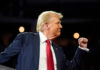
President Donald Trump has demanded that the BBC retract a documentary, issue a public apology, and pay $1 billion in damages over what he describes as selective editing of his January 6, 2021 speech. Legal experts, including Syracuse University law professor Gregory Germain, say the potential lawsuit is unlikely to succeed under established defamation law.
Story Snapshot
- Trump’s legal team issued a formal demand letter to the BBC with a November 14, 2025 deadline, threatening a $1 billion lawsuit over edited footage from a Panorama documentary
- The BBC’s Panorama program reordered segments of Trump’s January 6 speech in October 2024, altering the context and apparent meaning of his statements
- BBC Chair Samir Shah acknowledged the editing as “an error of judgment,” but legal experts argue selective editing does not meet the legal threshold for defamation
- Syracuse Law Professor Gregory Germain characterized the threatened lawsuit as “a total loser” that would not withstand a motion to dismiss under existing defamation law
- The case raises critical questions about media accountability, editorial discretion, and the limits of defamation law in the digital age
The Documentary Editing Controversy
The dispute centers on a Panorama documentary aired in October 2024 that examined Trump’s speech delivered before the January 6 Capitol riot. The BBC editorial team reordered parts of the speech, placing the conclusion at the beginning. Trump’s lawyers argue that this changed the context of his statements. Months later, the former president responded with a formal legal demand.
Trump’s Legal Demand and Timeline
On November 11, 2025, Trump’s attorney Alejandro Breto sent a formal letter to the BBC requesting a full retraction, public apology, and $1 billion in damages. The letter included standard legal phrasing such as “Please govern yourself accordingly,” signaling potential litigation if demands were not met. As of November 12, the BBC has not publicly commented on the letter.
Legal Experts Dismiss Defamation Claims
Syracuse University law professor Gregory Germain said the lawsuit would likely fail under the U.S. Supreme Court’s 1964 New York Times v. Sullivan standard, which requires public figures to prove “actual malice.” Germain explained that while the editing may have been misleading, it did not introduce false statements of fact. “It’s a total loser,” he said, adding that Trump “has a better chance of winning $1 billion in the lottery than from this lawsuit.”
Selective Editing as Standard Media Practice
According to Germain, selective editing is a common journalistic and production technique. “Editing video to change the order of quotes to make a point is what video editors do every day,” he said. He added that while the BBC’s approach may not have met its usual editorial standards, it did not amount to defamation under U.S. law.
BBC’s Partial Concession
BBC Chair Samir Shah described the editing as an “error of judgment,” acknowledging internal recognition of a lapse in editorial standards without accepting liability. Trump’s legal team described the editing as “malicious” and “disparaging,” alleging intentional misrepresentation — a central issue in any potential defamation claim.
.@BBCNews
Tell Trump to fuck himself!👇
Read "Trump-BBC live: US president tells corporation to apologise or he will sue them for $1bn" on SmartNews: https://t.co/2KG6h69Sa3 #SmartNews— V for Vote (@SCTBusVisInc) November 11, 2025
Broader Implications for Media Freedom
Media analysts say the case underscores ongoing tensions between media accountability and editorial freedom. If figures of influence could compel retractions through legal threats, it might deter critical reporting. Conversely, an unsuccessful lawsuit would reaffirm protections for editorial discretion under defamation law. The outcome could shape future standards for editing practices and media ethics in political reporting.
Sources:
Syracuse Law Professor Analyzes Trump’s Threatened $1B Lawsuit Against BBC