When a country fights for survival, its security organs must function as one; a daylight gun battle between two of them is not just a lapse in tradecraft but a breach of the state’s compact with its citizens.
At a Glance
- Ukraine’s Security Service (SBU) and military intelligence (HUR/GUR) clashed with live fire in Kyiv during an SBU-led operation.
- President Volodymyr Zelensky condemned the episode as “absolutely disgraceful” and ordered a full investigation.
- SBU says its officers were attacked during searches tied to an alleged Russian FSB plot; reports indicate HUR personnel were among the wounded.
- Authorities moved swiftly: streets were sealed, special forces deployed, and senior SBU personnel changes followed.
What happened in Kyiv: the core facts
In the morning hours in Kyiv, an SBU operation escalated into an armed confrontation that drew in personnel from Ukraine’s Defense Intelligence (HUR). The SBU stated its officers came under fire while conducting searches linked to an alleged FSB-directed plot, prompting a forceful response that included the deployment of its Alpha special forces and detentions on scene. Multiple outlets identified the two services involved as the SBU and HUR, reporting several casualties among HUR personnel and describing a police lockdown of the surrounding streets as the confrontation unfolded. While early accounts diverged on whether one person was killed or three were wounded, all credible reporting converged on the same bottom line: two pillars of Ukraine’s wartime security architecture exchanged gunfire in the capital.
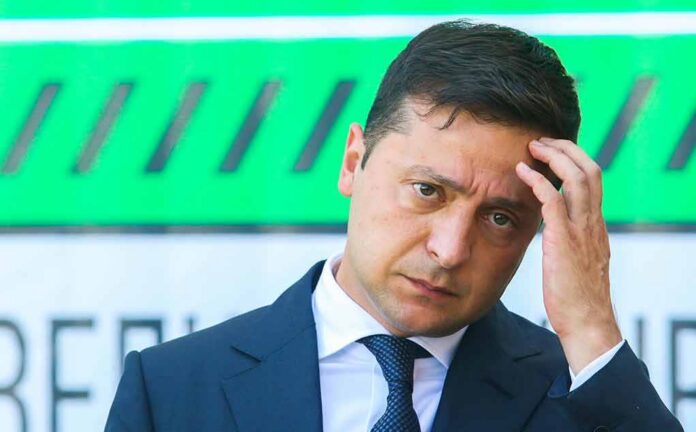
President Volodymyr Zelensky moved immediately to bring the incident under institutional control. He publicly labeled the clash an “absolutely disgraceful situation,” directed the Prosecutor General and the State Bureau of Investigation to establish the facts, and instructed the agencies’ leadership to explain themselves to the public. Within the same window, he dismissed the SBU’s chief of state secrets protection, signaling that accountability would not wait on a months-long inquest.
Mechanism and sequence: how an operation turned into a standoff
The SBU version begins with sanctioned investigative actions—searches tied to a counterterrorism lead—meeting armed resistance that necessitated escalation and arrests. That account, delivered in the agency’s official communication channels, situates the shootout within an anti-plot framework and emphasizes officer safety, legal process, and the use of elite units once the situation deteriorated. Parallel reporting from Ukrainian media and video fragments carried on social platforms framed the same window as a botched inter-service encounter in a residential district, with HUR personnel present and ultimately among the injured.
The precise trigger—who drew, who fired, and why—remains under formal investigation, but important structural elements are uncontested: SBU officers were on an active operation; HUR-linked figures and locations were implicated; weapons were discharged; special forces were called; and the police sealed off the vicinity to protect bystanders and preserve a scene that had crossed well beyond routine friction between agencies. As any veteran of complex domestic security work will recognize, the mechanics of such breakdowns are painfully familiar: overlapping jurisdictions, imperfect deconfliction, and the fog that attends fast-moving counterintelligence leads can, in minutes, turn colleagues into perceived threats.
Why this could happen at all: institutional design under wartime strain
Ukraine’s security sector has been reforming in flight. The SBU, a legacy institution with a broad charter that blends counterintelligence, counterterrorism, and powerful domestic authorities, has long been the subject of reform proposals that would prune its remit and sharpen external oversight. Analysts have argued that the concentration of sensitive capabilities—wiretapping, domestic surveillance, coercive investigative powers—inside a single service creates predictable accountability gaps and inter-agency friction, particularly when the country is under attack and every lead feels urgent.
Wartime multiplies those pressures. Intelligence sharing and operational deconfliction that might be merely inconvenient in peacetime become combustible under conditions of constant threat and secrecy. It is not abnormal for security services to investigate targets that sit near another service’s networks; what is abnormal is the erosion of the coordination protocols that prevent investigative lines from colliding at gunpoint. Ukraine’s broader war context—an international armed conflict with Russia in which espionage, sabotage, and active measures are a daily reality—renders every missed cue more dangerous and every lapse more public.
The presidency’s response: speed, signaling, and stakes
Zelensky’s language and actions served two purposes: arrest the narrative slide and reassert the primacy of state discipline. His instruction that “shooting here in Ukraine is permitted only at Russian occupiers” set a bright line for the security organs’ conduct and a rhetorical boundary for public debate. Ordering the Prosecutor General and the State Bureau of Investigation onto the case—and demanding that the SBU and HUR chiefs brief the public—was not just crisis management but an attempt to relocate the dispute from the street back into the hierarchy of law. Personnel changes at the SBU, including the removal of the official responsible for the protection of state secrets, signaled that command accountability would be part of the remedy, not an afterthought.
On the ground, the operational response matched the seriousness of the breach. Kyiv police closed affected streets, and SBU Alpha units restored control amid armed resistance, according to the service’s account. Those measures, disruptive as they were to city life, were necessary to contain risk to civilians and to secure evidence for prosecutors who must now reconstruct a minute-by-minute timeline that can withstand scrutiny.
Casualties and contested details: what’s firm and what awaits the case file
Casualty reporting in the immediate aftermath varied—some accounts described one death and two wounded, others three wounded. The overlapping facts are clear: HUR personnel were injured, and both agencies acknowledge the exchange of fire. The presidency has put formal investigators on a short leash; their mandates include establishing who initiated force, under what legal authority each team acted, and whether the SBU’s counter-plot premise will be supported by prosecutable evidence. That is the right process. A single sentence of caution belongs here and only here: until prosecutors publish their findings, fine-grained sequencing remains the remit of the investigation.
What this means going forward: discipline, deconfliction, and democratic control
Three priorities follow from an episode like this. First, deconfliction must be more than etiquette. It needs codified, enforceable protocols—who notifies whom, when warrants crosswire with live operations, and what the immediate chain-of-command contact looks like when two services converge on the same node. The tools are not exotic: shared operations centers, duty officers empowered to halt field teams on contact, and pre-cleared liaison channels that operate even when cell phones do not.
Second, rules of engagement must explicitly contemplate intra-government encounters. Every tactical leader should have drilled decision trees for encountering another Ukrainian service in plainclothes or without prior notice: hold, identify, call the liaison net, deescalate. In a theater where Russian false-flag operations are real, the burden of positive identification is higher, not lower—and the penalty for error cannot be gunfire between allies.
Third, democratic control and public confidence require visible, credible consequences. Prosecutors must tell the country, in plain language and with defensible evidence, what happened and what will change. The presidency has already set the tone; the justice system must now deliver the facts and, if warranted, the indictments. Ukraine cannot afford a second day like this one in Kyiv—its soldiers at the front and its citizens in the capital deserve better alignment from the institutions sworn to protect them.
Zelenskyy calls a shootout between Kyiv’s spy services “shameful”
On day 1,653 of the war, the sharpest presidential rebuke did not come from Moscow but from a street in Kyiv. Volodymyr Zelenskyy said an exchange of fire between the domestic security service, the SBU, and…
— mahmoud khalil (@sahel2212) September 3, 2026
Bottom line
The Kyiv shootout was not a rumor-fed sideshow; it was a real confrontation between the SBU and HUR that produced injuries, street closures, and a rapid presidential crackdown. The SBU frames it as a counterterrorism operation that met armed resistance; open-source reporting confirms HUR involvement and casualties. Zelensky has ordered the state’s legal machinery to establish the sequence and impose accountability. That is the path back from an unacceptable breach to the disciplined unity a wartime democracy requires.
Sources:
thegatewaypundit.com, english.nv.ua, iz.ru, eadaily.com, ukrmedia.news, yahoo.com, news.liga.net